

Light Side
Back to top001
Old Republic
The Clone Wars, S5E7: A Test of Strength
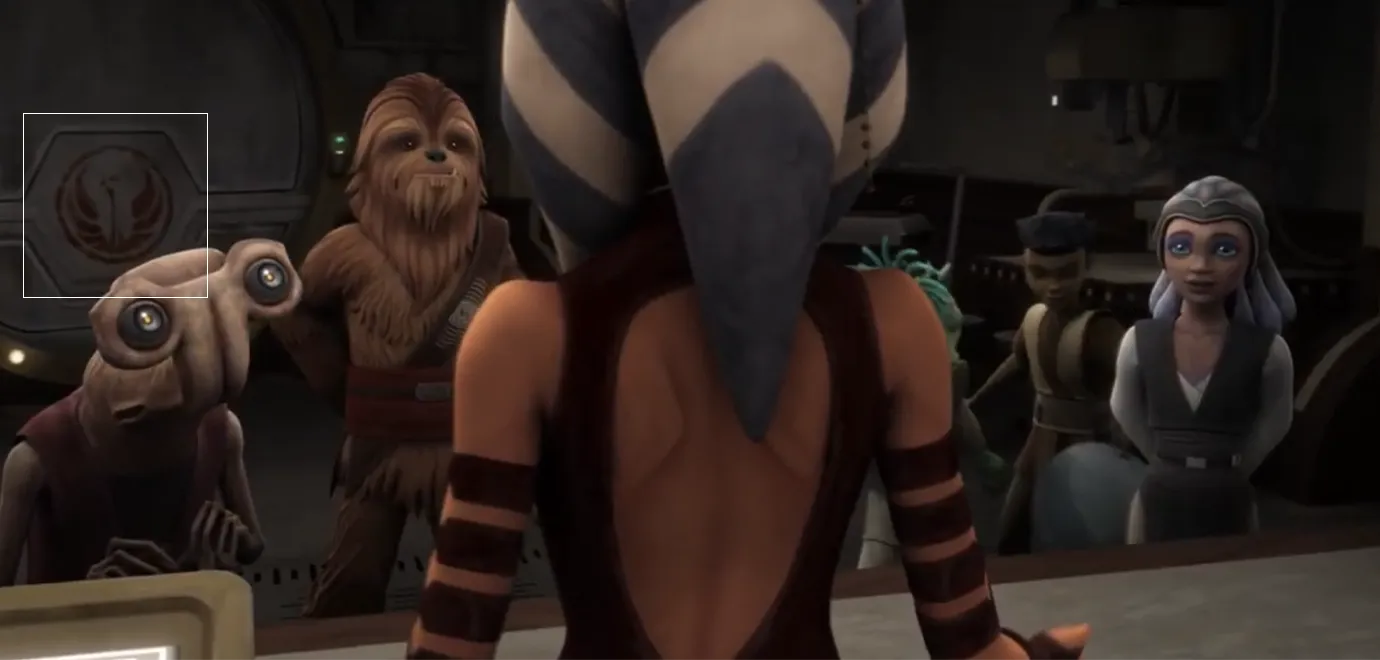
This is not the seal of an Old Republic government, but an earlier symbol of the Jedi Order. It depicts a bird rising with its wings spread. In The Clone Wars, the old mark survives on an inner door of the Crucible, a Jedi training ship dating back to the Old Republic. It was later used on medallions honouring heroes who fought for peace and justice. I placed it first on the poster because it begins a visual thread of winged light-side symbols that returns in different forms later.
002
Jedi Order
The Clone Wars, S2E16: Cat and Mouse
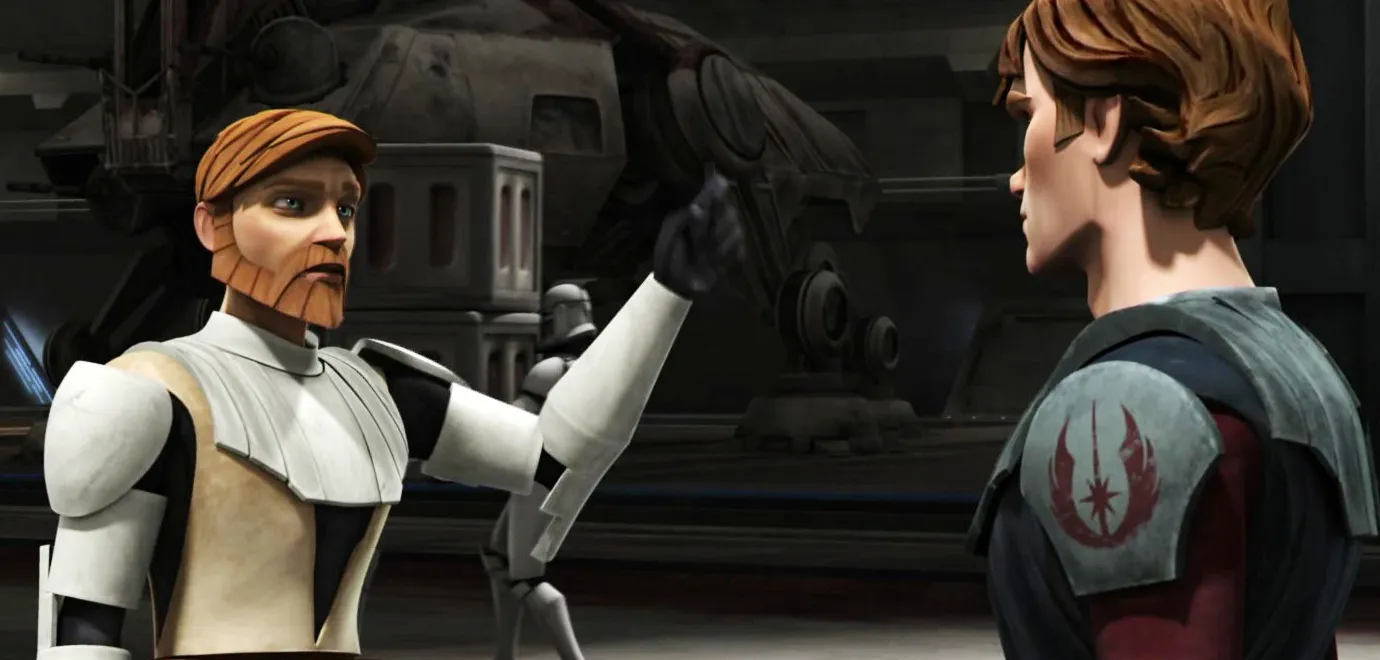
The Clone Wars became one of my best sources for this project. Its uniforms and ships show many symbols clearly enough to identify. Here, the Jedi Order emblem is worn on Anakin’s shoulder. Two wings frame a central light, which connects to the Order’s role and beliefs. The shape also echoes the older Jedi symbol that opens the poster, so I placed the two together. The visual relationship is clear, even though I have not found a source that confirms a direct redesign.
003
Galactic Republic
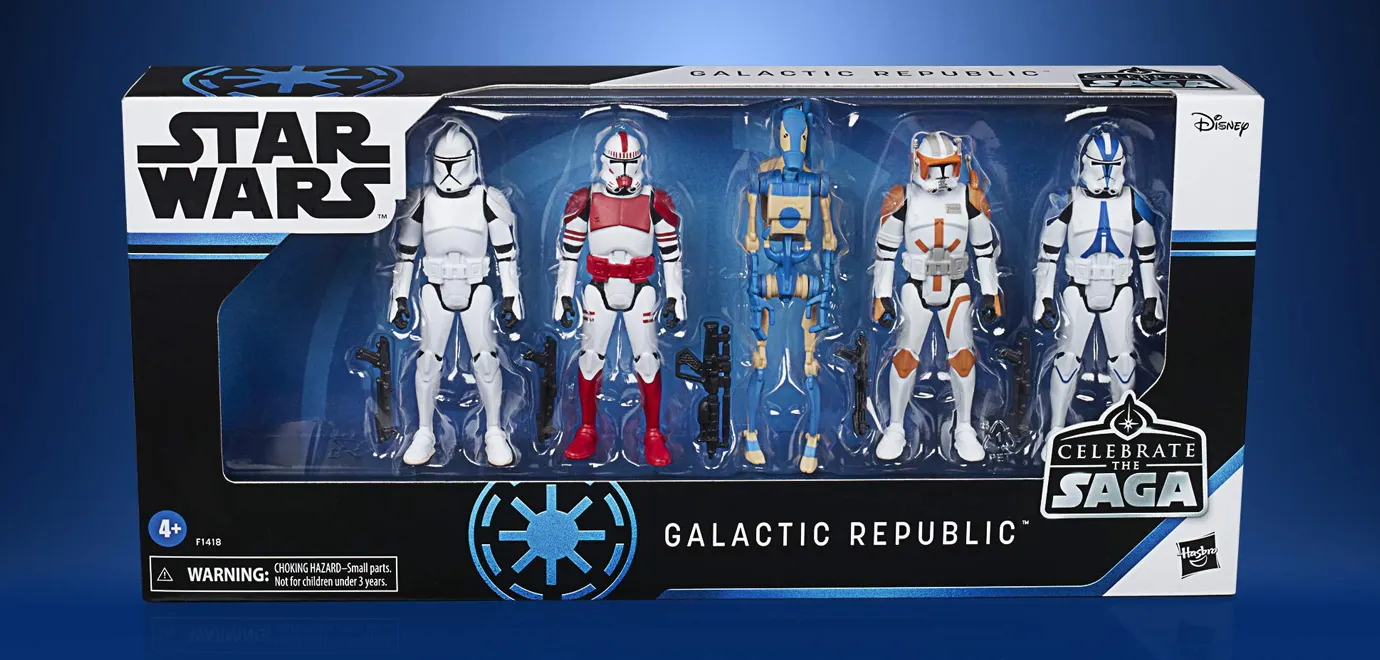
Official product merchandise
I found surprisingly few clear screen appearances of the Galactic Republic crest, so I used official product packaging as the reference here. Its eight spokes and central disc form the number nine, which the Bendu monks connected to the presence of the Force in a united galaxy. The resemblance to the Imperial cog is no coincidence. When Palpatine replaced the Republic with the Empire, this crest was reshaped into the six-spoked Imperial mark. It is the first clear step in one of the poster's most important visual transformations.
004
Galactic Senate
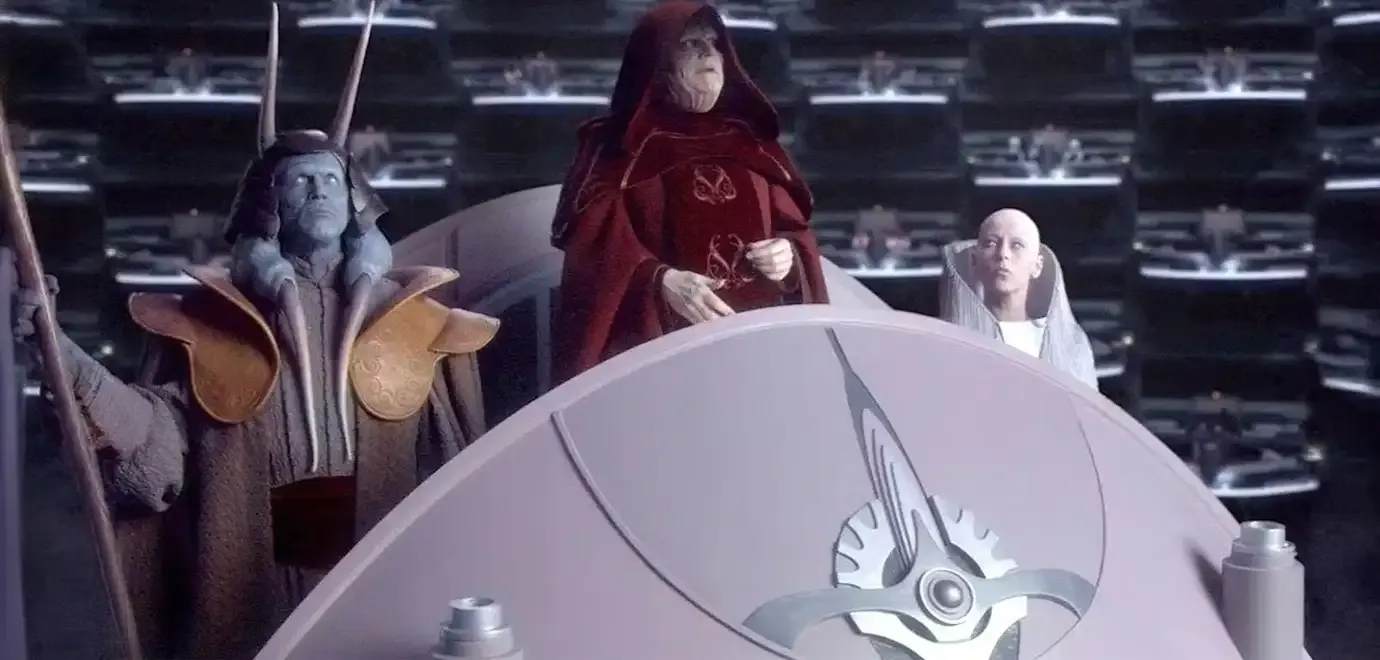
Episode III: Revenge of the Sith
Unlike the previous crest, this is not a symbol of the whole Republic. Known as the Great Galactic Seal, it belonged to the Senate and combines a cog with a curved, three-pronged form. I have not found an official explanation for what those separate shapes represent. It appears on the Chancellor's podium in Revenge of the Sith, directly beneath Palpatine as he addresses the chamber. Its placement makes it feel less like a badge and more like the authority of the institution itself.
005
Clone Army
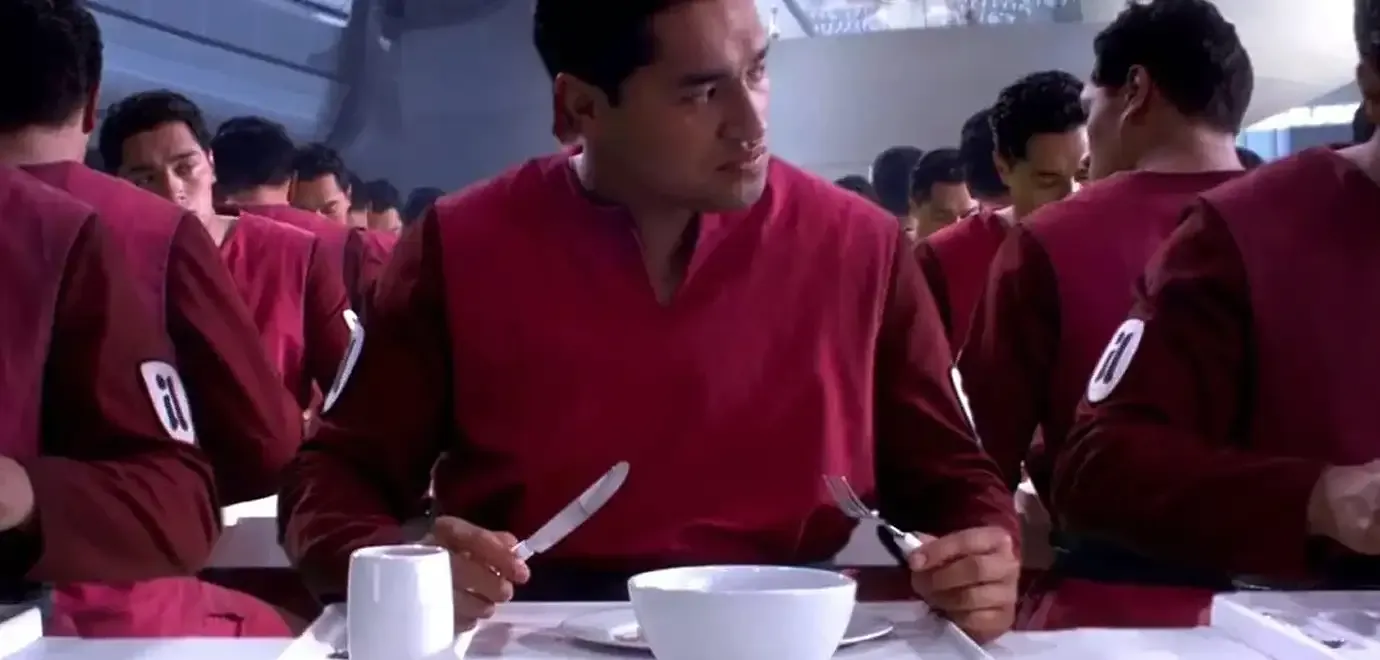
Episode II: Attack of the Clones
I initially read the centre of this mark as the lowercase letters “i” and “l”, but I found no source that identifies it as Aurebesh or gives the shapes a translated meaning. It is officially known as the Kaminoan emblem. In Attack of the Clones, it appears as a patch on the red uniforms of the clone cadets, marking where the army came from before individual units developed identities of their own. Variations of the emblem later return on cloning scientists’ uniforms, carrying the visual link to Kamino beyond the Clone Wars.
006
Rebel Alliance
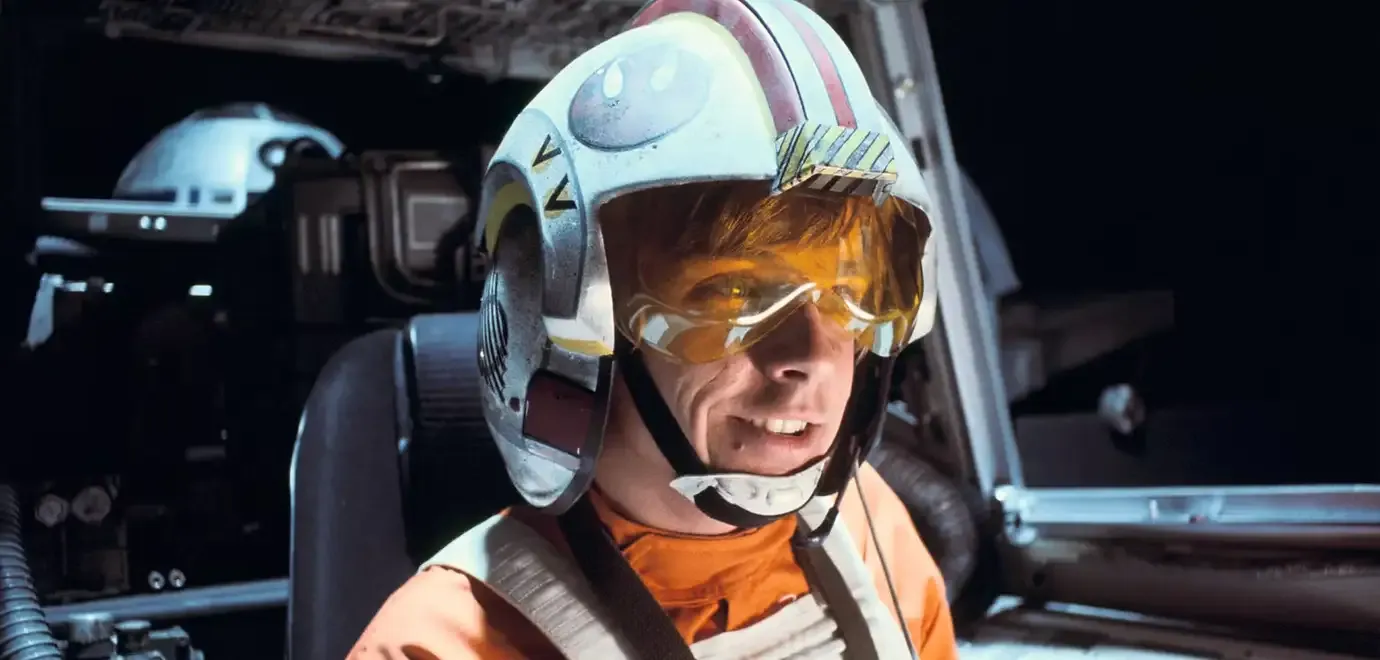
Episode IV: A New Hope
The Rebel starbird is one of the most recognizable marks in Star Wars. Its shape was created by combining Sabine Wren's personal signature with Saw Gerrera's three-pronged crest for the Partisans. Visually, it also continues the wings of the older Jedi marks at the start of the poster, although I found no source confirming a direct design line. In A New Hope you can see it on the X-wing pilots' helmets turning a personal sign of resistance into the shared symbol of a movement.
007
New Republic
Ahsoka, S1E7: Dreams and Madness
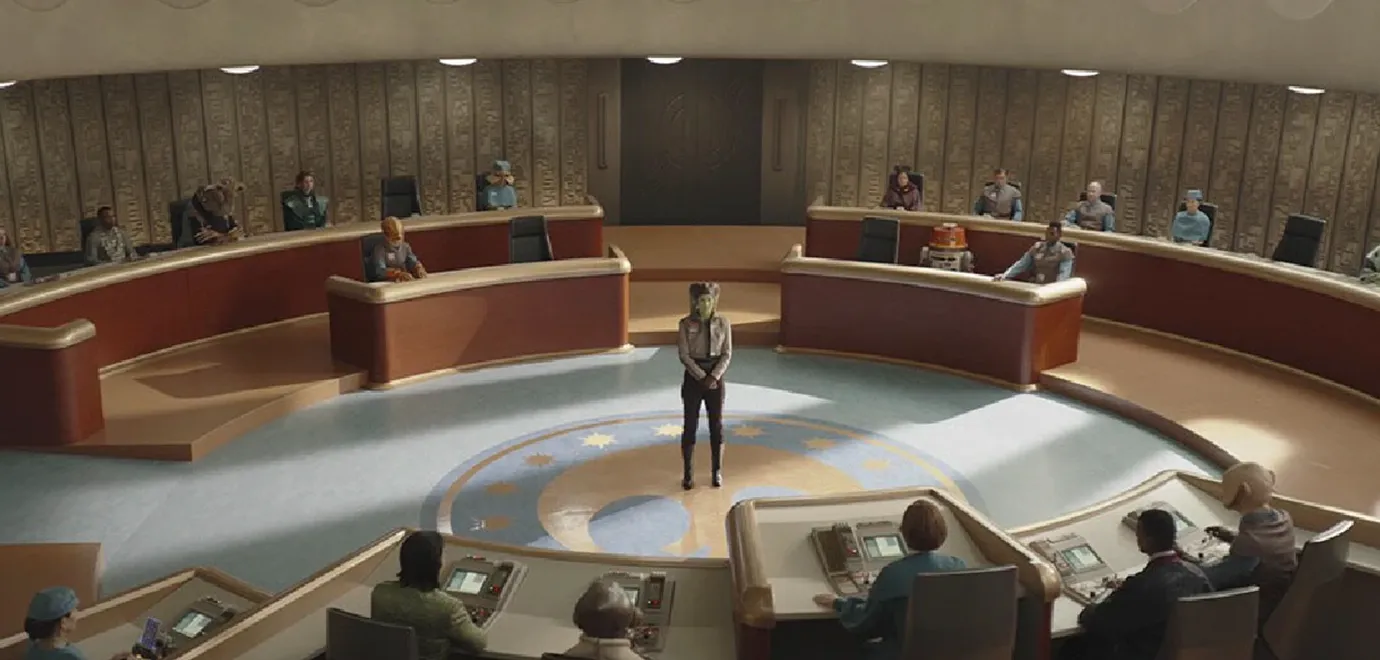
After the victory at Endor, the Rebel Alliance became the New Republic, and its starbird changed from a sign of rebellion into the seal of a government. The version on the poster is the provisional-era crest: the familiar bird surrounded by fifteen stars, representing unity. A second New Republic emblem placed the same bird over a large starburst and later appeared on military armour, pilot uniforms and X-wings. In Ahsoka, the rounded crest suits a young government still carrying the identity of the movement that created it.
008
Mandalorians
Hot Toys Boba Fett collectible
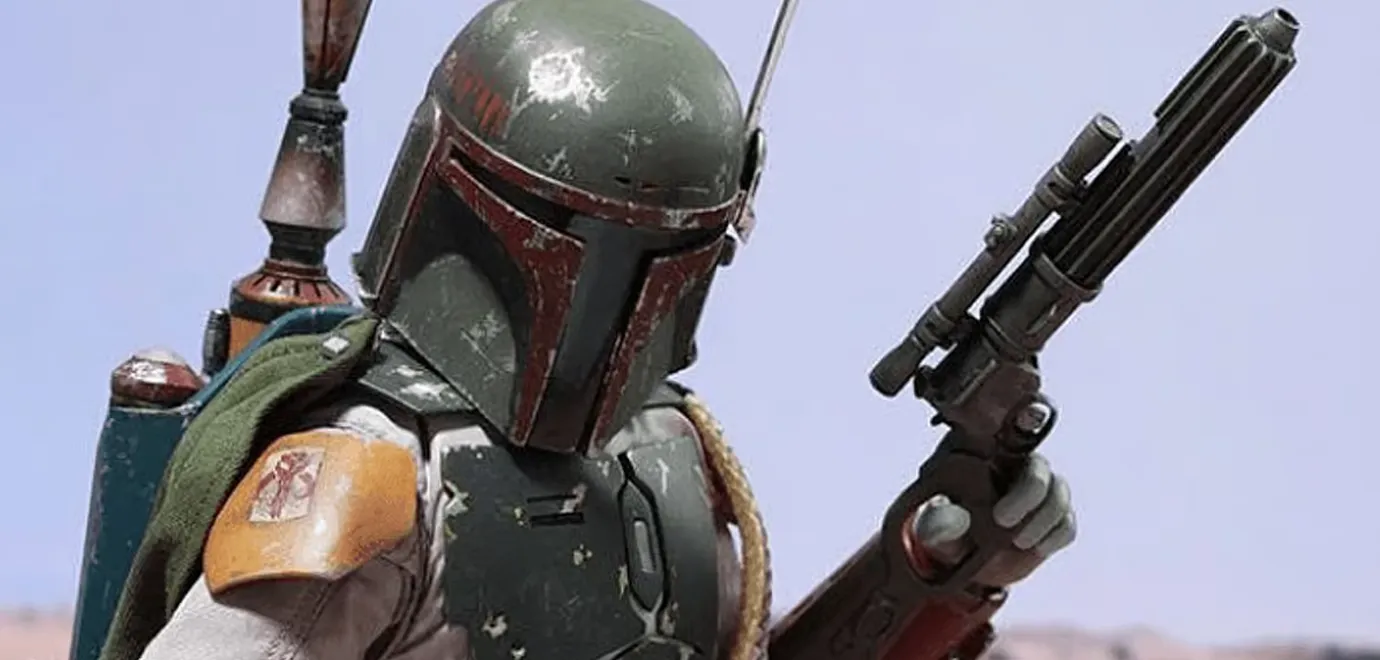
What first looks like a personal mark on Boba Fett’s shoulder belongs to a much wider culture. The crest depicts a mythosaur skull. According to Mandalorian legend, Mandalore the Great tamed and rode one of these enormous creatures, and later generations kept its memory alive on armour and walls. Unlike the clan emblems later on the poster, this mark does not belong to one family. It is a shared symbol of Mandalore and its people, turning a small detail seen in The Empire Strikes Back for example into a sign of collective identity.
009
Chiss Ascendancy
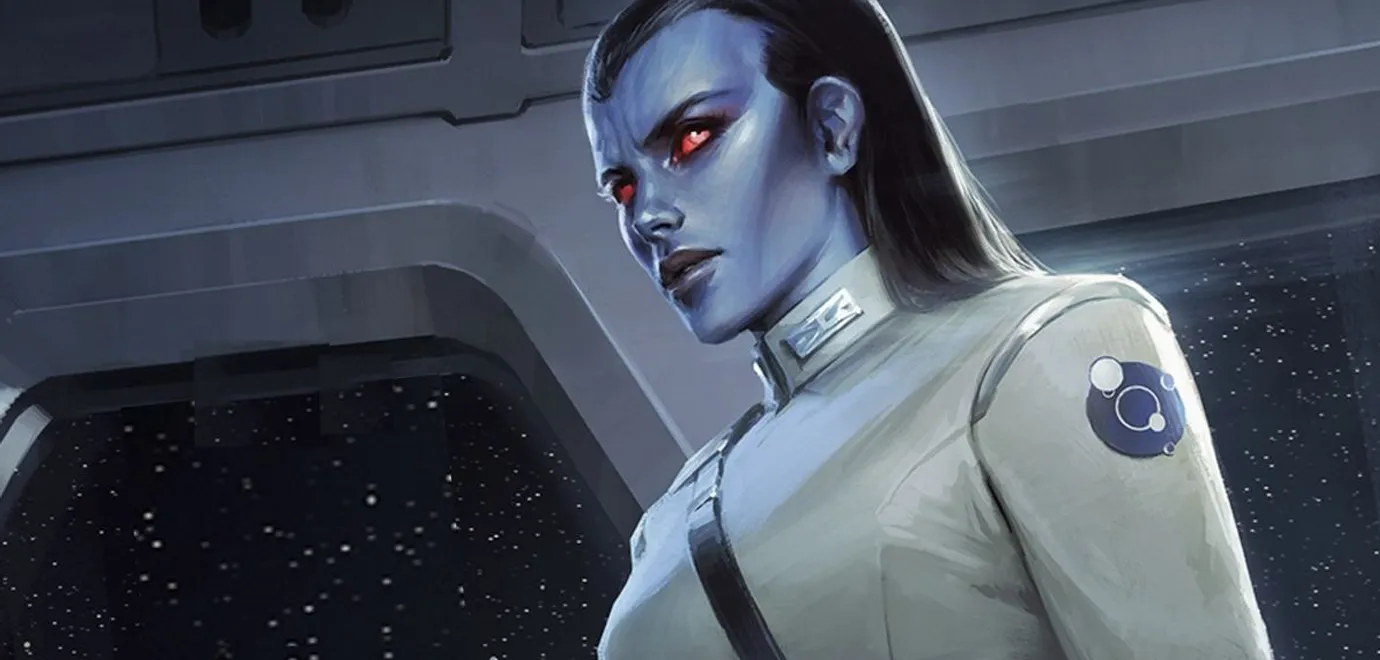
The circles suggest planets in orbit, but I found no source that explains their meaning. The more interesting detail is who wears the mark. Chiss officers normally carried the symbol of their family, but promotion to flag rank meant giving up those family ties and receiving a white uniform with the Ascendancy emblem on the shoulder. In Thrawn: Treason, Admiral Ar’alani wears it exactly that way.
010
Crest of Alderaan
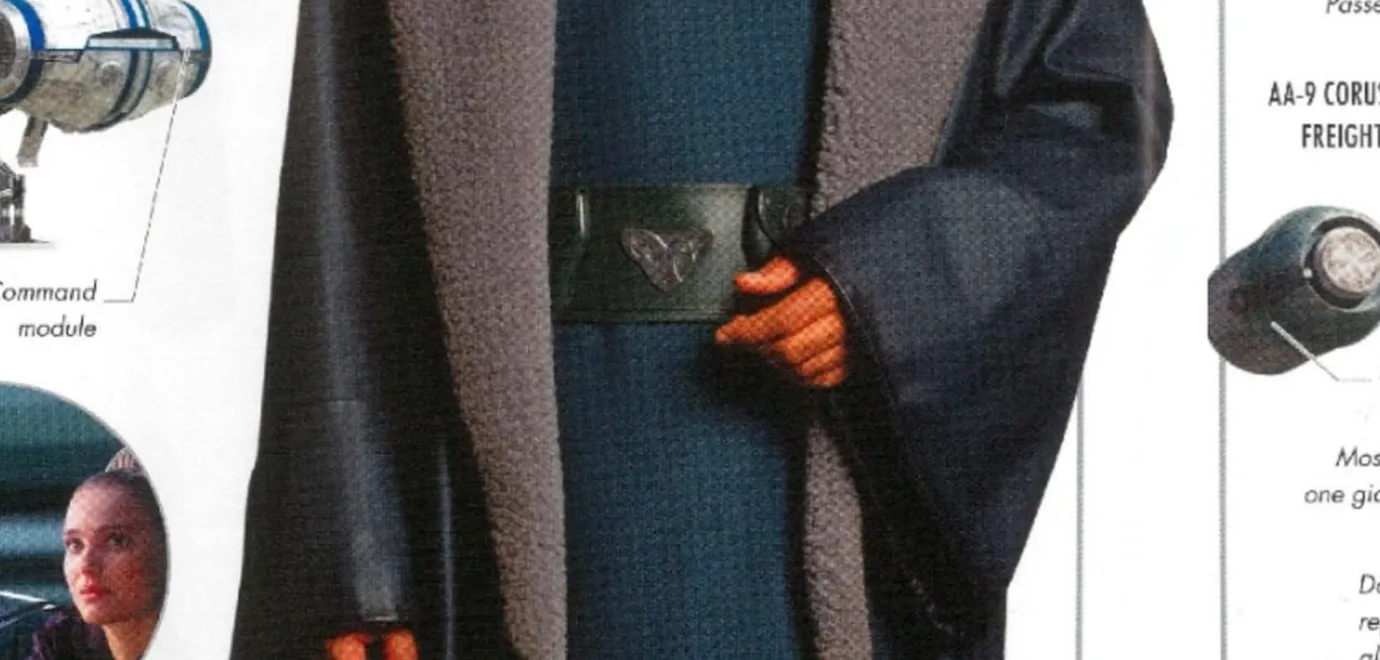
Star Wars: Revenge of the Sith Visual Dictionary
This upside-down triangle of interlacing curves is the crest of the Alderaanian monarchy. Clear references were hard to find, so I had to redraw it from several images. In Revenge of the Sith it appears on Bail Organa's clothing, and later Princess Leia wears a hair clasp of the same shape. The mark belongs to the royal house that helped seed the Rebellion from inside the Senate.
011
Starlight Squadron
Star Wars (Vol. 3) #15 (Marvel Comics)
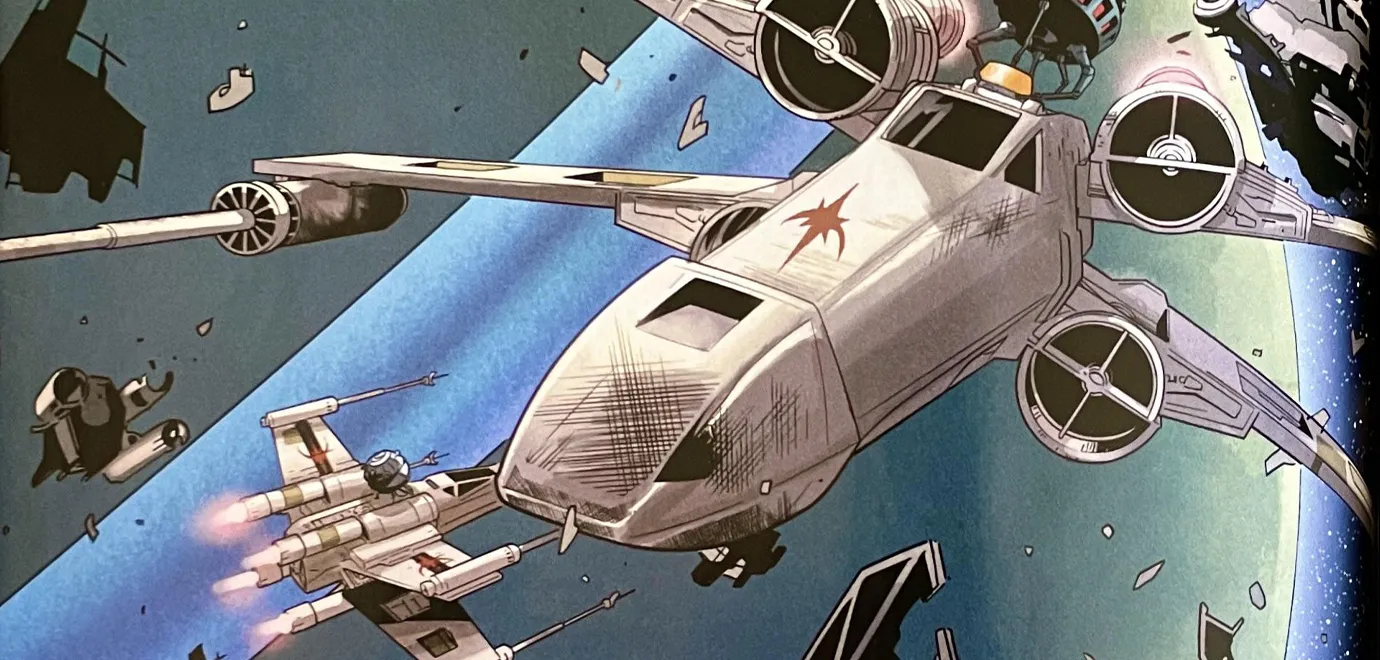
This one is fairly new. I couldn't find the mark in the older films or shows; everything with this starlight burst seems to start around 2020. It belongs to Starlight Squadron, a small elite Rebel flight, and in the comic still you can see it on the X-wings.
012

Open Circle Fleet
Episode III: Revenge of the Sith
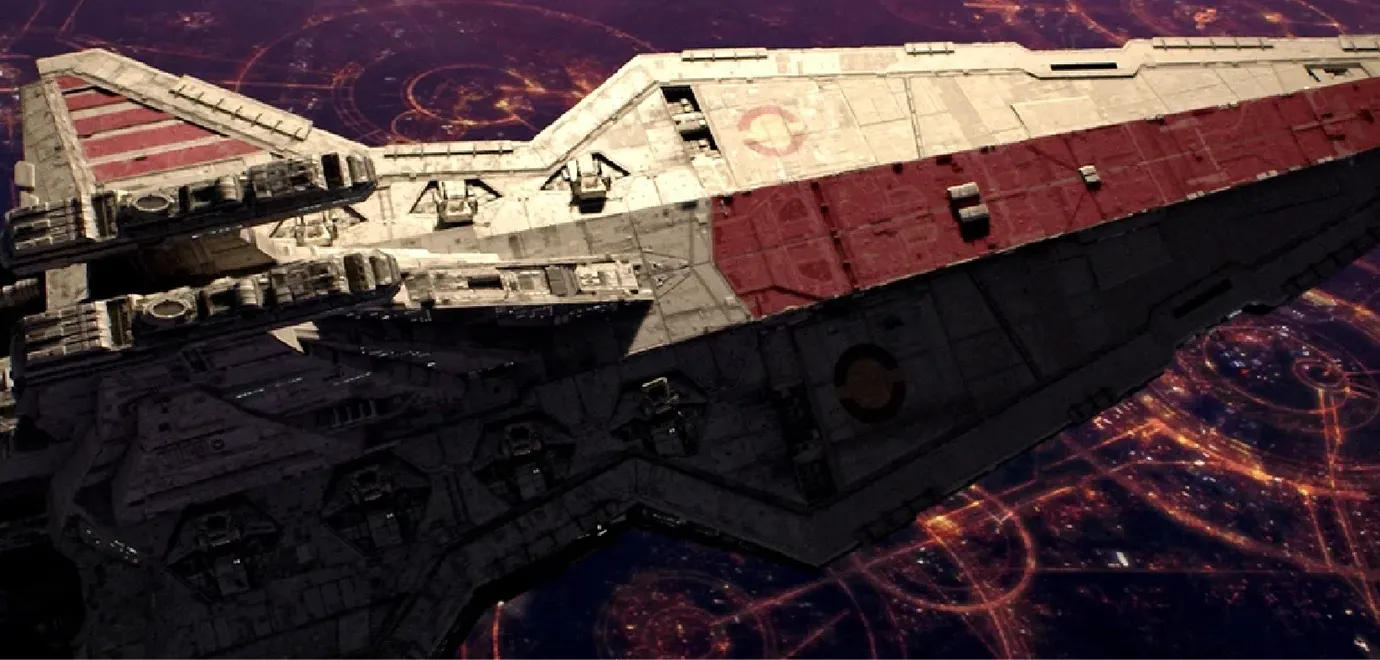
Two open arcs that nearly form a ring mark the Open Circle Fleet, the Republic armada led by Obi-Wan Kenobi and Anakin Skywalker during the Clone Wars. In Revenge of the Sith the emblem sits on Venator hulls, and Obi-Wan also wore it on his armour. The same open-circle shape later returned in concept art for Resistance A-wings in The Rise of Skywalker.
013
Coruscant Security Force
The Clone Wars, S2E15: Senate Murders
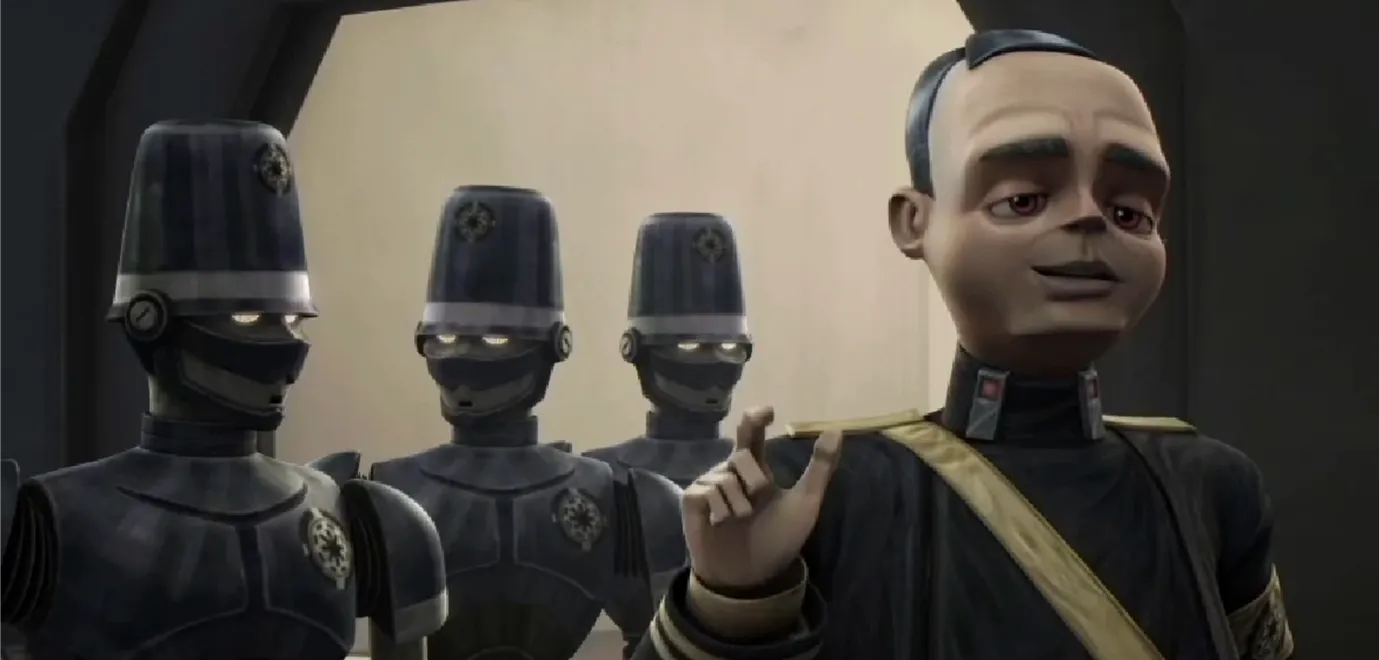
At the centre sits the eight-spoked Republic crest, and that is already half the Imperial mark. Remove two spokes and you get the cog that later covers the Empire. The Coruscant Security Force used this version as its police badge, set inside those broken outer rings. In the still you can see it on the chest and helmet of the police droids that patrol Coruscant for the CSF.
014
Naboo Security
Episode I: The Phantom Menace
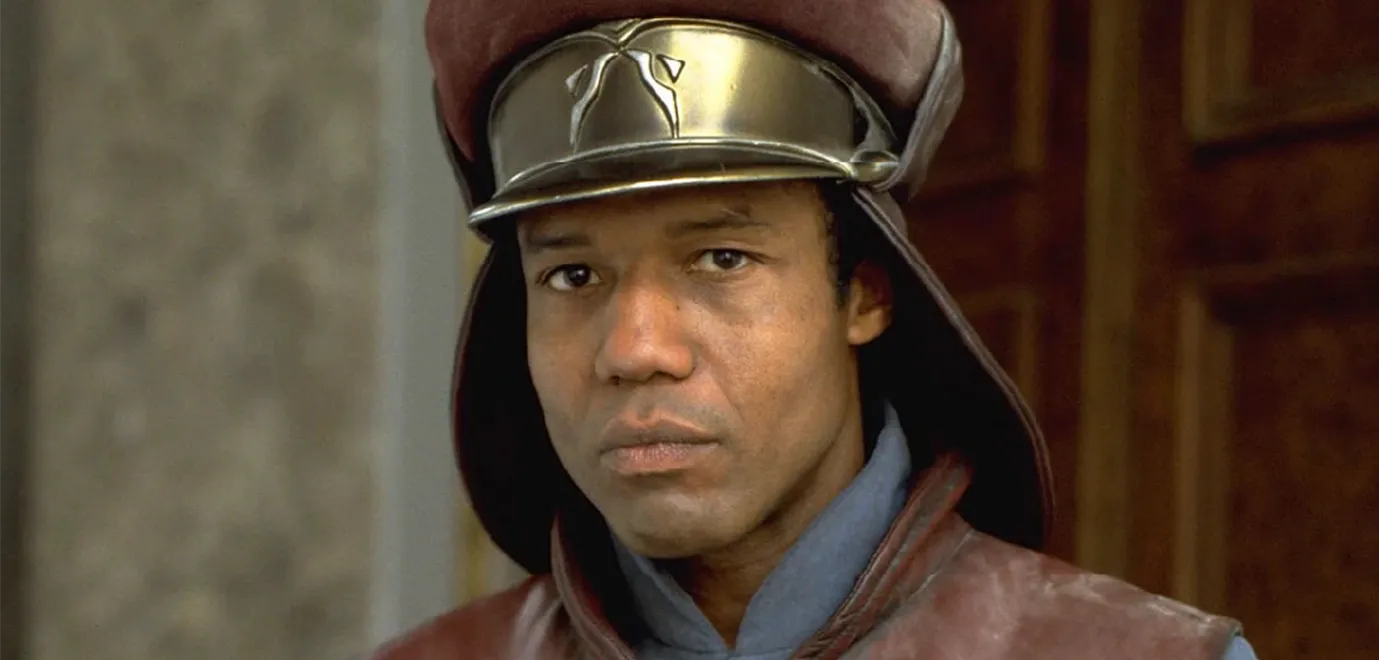
In The Phantom Menace, Captain Panaka wears this crest on the front of his cap. It marks the Royal Naboo Security Forces, the volunteer corps that protects the queen and keeps order on Naboo. The two mirrored curves sit in a gold band against his burgundy uniform, a small badge for a force that was never built as a standing army.
015
Royal House of Naboo
Episode I: The Phantom Menace
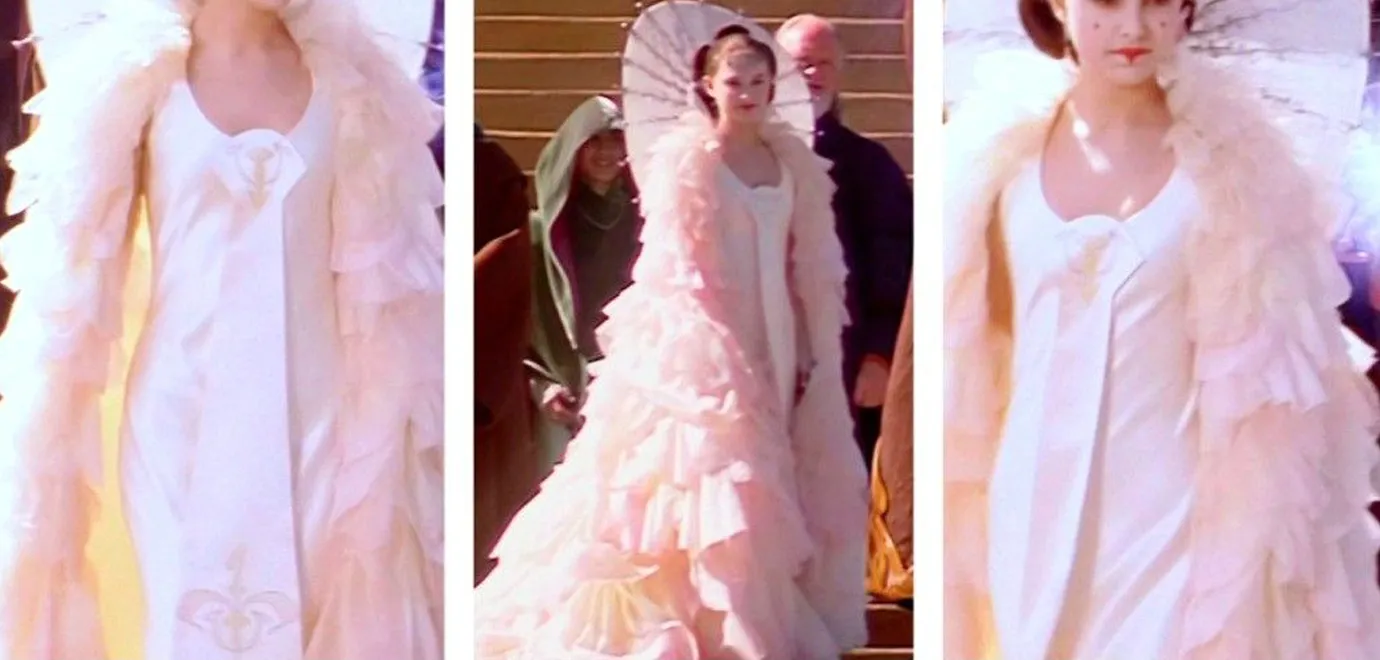
This one hides in plain sight. The crest of the Royal House of Naboo is rarely worn as a separate badge; it is woven into the queens' clothing. In The Phantom Menace it runs along the hem of the black traveling gown and appears again on Amidala's white jubilation dress at the victory parade. Other queens use it the same way, worked into fabric or jewelry rather than stamped on armour. That is why clear views of the shape itself were hard to find.
016
Gungan
Episode I: The Phantom Menace
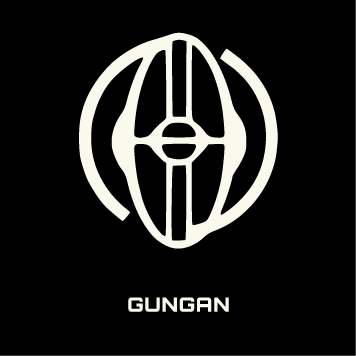
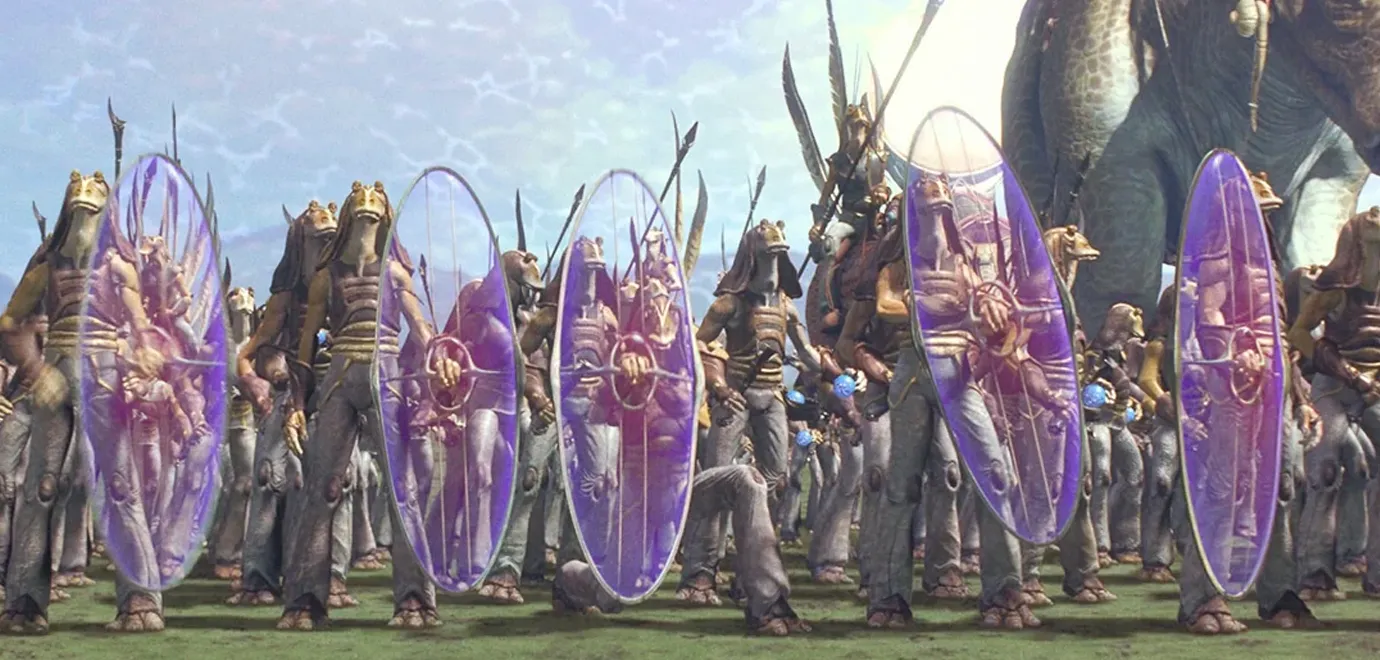
I have not found a clear Gungan crest used on its own in the films or shows. The mark on the poster follows the shape of the Gungan personal energy shield, the tall oval frame soldiers carry in The Phantom Menace on the grass plains. Those shields throw up a blue energy screen and use the same hydrostatic bubble idea as the cities under the lake. Until a solitary badge turns up on screen, this is the strongest shape that stands for the Gungans on the poster.
017
Mon Calamari Guard
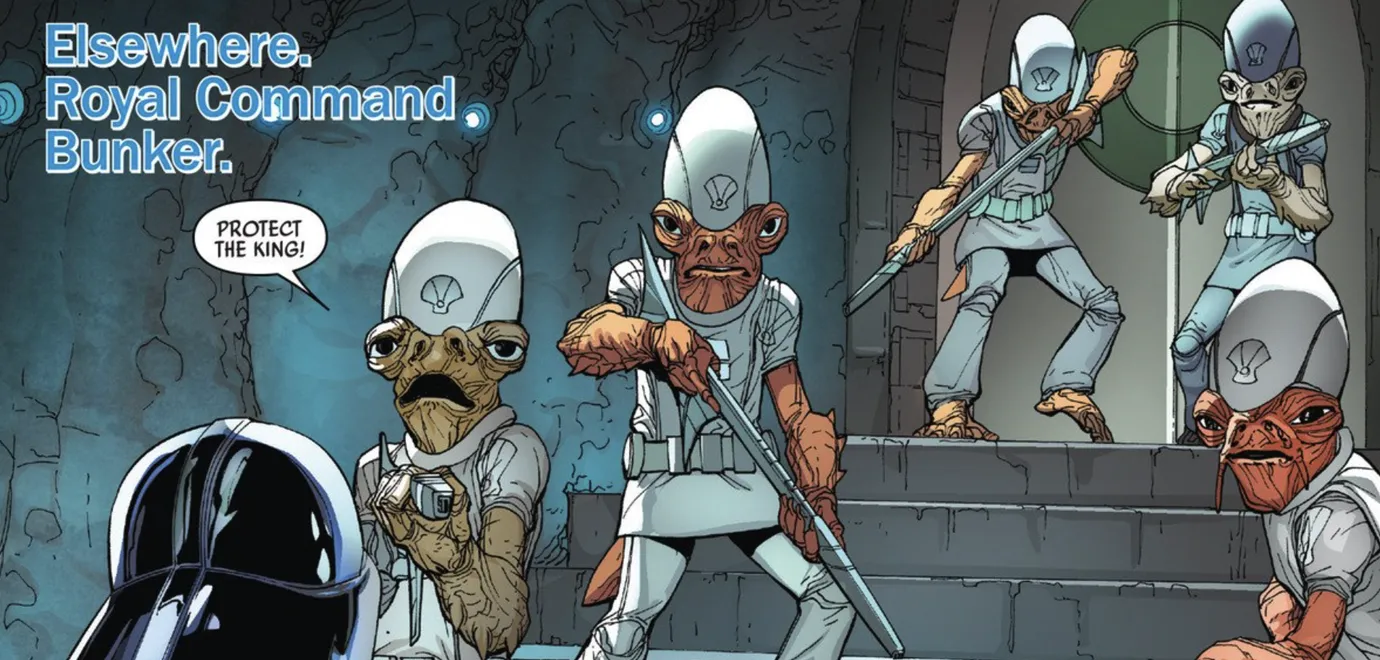
Darth Vader: Dark Lord of the Sith (2017) #17
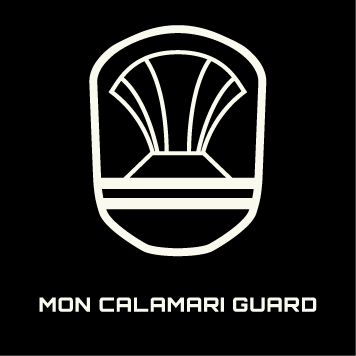
Clear views of this mark are rare. The Mon Calamari Guard is the personal guard of the King of Mon Cala, the royal troops once led by Captain Ackbar. I could not find a clean film or TV badge that matches the simplified poster version, so the reference comes from Darth Vader: Dark Lord of the Sith #17, where the comic shows the closest form. In that issue the Guard stands with the king as the Empire moves against their ocean world.
018
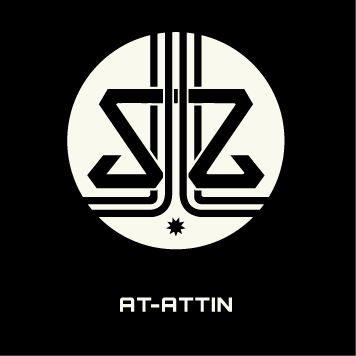
At-Attin
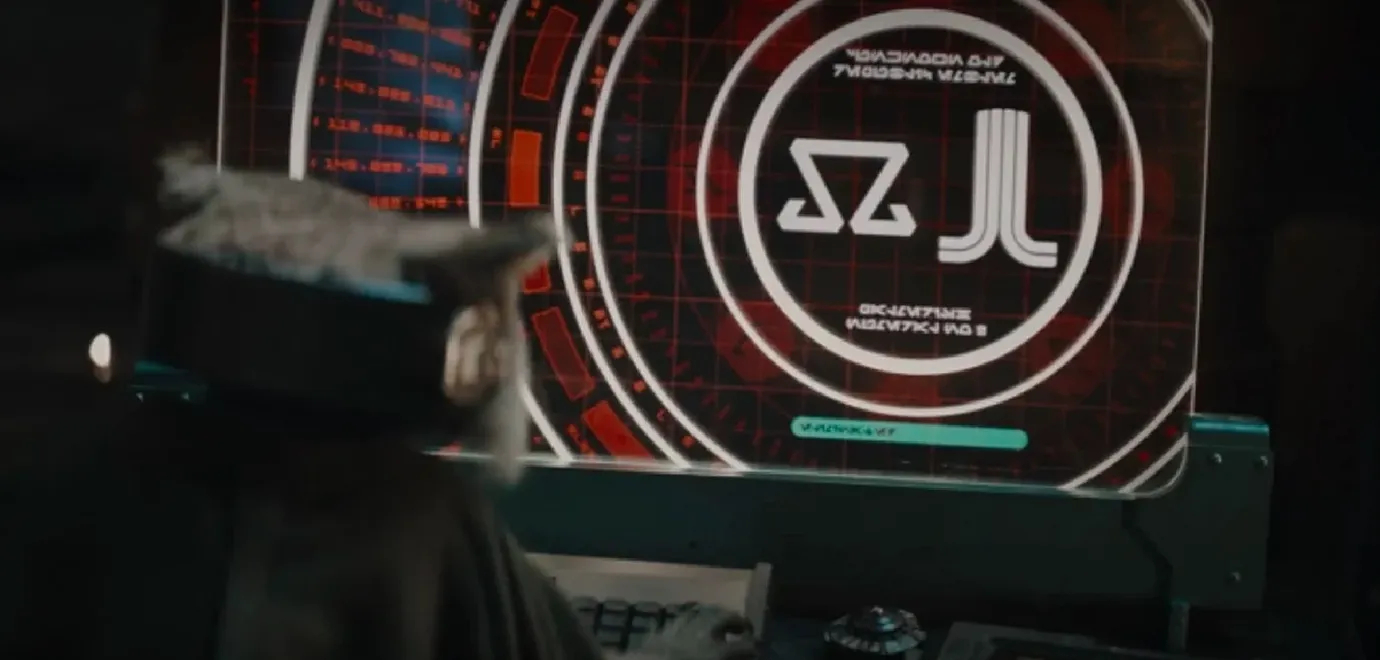
Skeleton Crew, S1E3: Very Interesting, As an Astrogation Problem
There are a few versions of this mark. The kids in Skeleton Crew wear a school badge on their jackets, but the cleaner circle on the poster is the planetary seal. In the still you can see it on Kh'ymm's display while she maps the Jewels of the Old Republic, the hidden worlds the old government kept safe. At Attin is the last jewel left, a sealed-off world outsiders only know from pirate stories about treasure. That is what the mark stands for: the secret planet itself, not just the school.
019
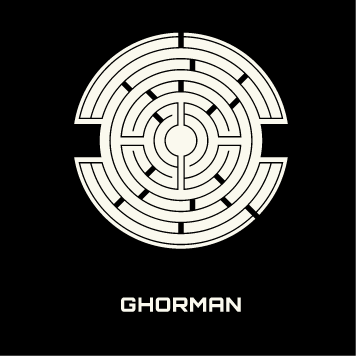
Ghorman
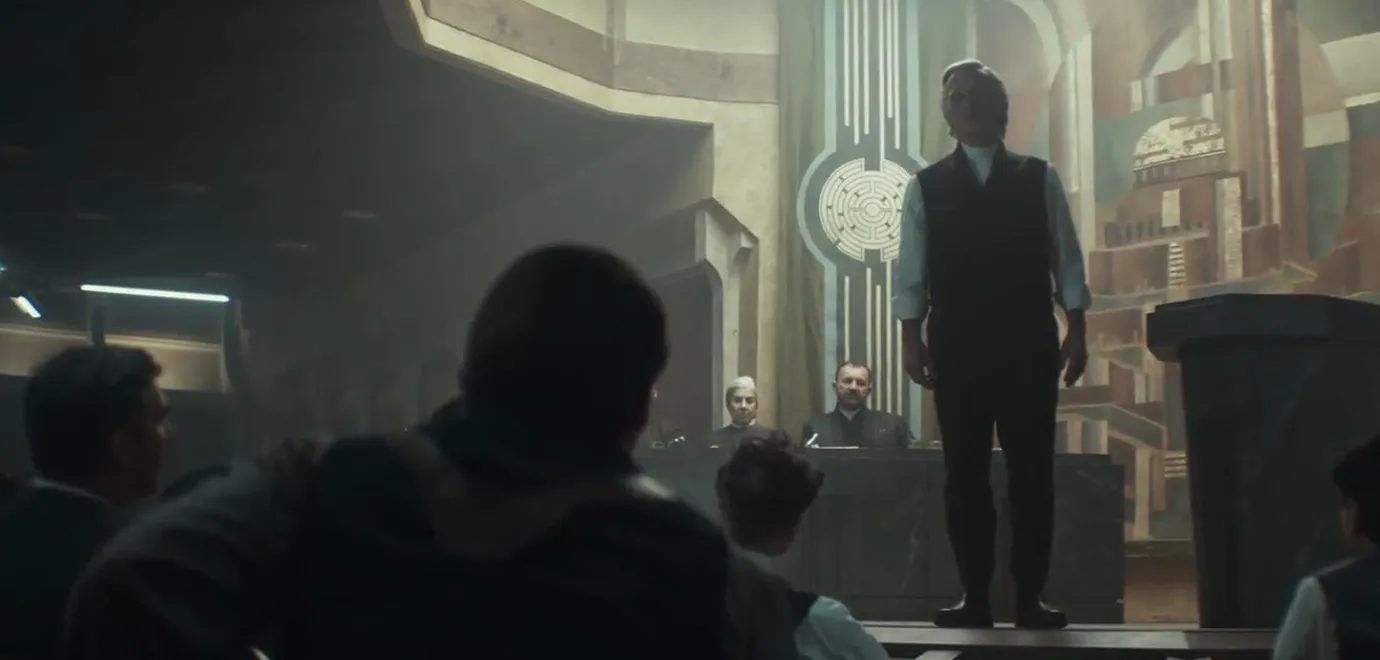
Andor, S2E4: Ever Been to Ghorman?
Look at the still and the maze starts to make sense. Beside the green banner sits a mural of Palmo, Ghorman's capital, grown in stacked layers that read like a labyrinth from above. The planetary mark copies that idea: concentric paths around a centre, a city plan turned into a crest. In Andor it hangs behind the speakers at a local meeting, the shape of the city worn as a badge of the Ghor.
020
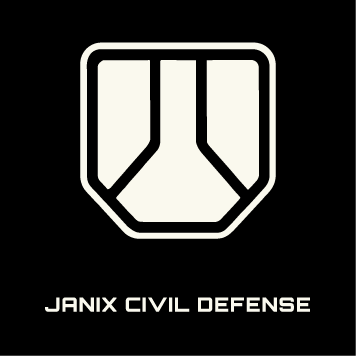
Janix Civil Defense
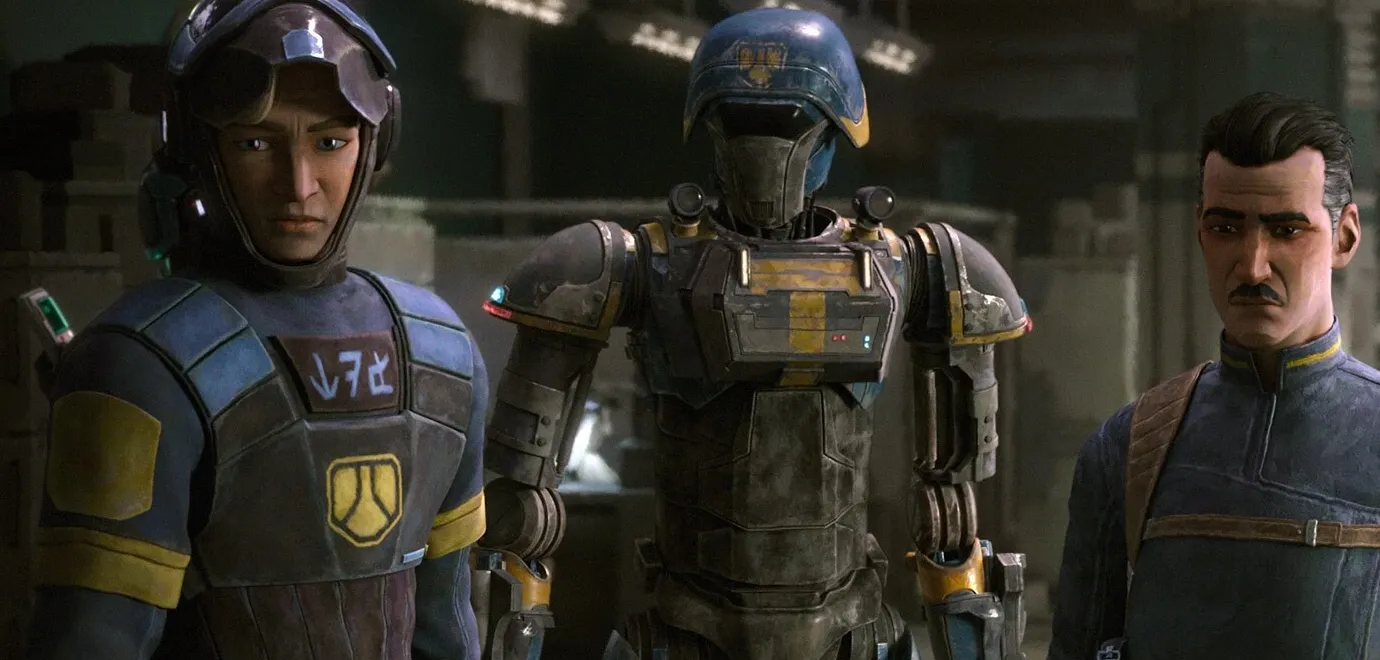
Maul: Shadow Lord, S1 Ch2: Sinister Schemes
This sturdy shield with two descending lines already looks like a defensive force, and that is what it marks. Janix Civil Defense is the local law on the planet Janix, proudly independent of the Empire. Its Tactical Defense Force officers wear the yellow badge on their chests while they work with police droids to keep the crime syndicates in line. In Maul: Shadow Lord you can see it clearly on the officer's armour, a blunt shield rather than a fancy crest.
021
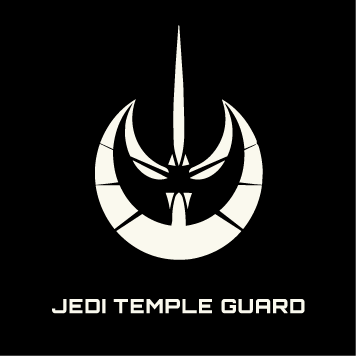
Jedi Temple Guard
Star Wars Rebels, S2E18: Shroud of Darkness
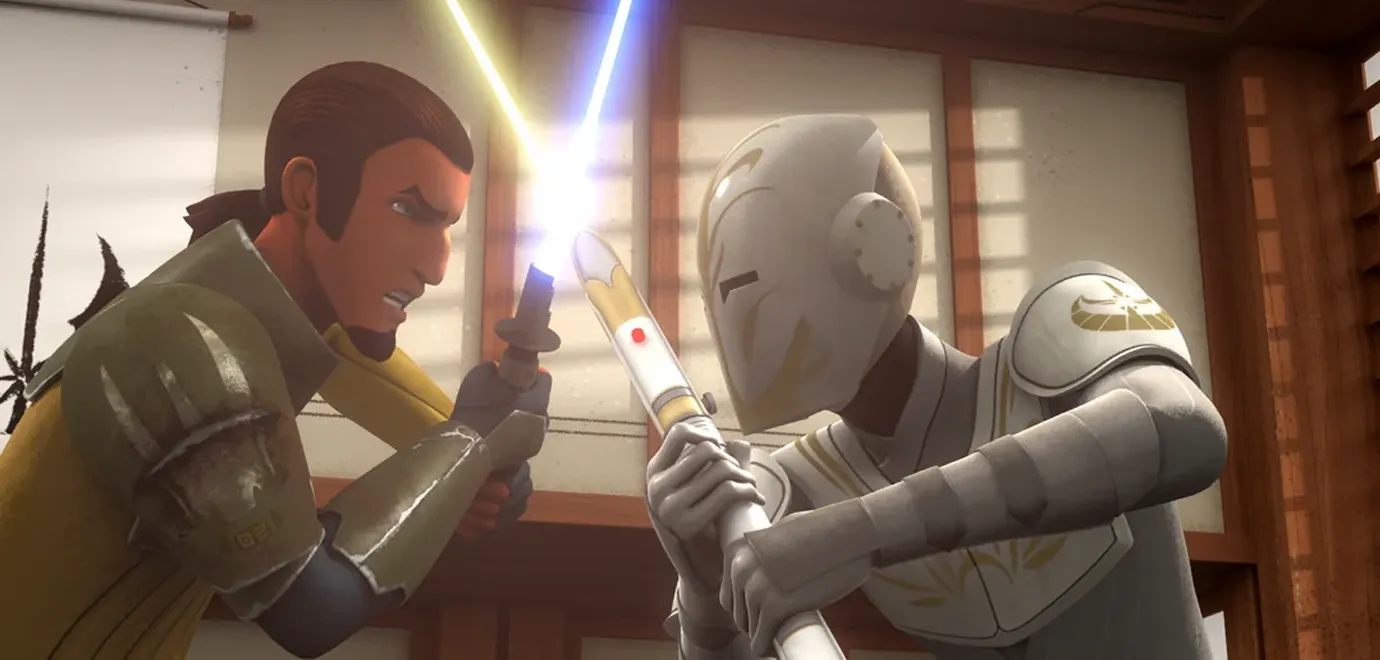
The Temple Guard mark is a close cousin of the Jedi Order emblem: the same winged light around a central blade, tightened into a guardian's badge. These anonymous sentinels protected the Jedi Temple, hiding their faces behind masks and fighting with yellow lightsaber pikes. In Shroud of Darkness a Temple Guard appears in Kanan's vision, and you can see the golden mark on his shoulder armour while they clash. It is the Order's symbol remade for those who give up personal identity to guard the Temple itself.
022
Jedi Younglings
The Clone Wars, S5E6: The Gathering
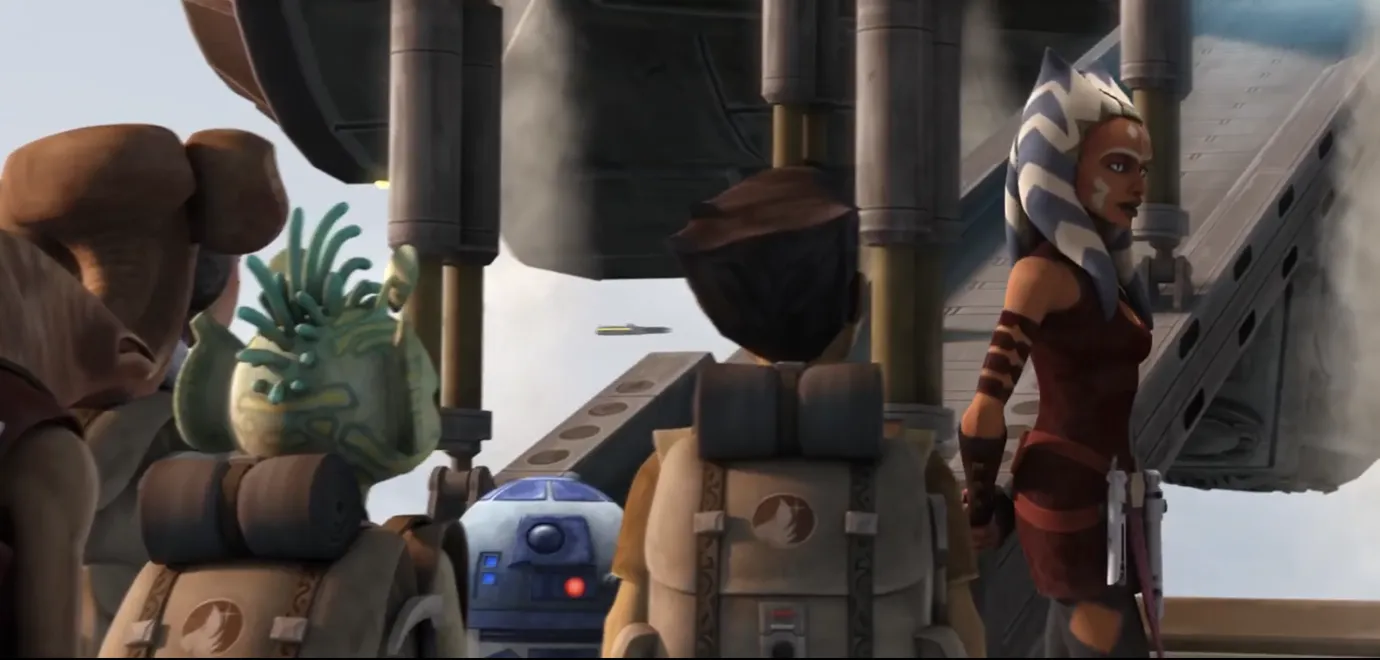
This youngling mark is easy to miss. It only appears as a small patch on the gear the initiates wear. In The Gathering, Ahsoka escorts a class of younglings to Ilum for their kyber crystals, and you can spot the circular badge on their backpacks as they board the ship.
023
Onderon Rebels
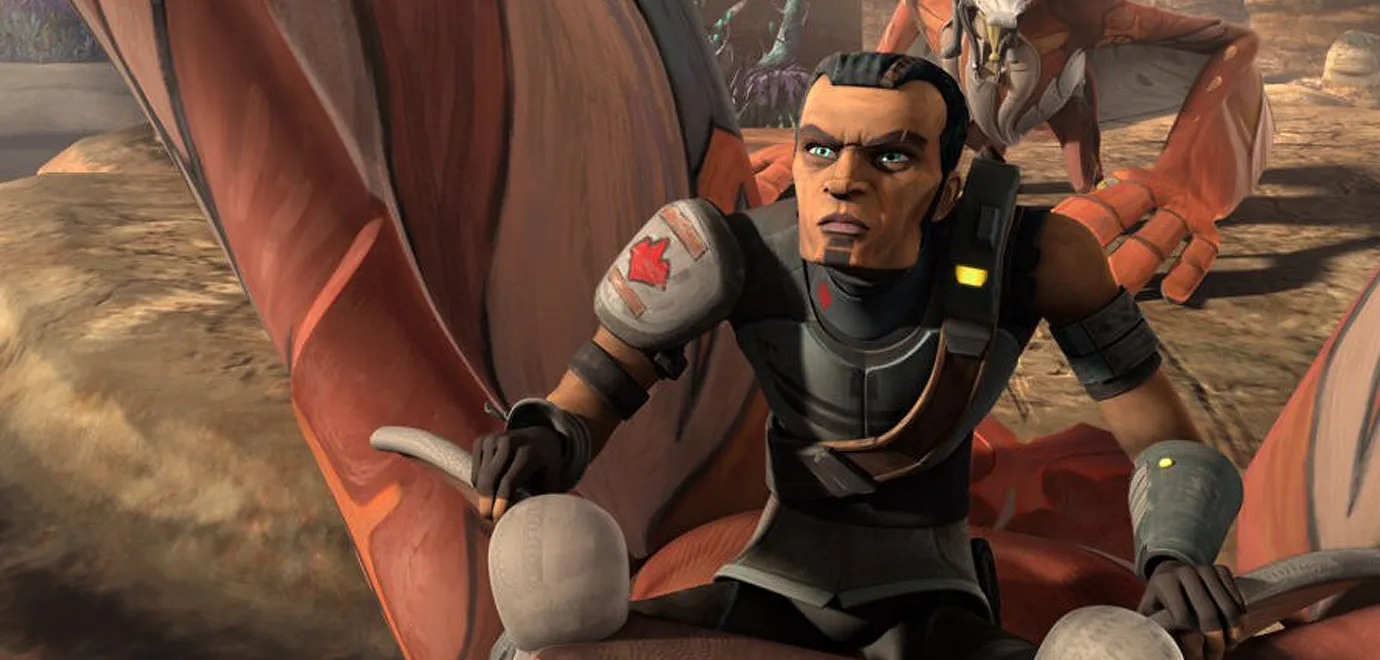
The Clone Wars, S5E2: A War on Two Fronts
The three-pronged crest appears on Saw Gerrera's shoulder while he fights with the Onderon resistance in The Clone Wars. After the war, Saw reorganised the movement into the Partisans, but that later group adopted a different angular emblem. This older mark remained connected to Saw and eventually contributed to the shape of the Rebel Alliance starbird. It is an early resistance symbol whose influence lasted even after the organisation that first wore it had changed.
024
Free Kashyyyk
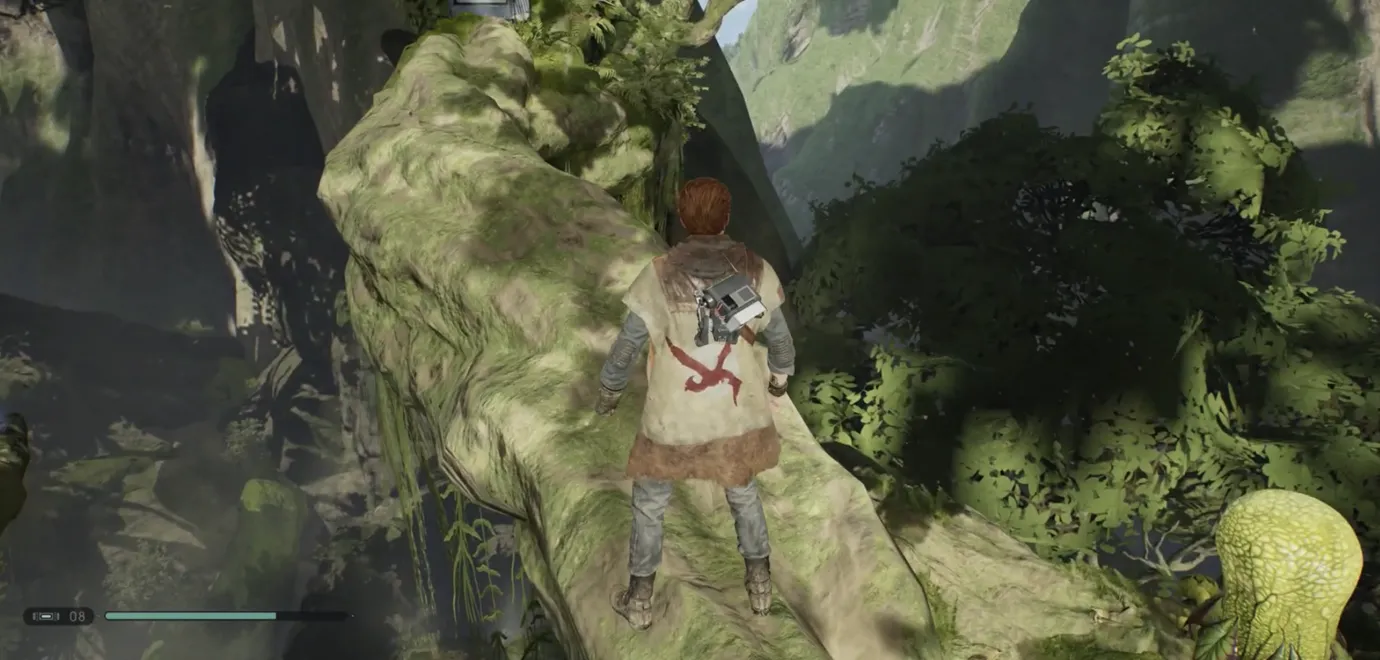
Jedi: Fallen Order
The Free Kashyyyk symbol appears on the back of an optional poncho in Jedi: Fallen Order. I read the red silhouette as a shyyyo bird, the rare giant creature Cal encounters on Kashyyyk, but I found no official source that names the design or gives it a formal meaning. The title and its place in the game connect it to the Wookiees' fight against Imperial occupation.
025
Partisans
Rogue One
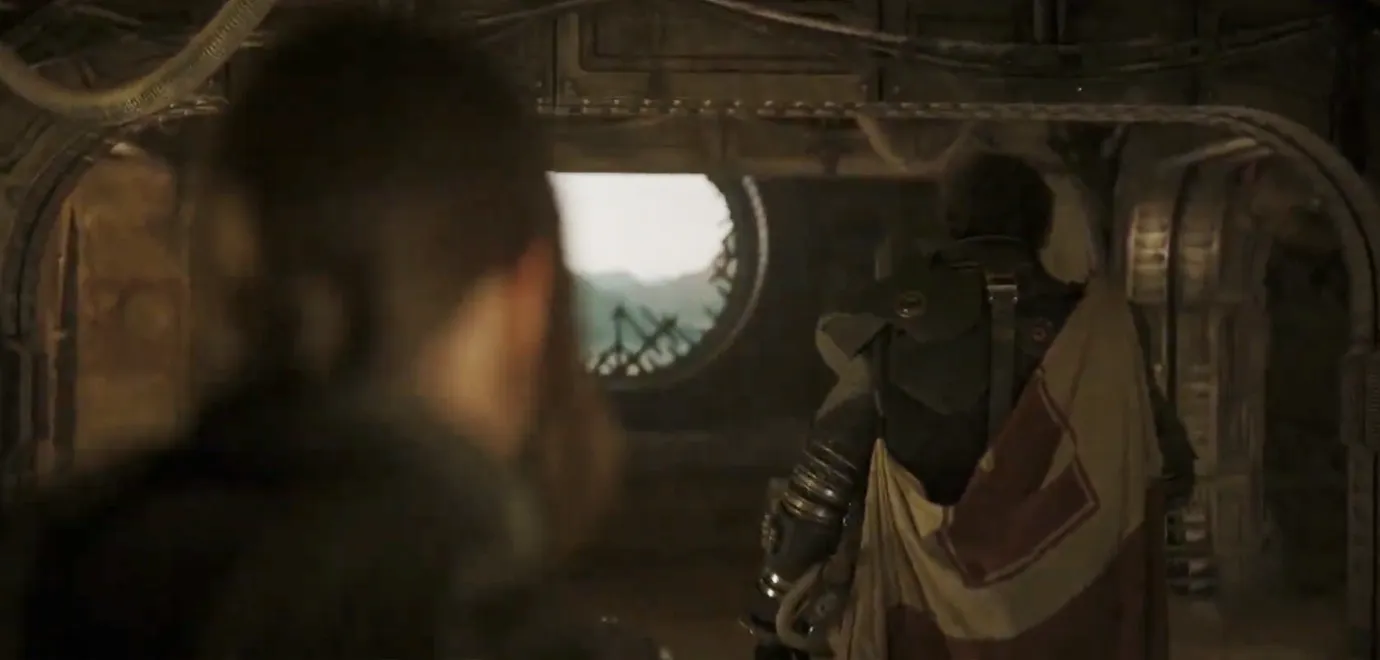
Saw Gerrera formed the Partisans from the earlier resistance on Onderon, but the new group used a different emblem. Its broken angular shape appears on Saw's clothing in Rogue One. I have not found a documented meaning for the design, but visually it feels less open and hopeful than the Rebel starbird. That distinction suits a movement whose increasingly extreme methods separated it from the wider Rebel Alliance.
026
Axis Network
Andor, S1E7: Announcement
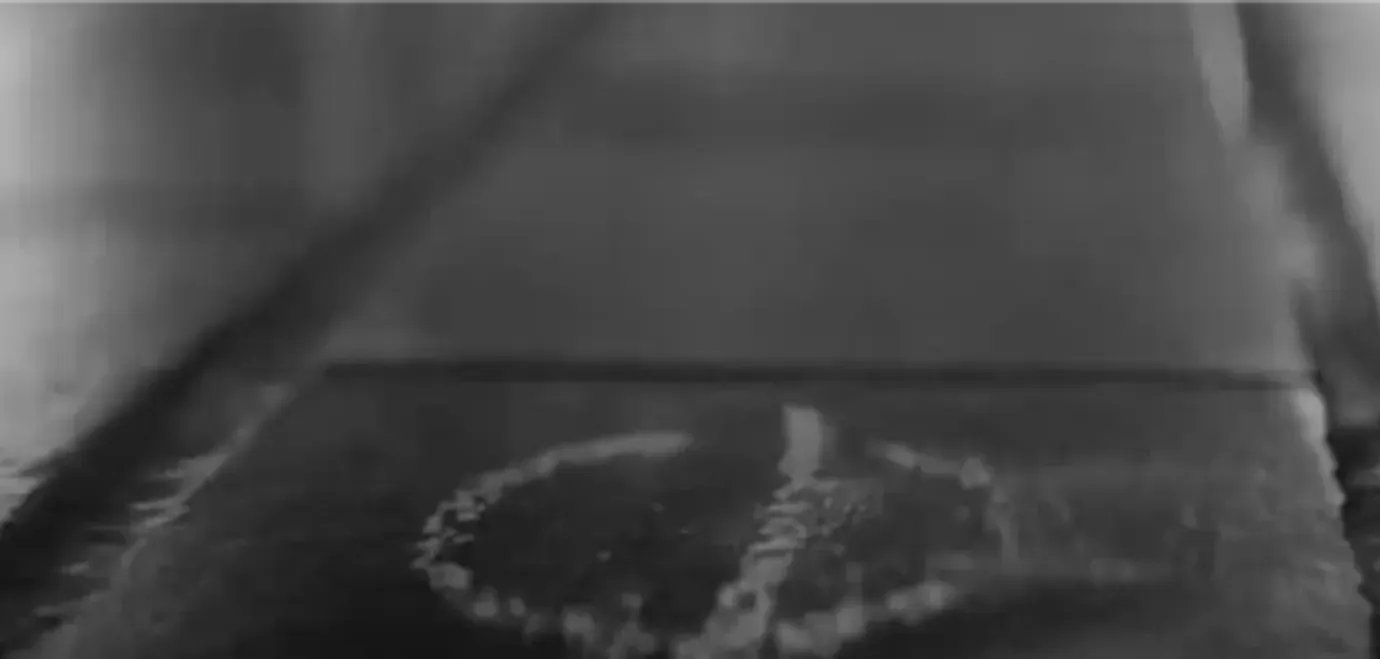
The Axis Network was the name the ISB gave to Luthen Rael's covert web of spies and rebel cells. It operated while the Rebel Alliance was still taking shape, which makes its mark especially interesting. The symbol also forms the O in Andor's opening title, but episode seven places it inside the story, marked on a Coruscant walkway along the route Kleya follows to a secret meeting. Its curved wings and central point resemble the later Rebel starbird. I see it as an early relative, although I could not find proof of a direct connection. It is a fitting mark for a network that was seen by the right people and missed by everyone else.
027
Fulcrum
Dawn of Rebellion
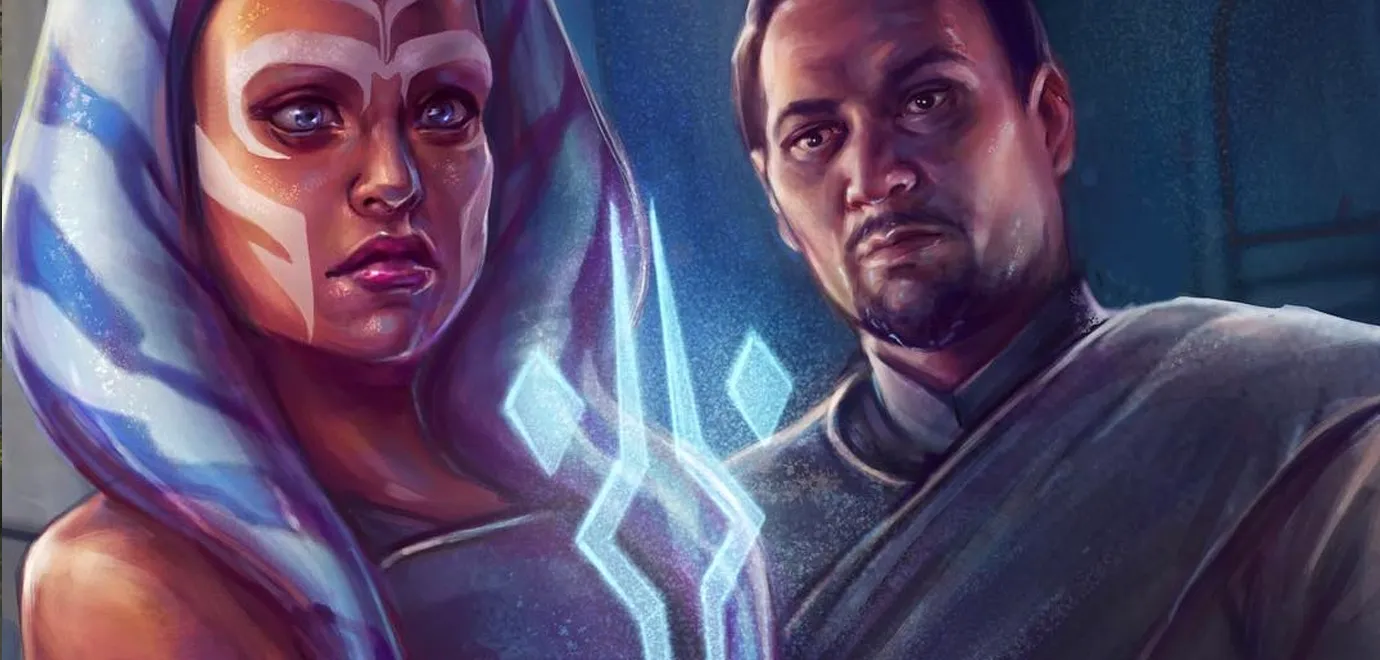
Fulcrum was not one person or a single rebel cell, but a secret identity used by agents who passed information between groups fighting the Empire. Ahsoka Tano created the name, and its symbol came directly from the white markings on her forehead. Other agents later used the Fulcrum name, but the symbol continued to carry Ahsoka's presence.
028

Phoenix Cell

Star Wars Rebels
Here the bird-like thread running through the light-side symbols becomes even clearer. The mark began as Sabine Wren's personal starbird, which she painted on her armour and left behind as a calling card after rebel missions. Then Phoenix Cell adopted it as its own symbol. The legendary bird rises with its wings spread and stands for renewal and hope. Sabine's design later inspired the starbird of the Rebel Alliance, so this mark forms an important step between a small rebel crew and the rebellion that followed.
029
The Uprising
Star Wars: Uprising
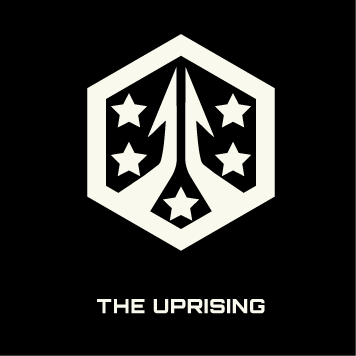
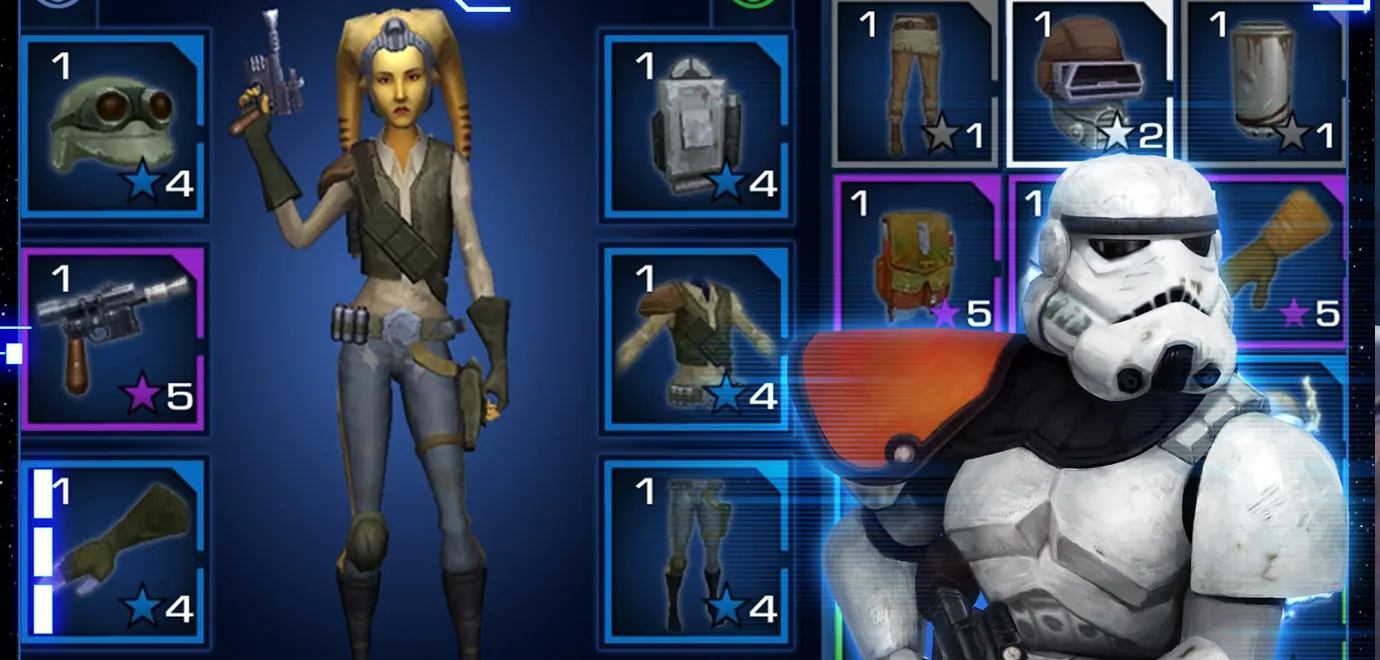
This one is rare because the game around it disappeared. The Uprising formed in the Anoat sector after the Battle of Endor, when an Imperial blockade kept its worlds cut off from the wider rebellion. Its five stars and pointed centre give the mark the appearance of a compact military badge, but I could only find it inside the mobile game's interface. Star Wars: Uprising shut down in November 2016, leaving the symbol tied to a piece of canon that can no longer be played.
030
Black Squadron
Star Wars The Force Awakens The Visual Dictionary
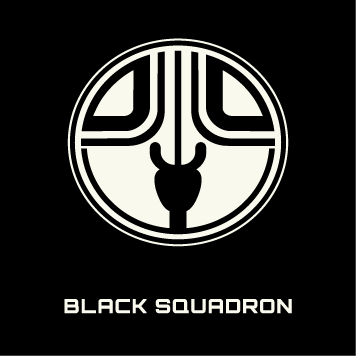
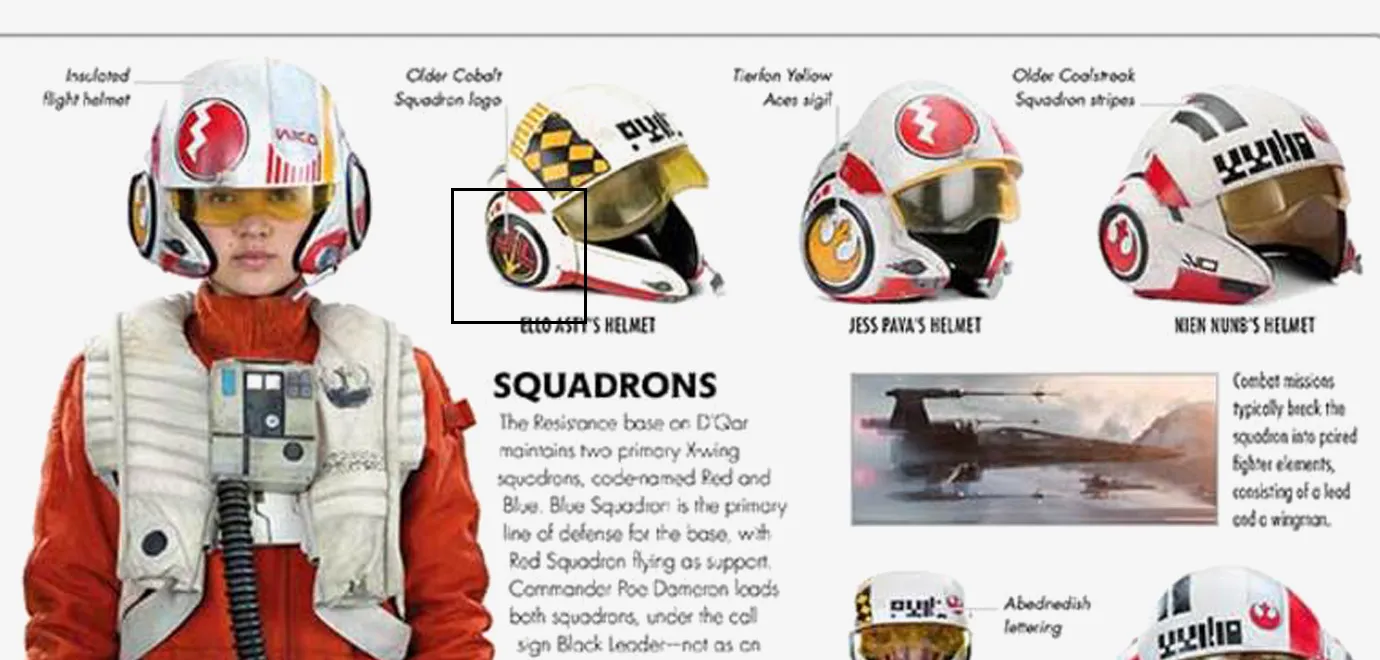
Black Squadron was Poe Dameron's special-missions team within the Resistance. I included its badge because it shows how the Resistance kept the Rebel tradition of giving smaller flying units their own marks beneath the larger starbird. However, because I couldn't find a clear depiction of the Black version, I used the above reference image from the Cobalt Squadron.
031
Clone Force 99
The Clone Wars, S7E1: The Bad Batch
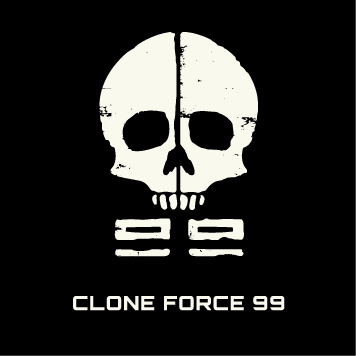
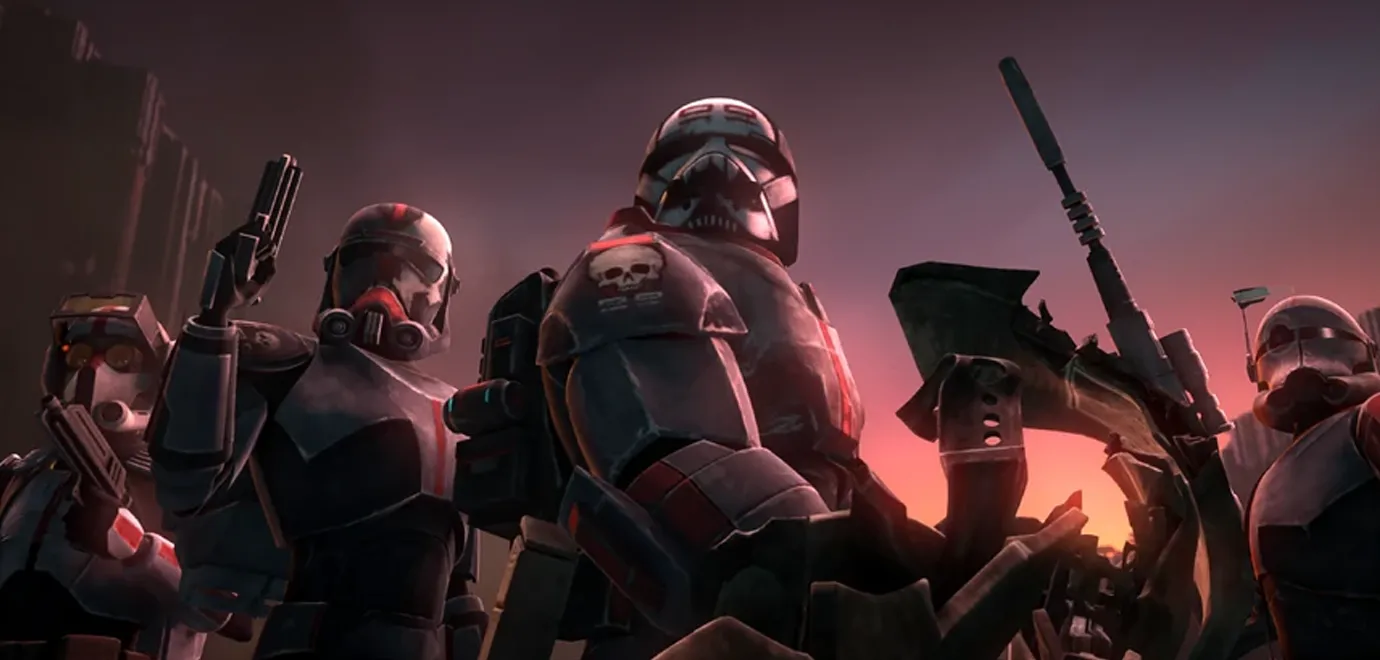
Most Republic units use clean military badges. Clone Force 99 chose a skull. It appears across their modified armour, including on Wrecker's shoulder in this scene, with the number 99 placed underneath. The skull is an aggressive choice. Like the mark on a pirate flag, it suggests danger and death before the squad has fired a shot. It fits an experimental unit sent on missions regular clones couldn't handle.
032
Wolfpack
Battlefront II
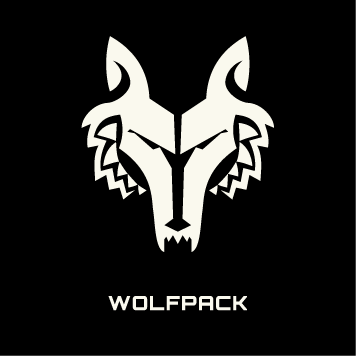
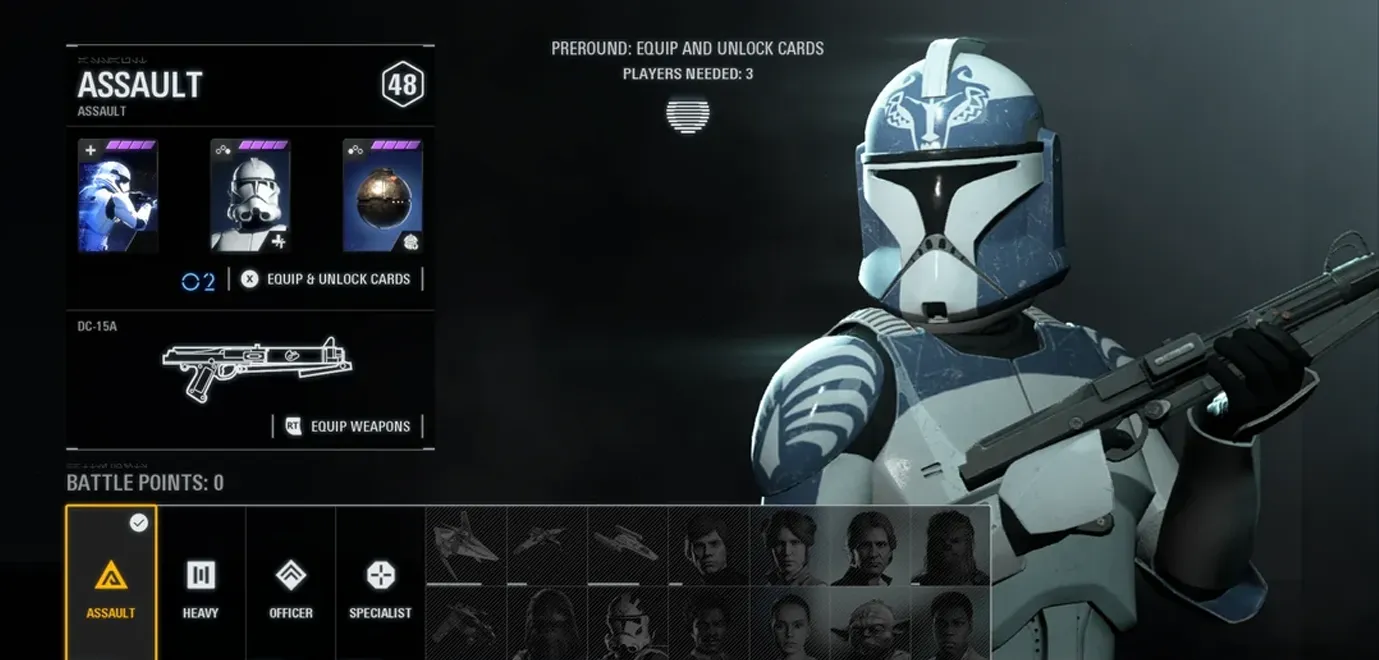
The wolf works first as a statement of identity. The 104th Battalion was known as the Wolfpack and served under Commander Wolffe and Jedi General Plo Koon, who used the callsign Wolf Leader. The mark connects both leaders to the soldiers beneath them. Its mirrored head spreads across the helmet, making each trooper part of the same pack. To me, the wolf also suggests loyalty and coordination, but with enough aggression to warn an enemy what happens when the group moves together. Battlefront II gives one of the clearest views of the complete design.
033
91st Recon Corps
Episode III: Revenge of the Sith
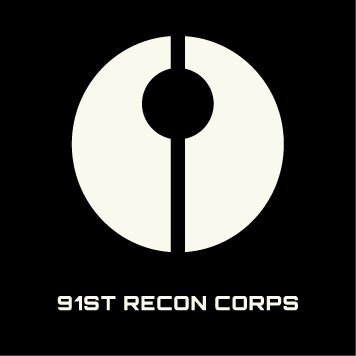
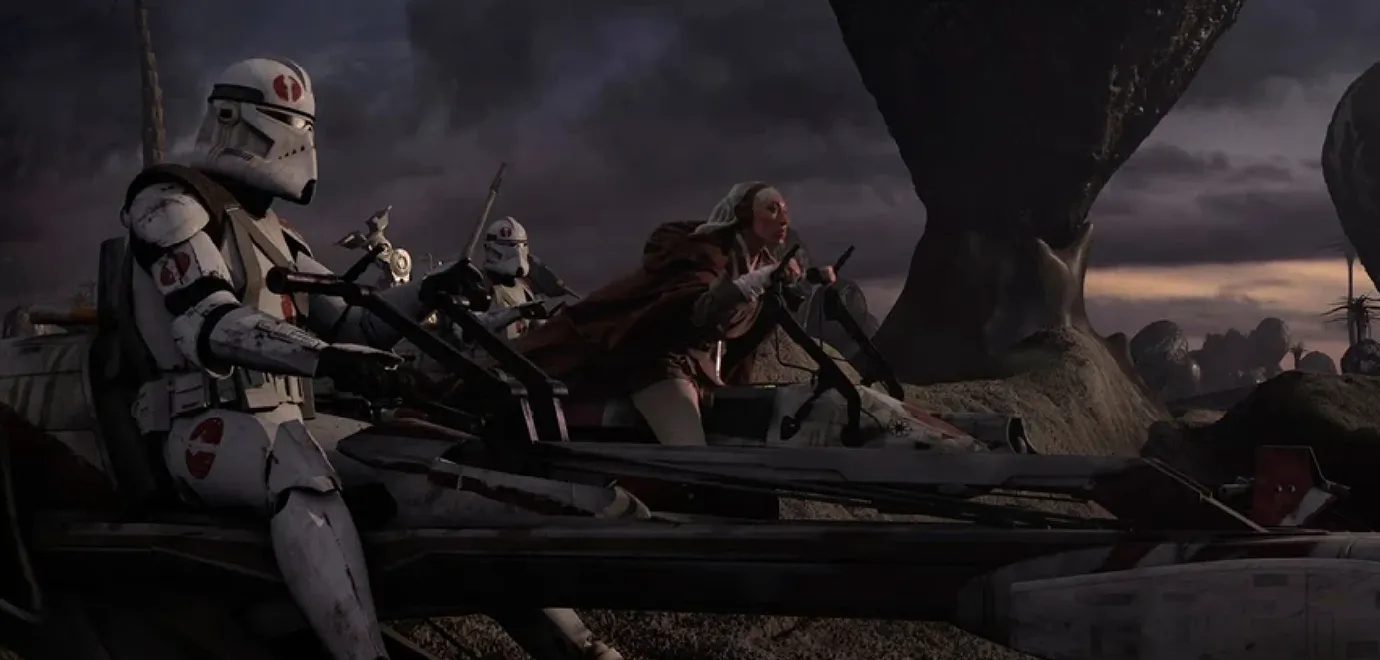
The 91st Mobile Reconnaissance Corps carried this mark across their helmets, shoulders and leg armour, making it one of the most repeated clone insignias on the poster. The unit specialised in reconnaissance and fast movement, often using BARC speeders under Commander Neyo. I could not find an official meaning for the split circle and central dot. To me, it resembles either a target viewed through a sight or a wheel around an axle. Both ideas would suit soldiers whose job was to move ahead of the main force and locate the enemy.
034
Eeth Koths Unit
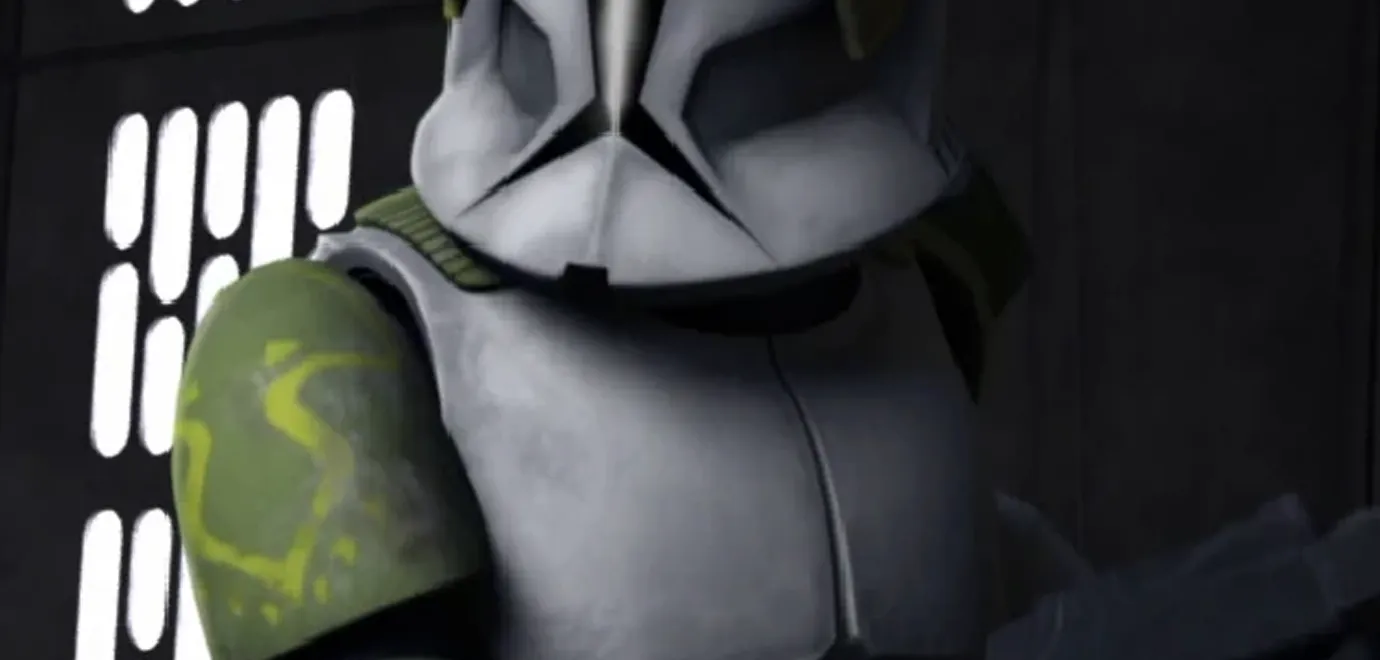
The Clone Wars, S2E9: Grievous Intrigue
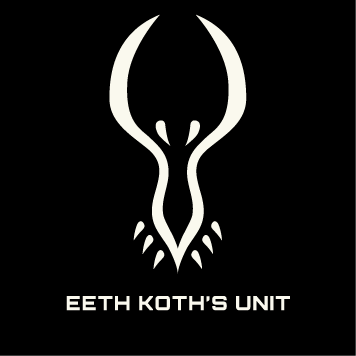
This was one of the harder clone marks to find. It appears briefly on Captain Lock's shoulder as his green-and-yellow troops defend Eeth Koth's cruiser from General Grievous. The unit never received a confirmed name, so "Eeth Koth's unit" is a practical label rather than an official title. I could not find an established meaning for the emblem either. Its long curved points resemble horns, which may be a visual reference to Koth's Zabrak features. Its brief appearance is exactly why I wanted to preserve it on the poster.
035
Kamino Security
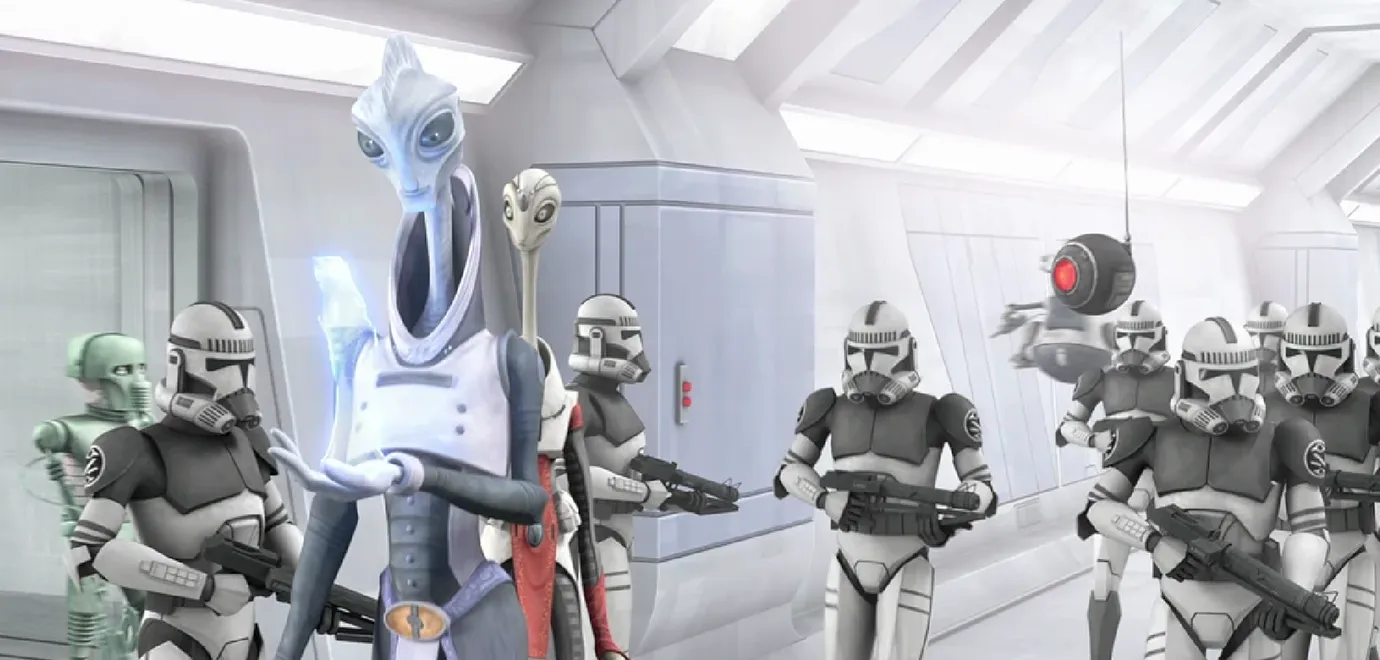
The Clone Wars, S6E1: The Unknown
These are not early versions of clone troopers. They are clone troopers assigned to protect Kamino, the world where the Republic's army was created and trained. Their grey armour follows the same basic pattern as the red Coruscant Guard, which makes sense for another security unit. The circular mark appears on their shoulder plates, but I could not find an official explanation for its inner shape. It may be a stylised letter or a Kaminoan design. Here the emblem works mainly as a badge of place and duty: these soldiers guard the source of the clone army.
036
Tango Company
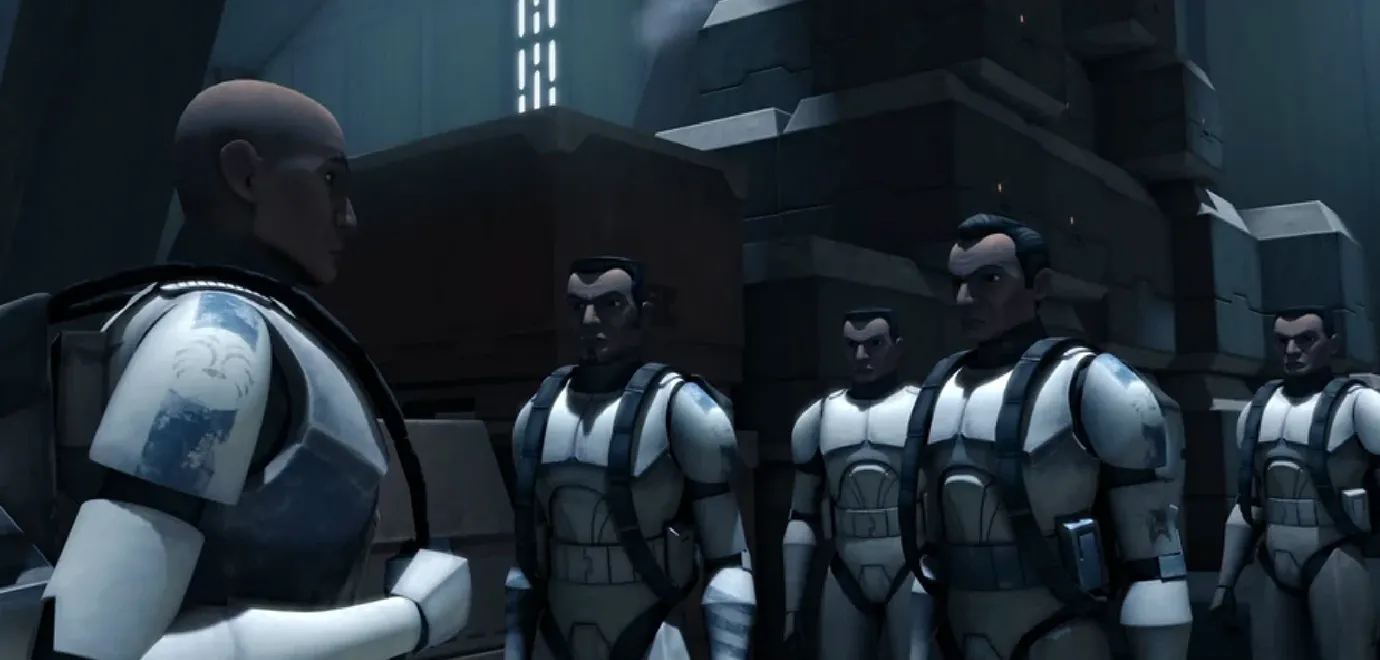
The Clone Wars, S2E8: Brain Invaders
The cat-like face is a stylised tiger, worn on the shoulder armour of Tango Company's clone troopers. Their pale blue markings separate them from the rest of the Republic army, while the tiger gives the company a more individual and aggressive identity. I could not find an official explanation for why this animal was chosen, so any deeper meaning remains uncertain. In Brain Invaders, the badge becomes especially noticeable because the company's infected soldiers turn against their own ship.
037
Clone Ordnance Specialist
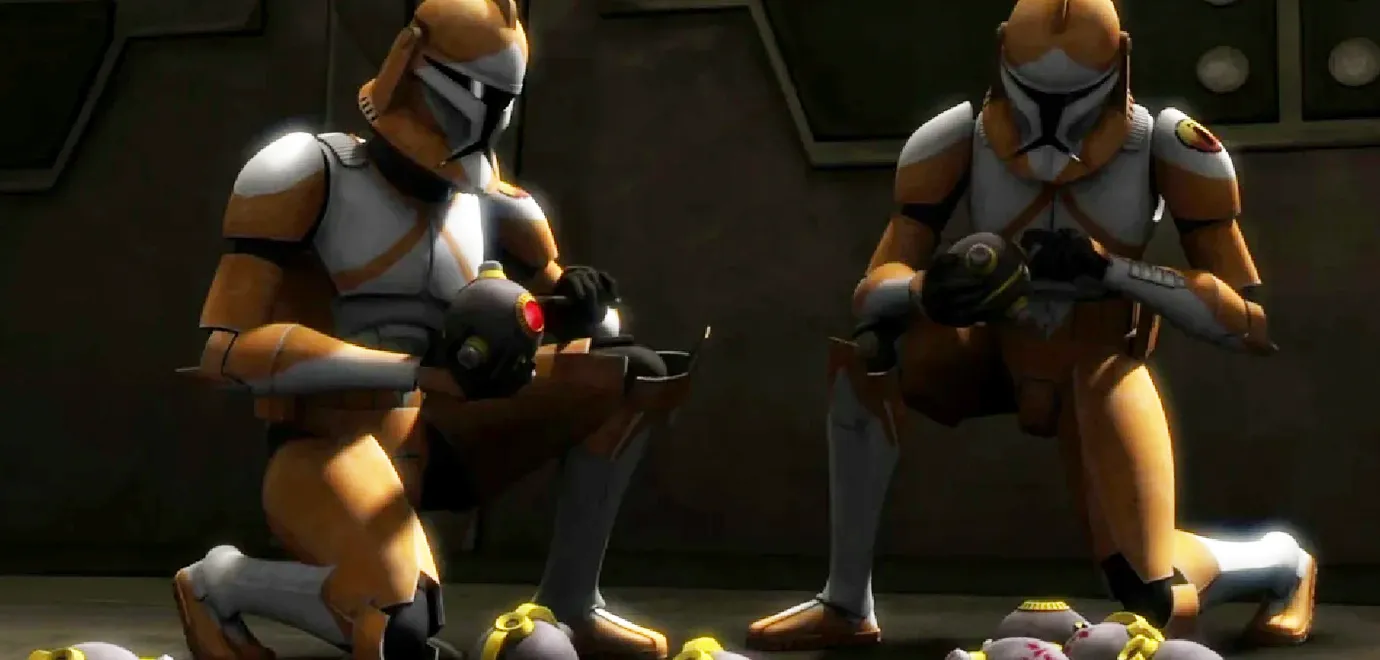
The Clone Wars, S1E17: Blue Shadow Virus
This is one of the most literal symbols in the collection. Clone ordnance specialists were trained to find and disarm explosives, so their shoulder badge shows a bomb at its centre. In Blue Shadow Virus, the orange-marked troopers work through Nuvo Vindi's laboratory to disable the charges linked to his deadly virus. I could not find an official explanation for the thin zigzag line. To me, it resembles a shockwave or electrical signal, adding the moment of detonation to an otherwise static object. The mark works almost like an instruction label: danger, explosives and the soldiers trained to deal with both.
038
Mimbanese Liberation Army
Wookieepedia
The Mimbanese Liberation Army first fought alongside the Republic against Separatist invaders, then continued its resistance when the Empire tried to seize Mimban's resources. Its soldiers blended into the planet's mud and fought with old Clone Wars equipment. But I have not found this emblem on their clothing, weapons, banners or surroundings. Wookieepedia associates this mark with the canon group so I kept it in the poster, yet I have not traced the graphic back to an official source. If you have found one, let me know.
039
Noble Court
Wookieepedia
The second symbol from the mobile game Star Wars: Uprising. The enclosed, gear-like emblem feels more formal than the improvised rebel marks around it, well suited for a government built on rank and ceremony. But I could not find it displayed on clothing, ships or buildings inside the story, so its use and meaning remain unclear. Its place in the Light Side section comes from the Court's alliance with the Uprising.
Dark Side
Back to top040
Sith Order
YouTube channel Star Wars Kids
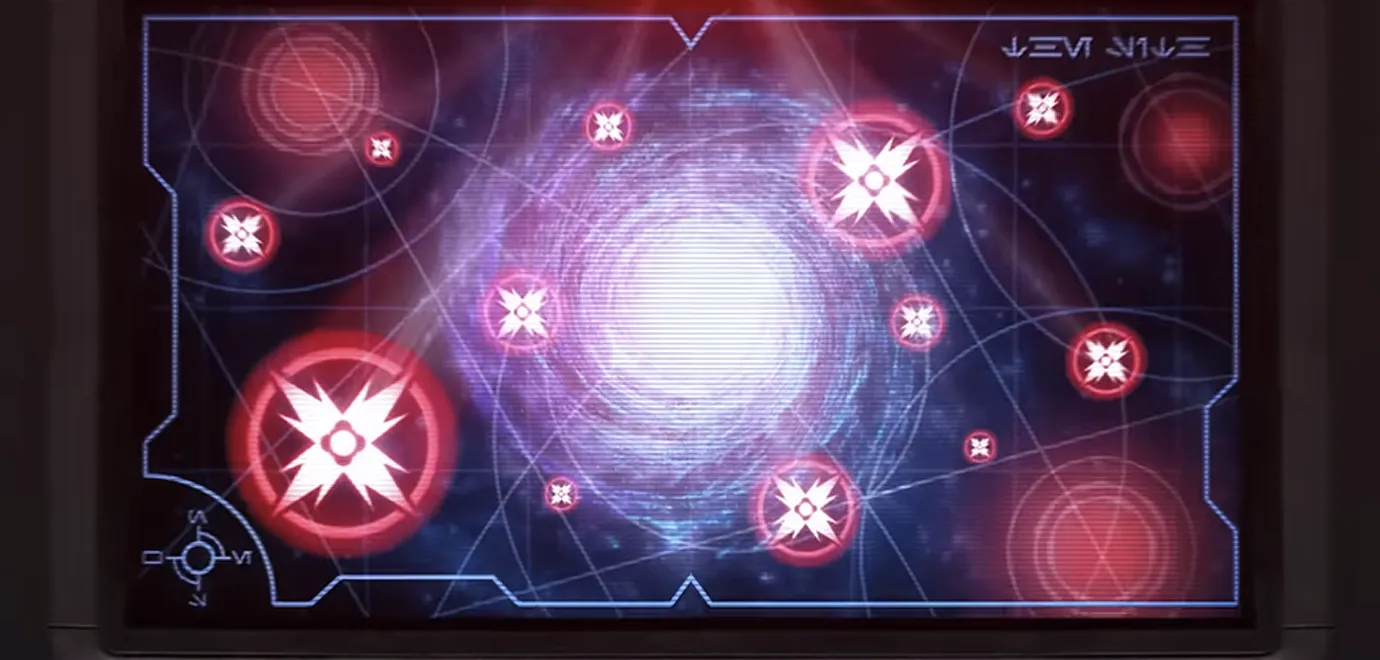
Unlike the Imperial cog, this mark is difficult to find inside the Star Wars universe. The Sith hid their existence for centuries under the Rule of Two, so the absence of flags and uniforms is explainable. I found the emblem in official explanatory material, including a Star Wars Kids video, rather than in a film or series scene. Its jagged rays surround a ringed centre, resembling an explosion or a darkened sun. I use it to open the Dark Side section because the Sith stand behind many of the powers that follow.
041
Sith Empire
Star Wars: Squadrons
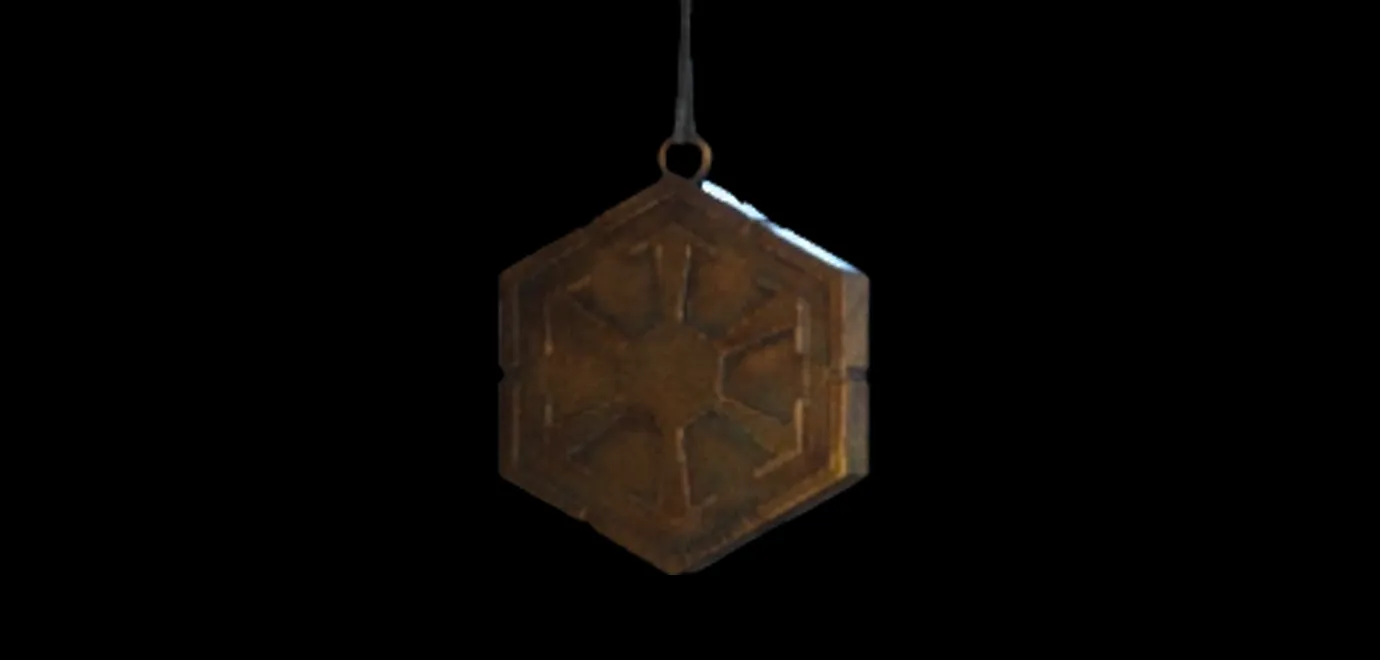
This is an unusual bridge between Legends and canon. The six arrows radiate from a central hexagon, suggesting power spreading outward from one controlled centre. Its hard geometry also places it in the same visual family as the Imperial symbols that follow. The Sith Empire and most of its history belong to Legends, yet Star Wars: Squadrons brought its emblem into canon as a medallion hanging inside an Imperial cockpit.
042
Sith Eternal
Episode IX: The Rise of Skywalker
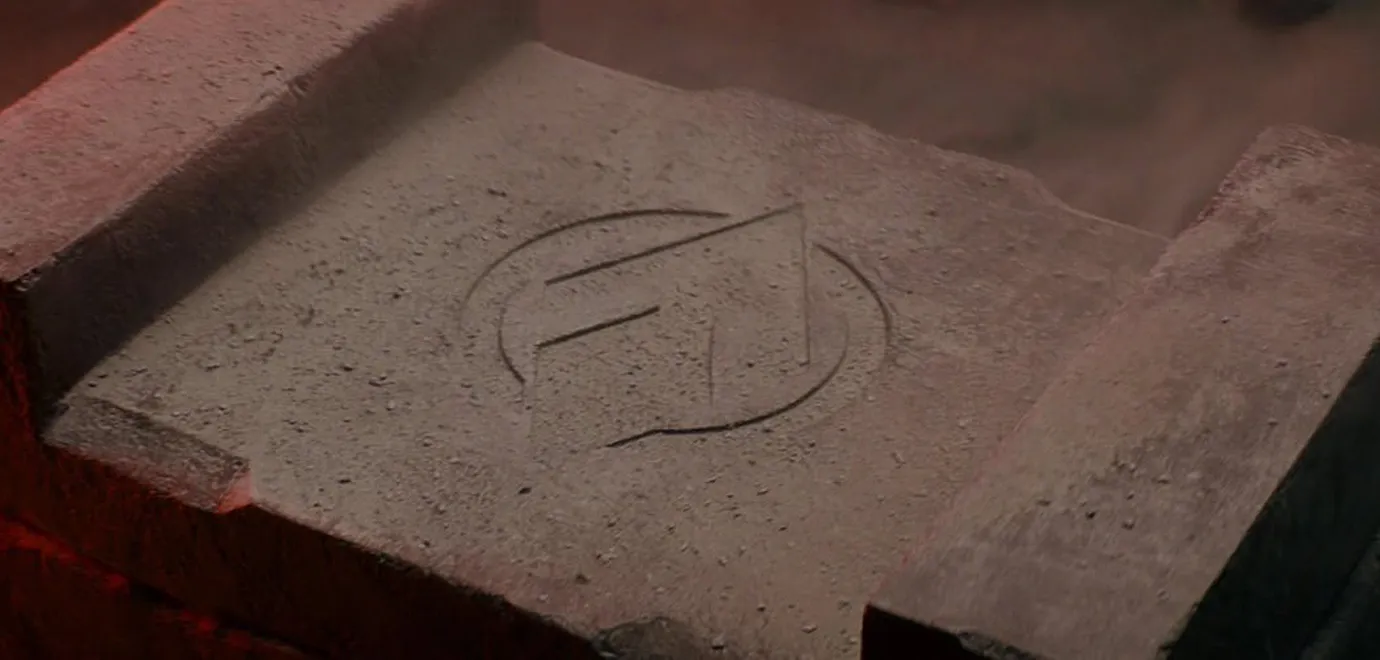
The Sith Eternal crest appears here carved into stone on Exegol, making it feel less like a modern military badge and more like an ancient religious mark. Its long central shape is officially described as dagger-like, although at first glance it also resembles a mask to me. The surrounding circle gives the symbol a closed and ceremonial appearance. That suits the Sith Eternal, a hidden cult that preserved Sith traditions and served Palpatine in secret. The mark also appeared on clothing and equipment, but this carved version shows its connection to the order's temples and rituals most clearly.
043
Inquisitorius
Obi-Wan Kenobi, Part I
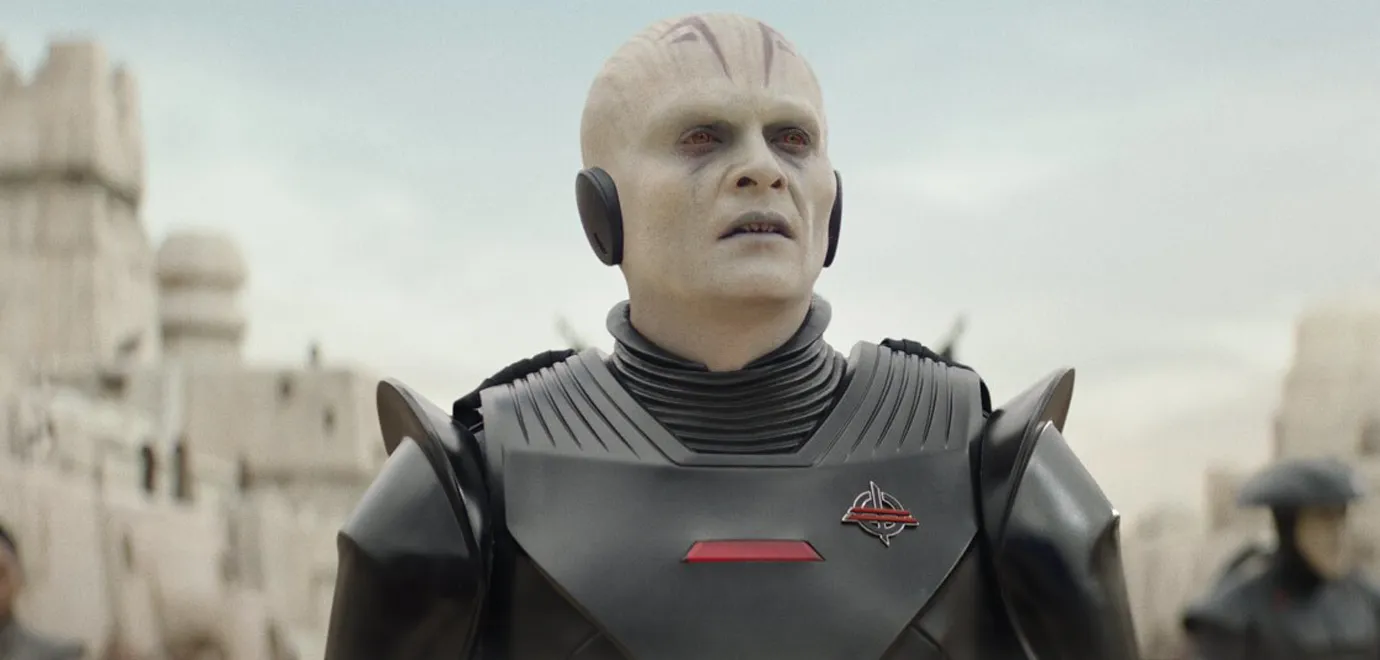
The order consisted of dark-side agents, many of them fallen Jedi, who hunted survivors of Order 66 for the Empire. The badge was worn by the Grand Inquisitor depicted above and later by the Third Sister when she claimed his position. Its circle, crossbar and long central point may echo the ringed lightsabers carried by the Inquisitors.
044
Galactic Empire
Episode IV: A New Hope
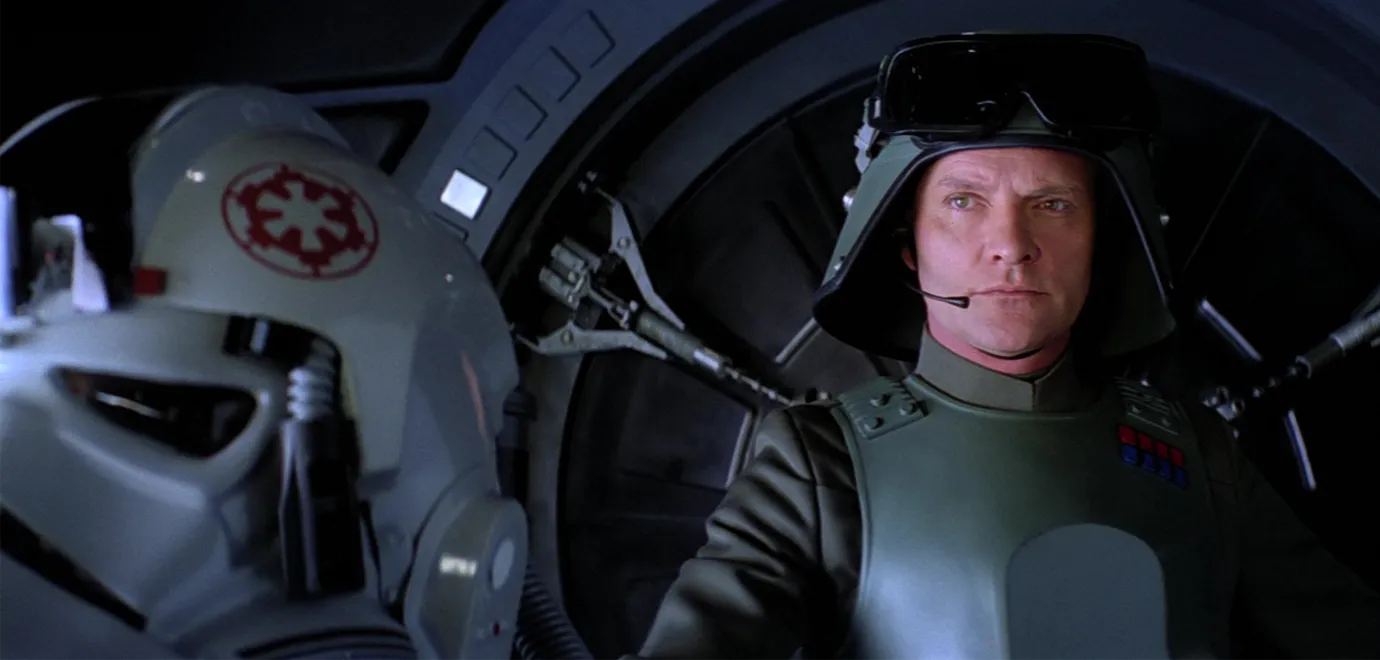
The Empire did not invent its visual language from nothing. It changed the Republic's eight-spoked crest into a harder six-spoked cog, then placed it everywhere: on helmets, uniforms, ships, flags and propaganda. Few symbols in Star Wars are used with the same consistency. I see it as more than a faction mark. Wherever it appears, it tells you that the Empire controls the space. The next entries show how that visual system spread into its many departments and military units.
045
Imperial Security Bureau
Andor, S1E4: Aldhani
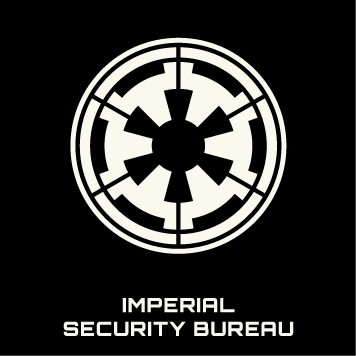
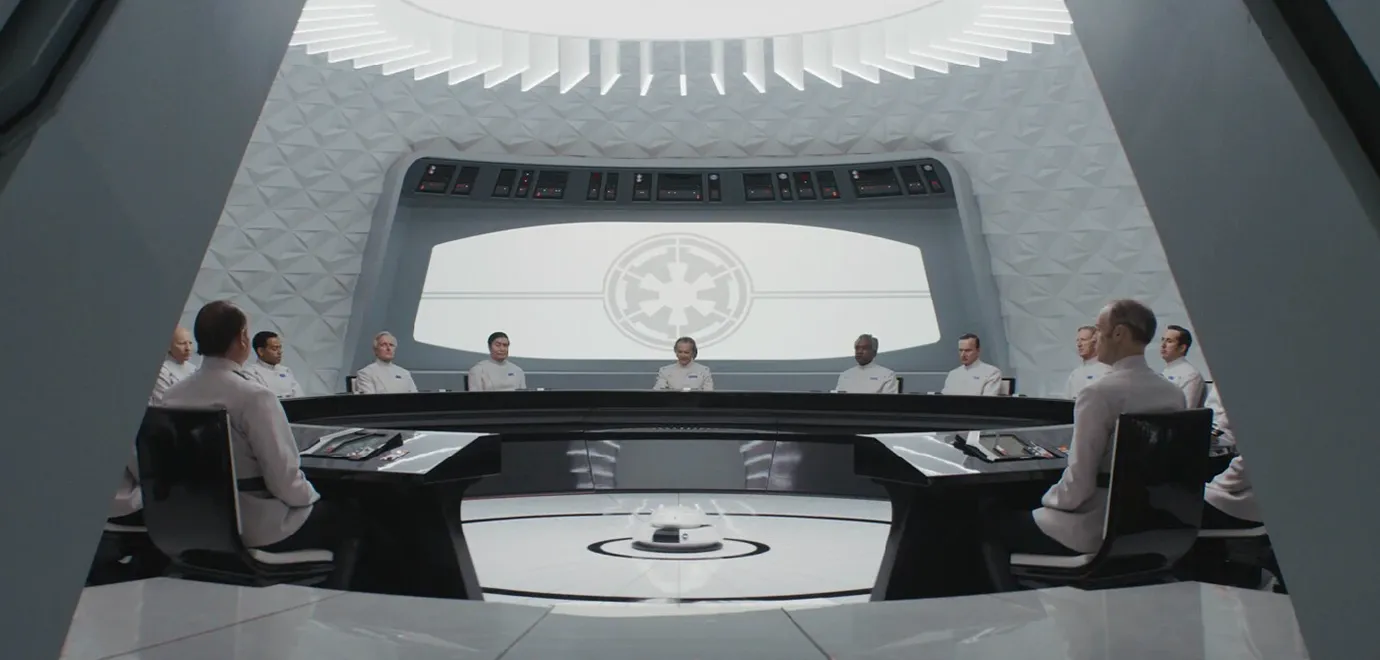
The Imperial Security Bureau keeps the Empire's six-spoked cog, then adds a second ring and lines that cut through its centre. To me, these additions resemble a target or surveillance grid, which suits an agency that searches for dissent and the first signs of rebellion. In Andor, the crest fills the wall behind the supervisors' meeting table.
046

Imperial Information Office
Star Wars Rebels, S1E8: Empire Day
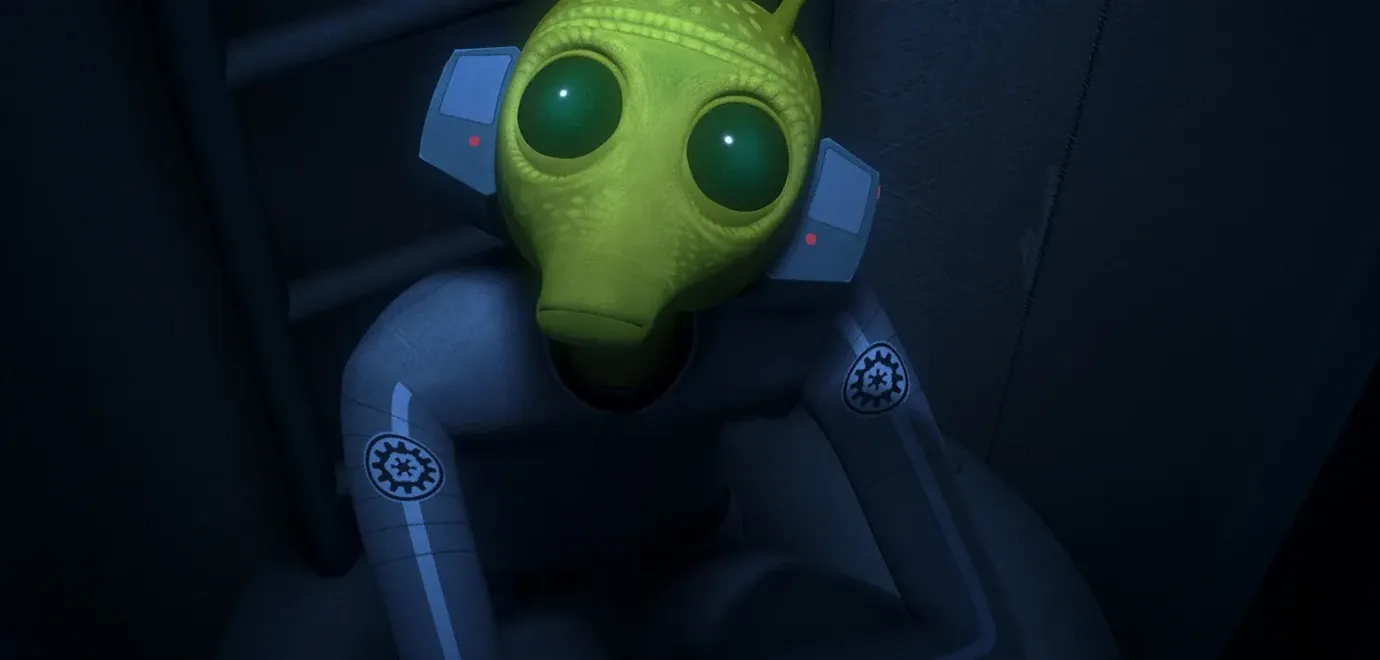
The Imperial Information Office turns the Empire's six-spoked crest into a cog within a larger cog. It looks like one part inside the wider Imperial machine, which suits an intelligence office built around collecting and processing information. In Star Wars Rebels, the badge appears on both sleeves of Tseebo's uniform. He used his cybernetic headgear to steal Imperial plans and secrets, so the reference image connects the symbol directly to the work of the department.
047

Imperial Press Corps
Alton Kastle from Star Wars Rebels
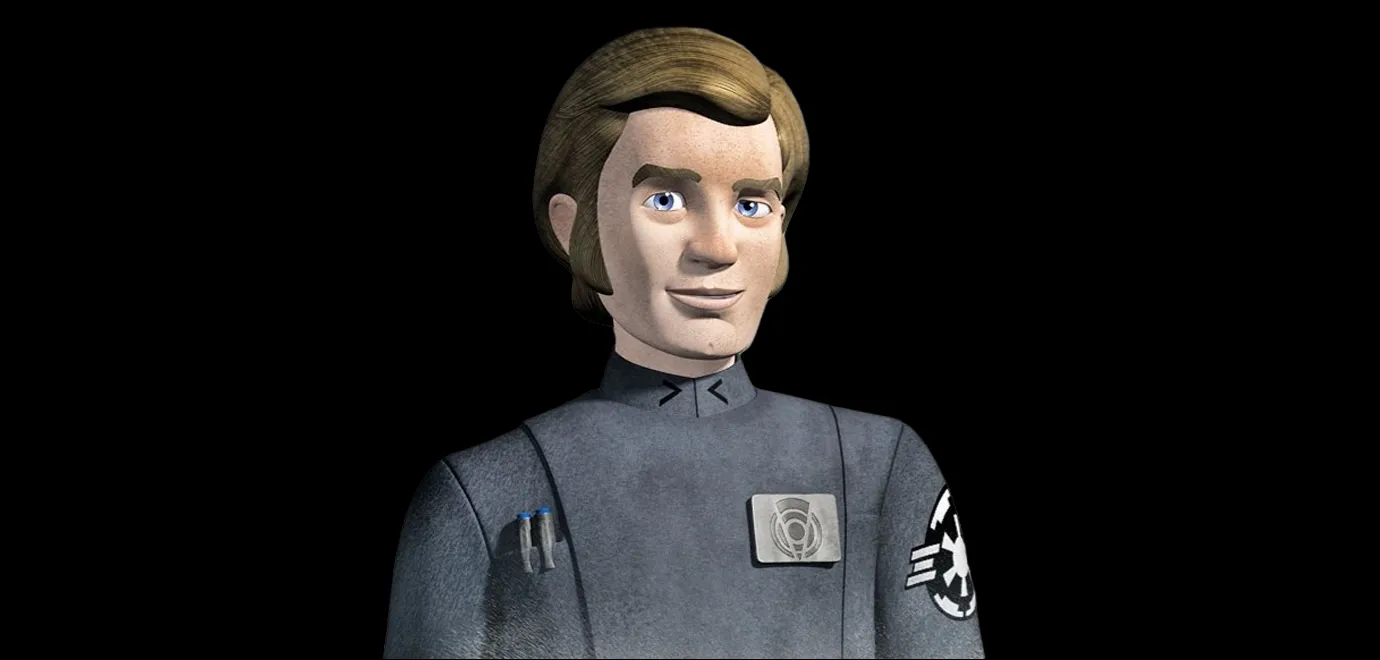
The Imperial Press Corps moves away from the familiar cog and uses a more independent mark. Concentric circles are crossed by two sharp diagonal forms, creating a compact symbol that reminds me of the work of Stefan Kanchev: simple, balanced and memorable. The badge appears on Alton Kastle, a HoloNet journalist who presented the Empire's version of events in Star Wars Rebels. It gives Imperial propaganda its own identity.
048

Imperial Department of Military Research
Wookieepedia
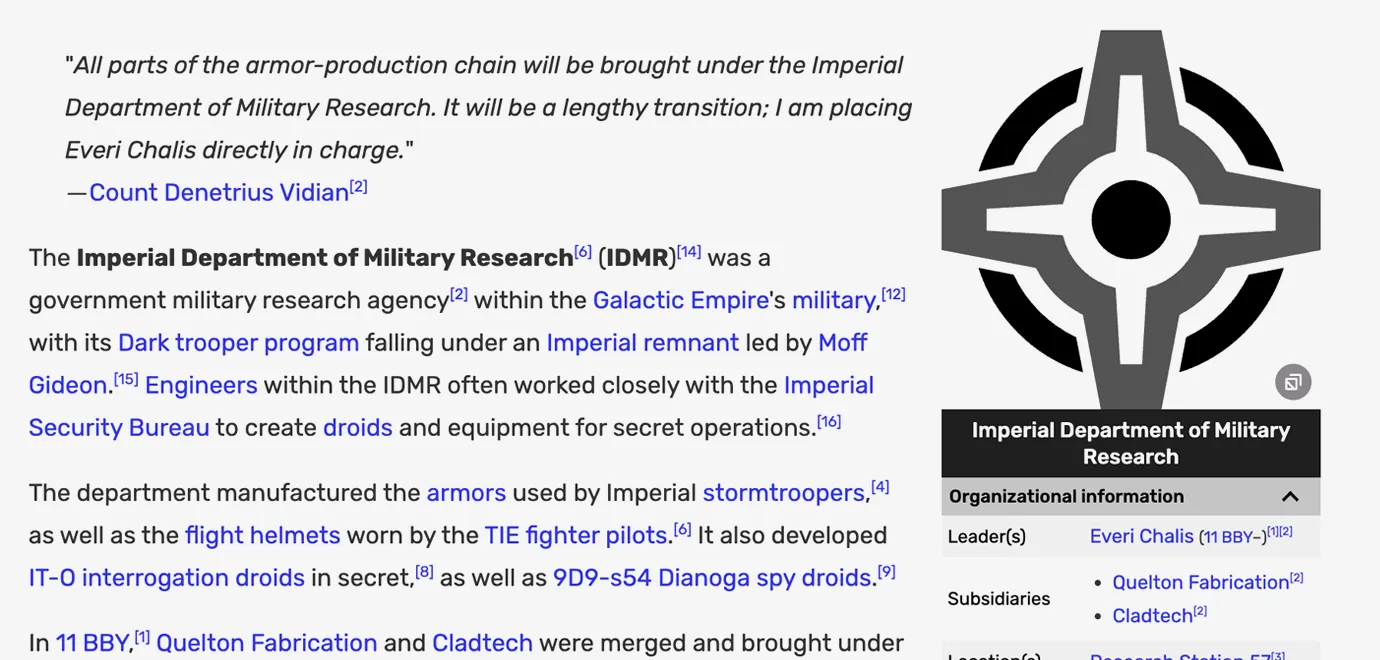
The Imperial Department of Military Research replaces the Empire's six spokes with four heavy arms around a central circle. To me, it resembles a crosshair, which suits a department that developed armour, droids and equipment for secret military projects. I have not found a clear shot of the symbol. For now, the reference image shows the symbol as documented by Wookieepedia.
049
Tarkin Initiative
Rogue One: A Star Wars Story
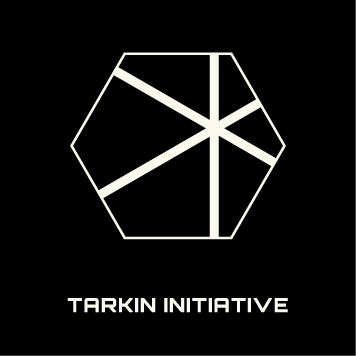
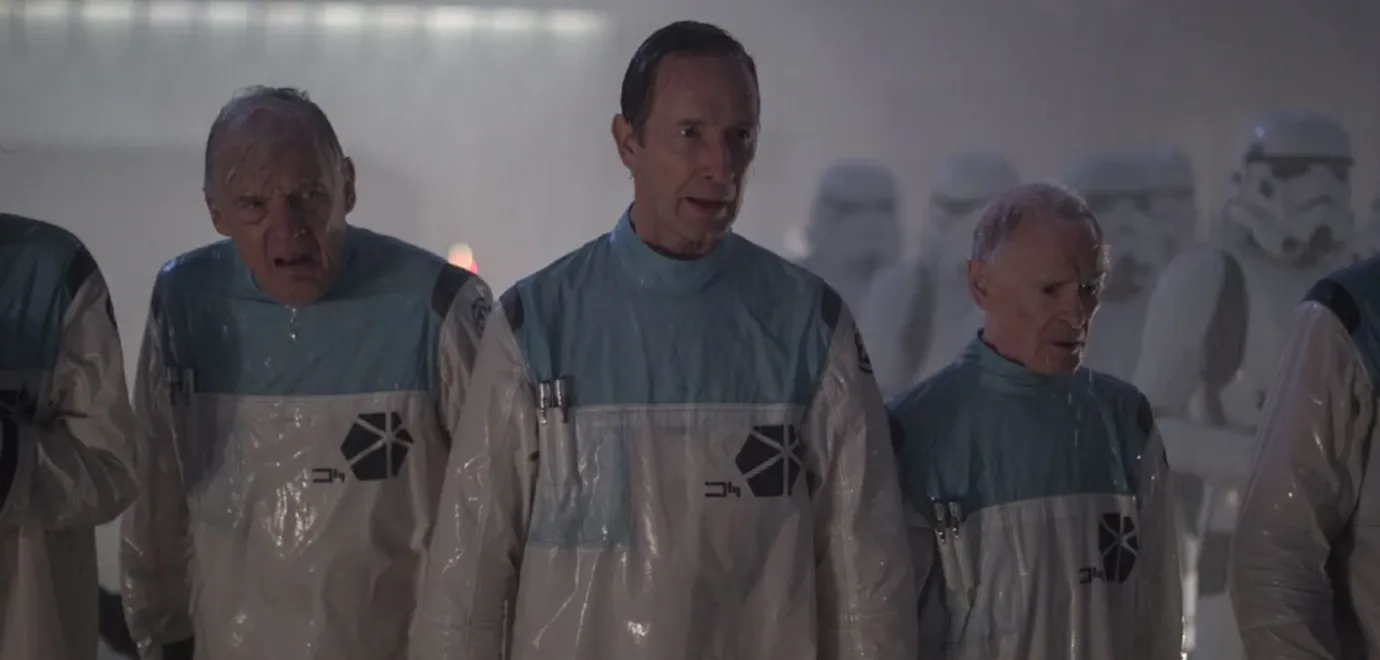
The Tarkin Initiative leaves the Imperial cog behind and uses a faceted hexagon instead. The shape represents a kyber crystal, the material its scientists studied on Eadu while helping to turn the Death Star into a working weapon. At first glance, it could pass for the logo of an 80's technology company. That almost makes it more fitting: the clean, neutral mark hides the scale of what the organisation was building. In Rogue One, it appears on the coveralls of the scientists working under Krennic.
050
Seventh Fleet
Star Wars Rebels, S3E17: Through Imperial Eyes
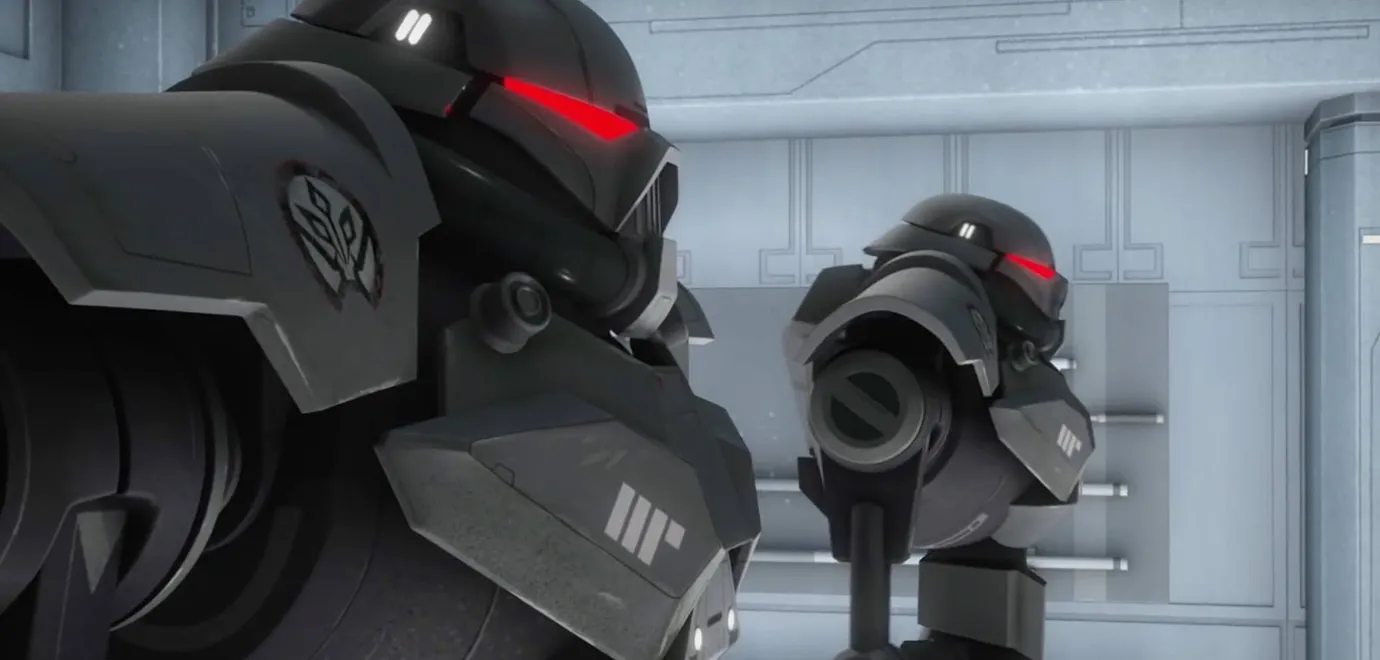
The Seventh Fleet does not use another version of the Imperial cog. Its badge is a stylised chimaera, a three-headed creature that became Thrawn's personal symbol and gave his flagship its name. Officers, stormtroopers and sentry droids under his command wore it as a sign of allegiance. The large figures in this still are DT-series sentry droids, which Thrawn uses for sparring. Their pauldrons show how his personal mark spread across the wider fleet.
051

Skystrike Academy
Star Wars Rebels
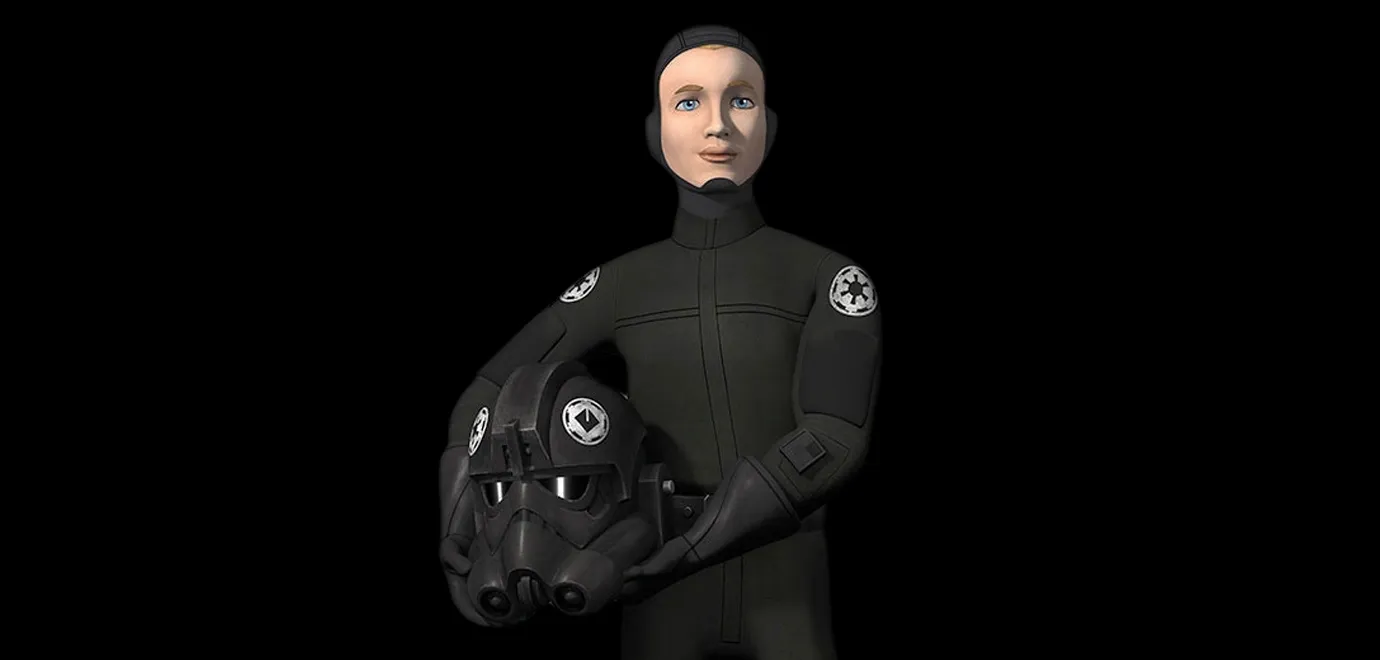
Skystrike Academy keeps the Empire's circular frame but gives it a much heavier centre. The diamond and upward point make me think of a fighter climbing into the sky. I like how clearly it belongs to the Imperial system without copying the familiar cog. In Star Wars Rebels, Sabine wears the academy badge on her borrowed pilot helmet while infiltrating its elite training programme. The standard Imperial crest remains on her shoulders.
052
Inferno Squad
Battlefront II
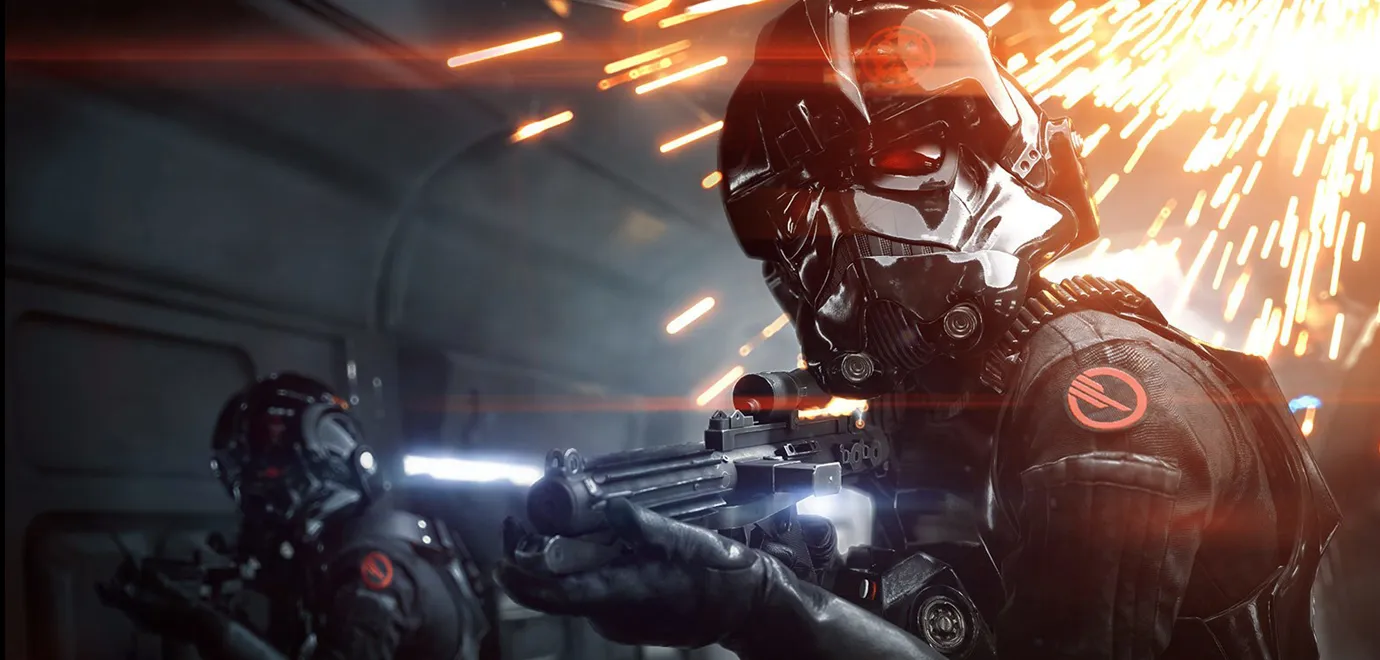
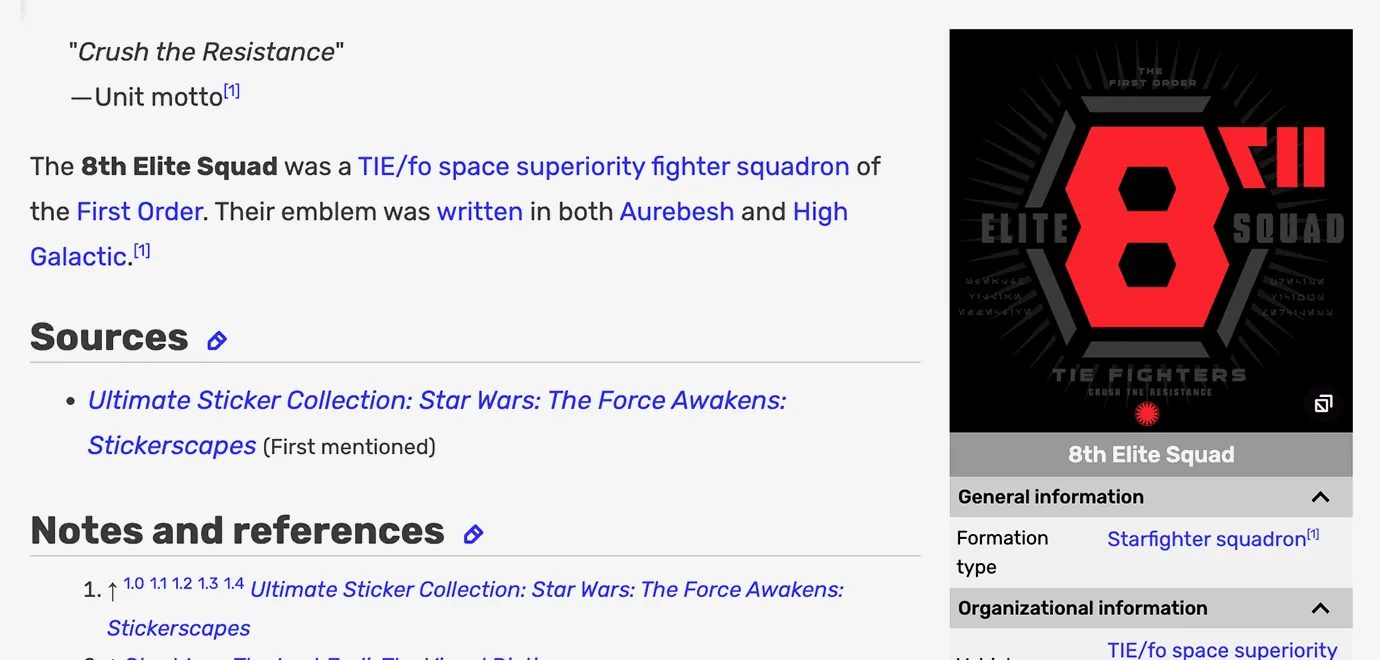
Inferno Squad drops the Imperial cog for a smoother, more compact badge: a circle cut by three sharp diagonal lines. The rounded form feels controlled and precise, while the cuts add speed and aggression. I have not found an official meaning for the design, but it suits an elite Imperial special forces unit trained for both covert missions and direct combat. In Battlefront II, the red emblem stands out on Iden Versio's shoulder against the squad's black armour.
053
8th Elite Squad
Wookieepedia
054
First Order
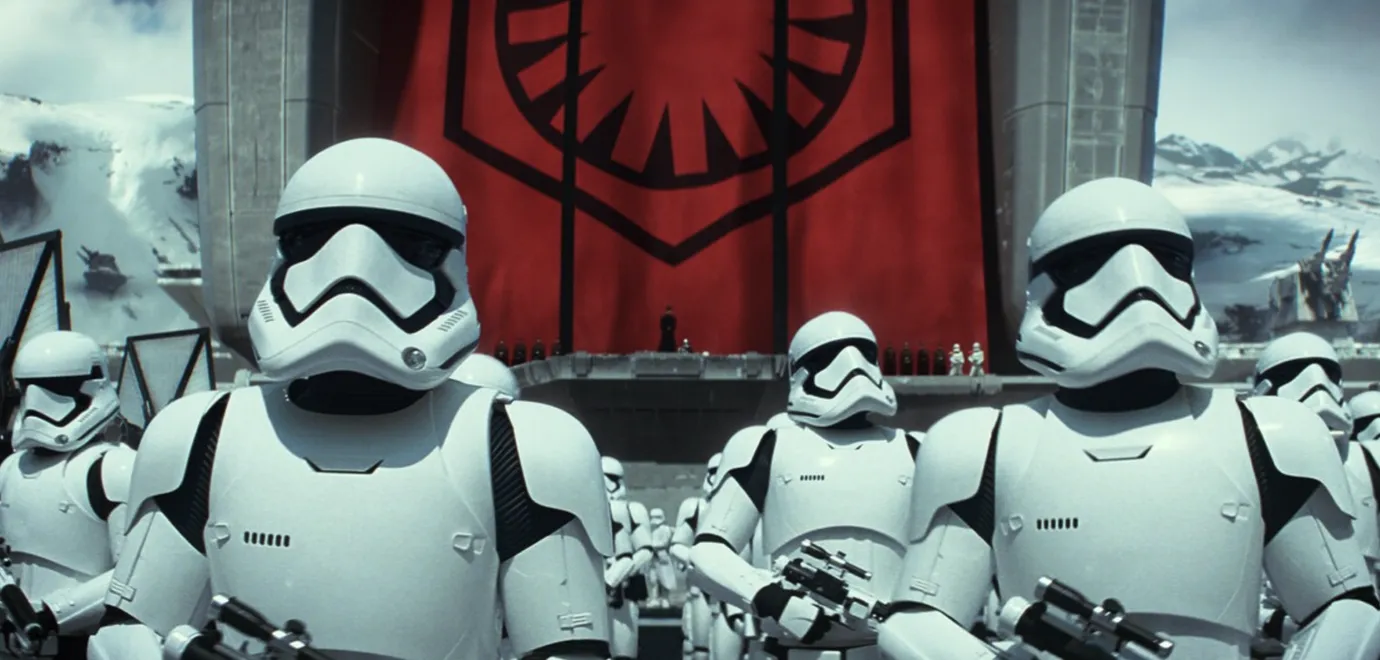
Episode VII: The Force Awakens
The First Order keeps the Empire's radial structure but turns it into something sharper and more absolute. Narrow rays are locked inside a double hexagon, giving the mark the feel of a sealed sun. In The Force Awakens, it dominates red banners behind rows of identical troops. Repetition, symmetry and the limited colour palette make it an effective authoritarian symbol: individual parts disappear into one controlled system. The resemblance to the Nazi-linked Black Sun is striking, although I have not found proof that it directly inspired the design.
055
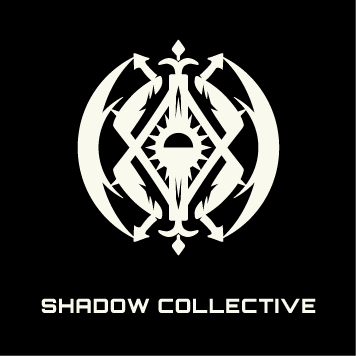
Shadow Collective

Official merchandise
The Shadow Collective emblem looks less like one symbol and more like several marks forced to share the same frame. Arrows, crescents, diamonds and a sun-like centre overlap in a dense but symmetrical design. I see that complexity as a fitting image for Maul's alliance, which brought Death Watch, Black Sun, the Pyke Syndicate and the Hutt Clan together under one command. I have not found the badge inside a film, series, comic or game. The design appears through official merchandise connected to Maul's Shadow Collective lightsaber.
056
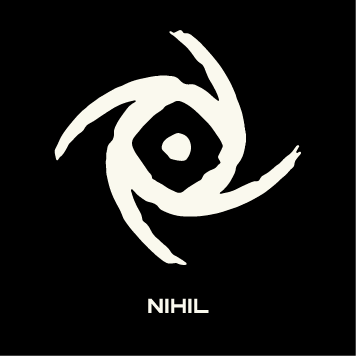
Nihil
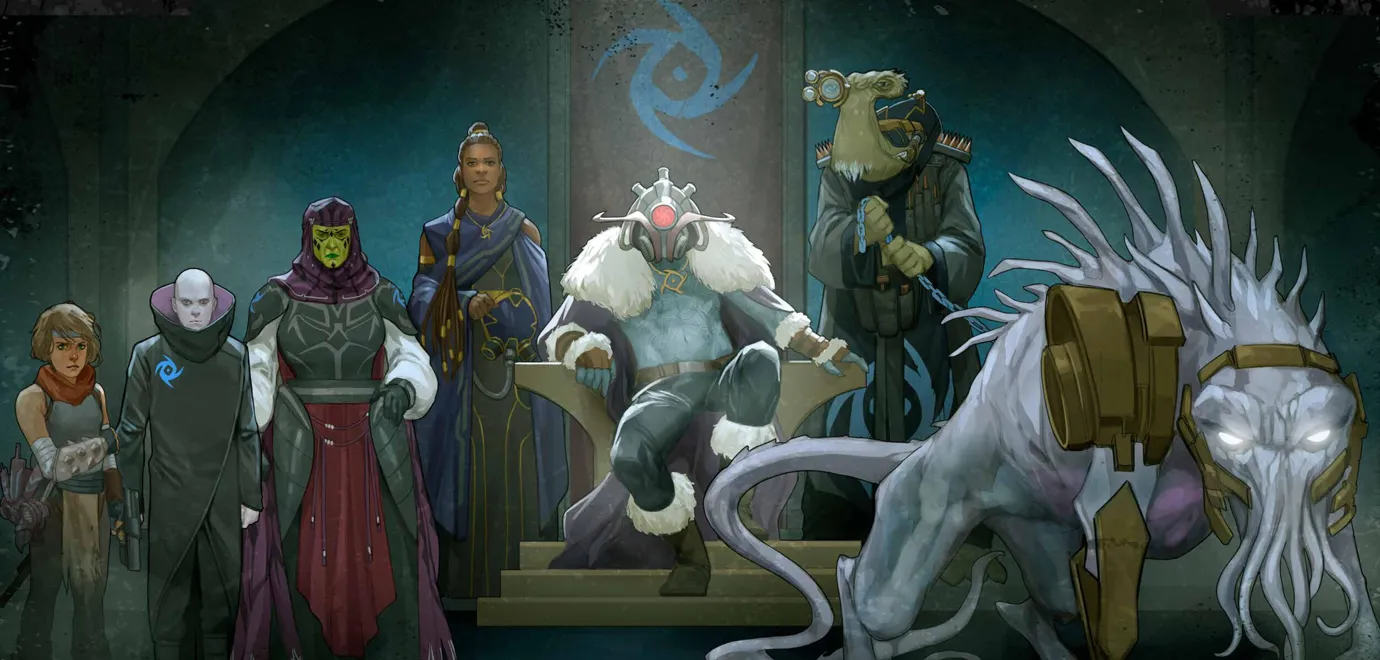
The High Republic
After the strict geometry of the Imperial symbols, the Nihil mark feels almost in motion. Its four rough arms turn around a central eye, somewhere between a storm, a whirlpool and a galaxy. I read it as a fitting symbol for marauders who call their leader the Eye, organise their forces into Tempests and use secret hyperspace Paths to appear where they are least expected. In this High Republic artwork, the blue mark appears on both clothing and the wall behind the group. It gives a patchwork collection of raiders one shared identity.
057
Confederacy of Independent Systems
Star Wars Propaganda: A History of Persuasive Art in the Galaxy
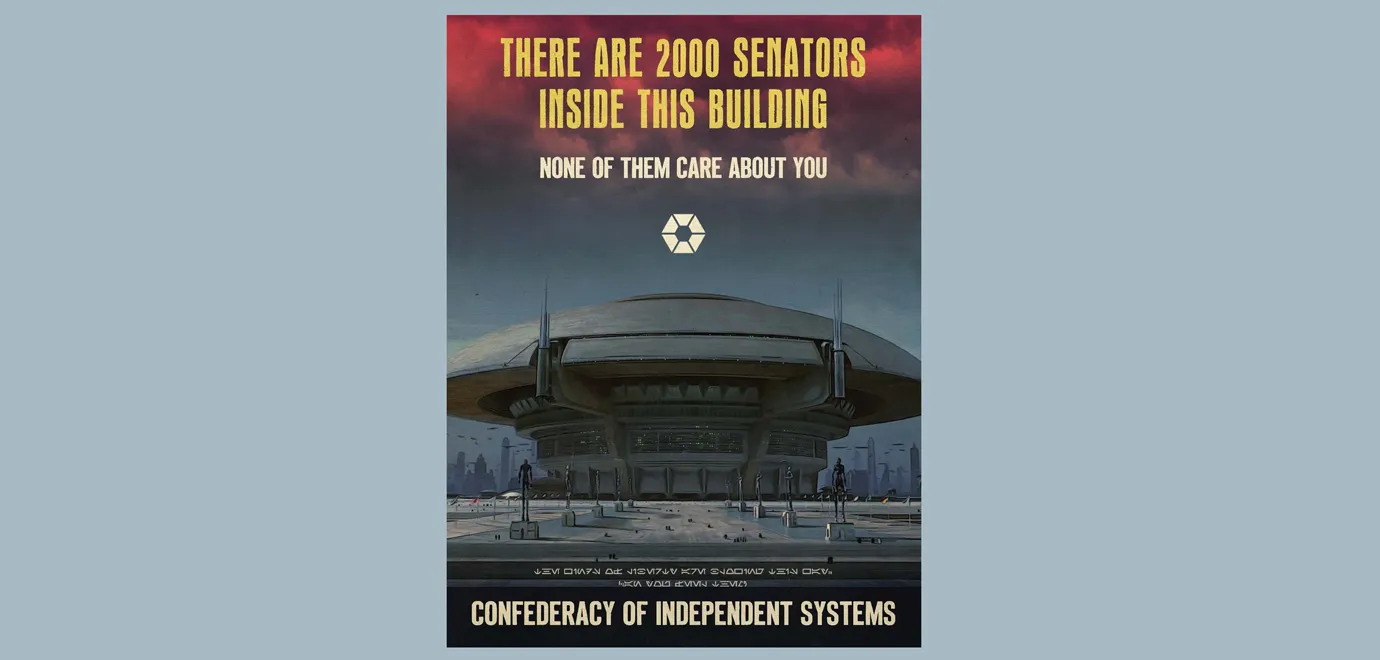
The Separatist emblem is a hexagon divided into six parts around a smaller centre. I have not found an official meaning for the geometry, but it suits a confederacy: separate systems held together by one shared cause while keeping their own identity. Thousands of worlds left the Republic over taxation, corruption and the neglect of systems beyond the Core, although powerful corporations also supplied the movement with droid armies, ships and credits. In this propaganda poster, the clean and ordered mark helps present that complicated alliance as one united alternative to the Republic.
058
Nightsisters
Wookieepedia
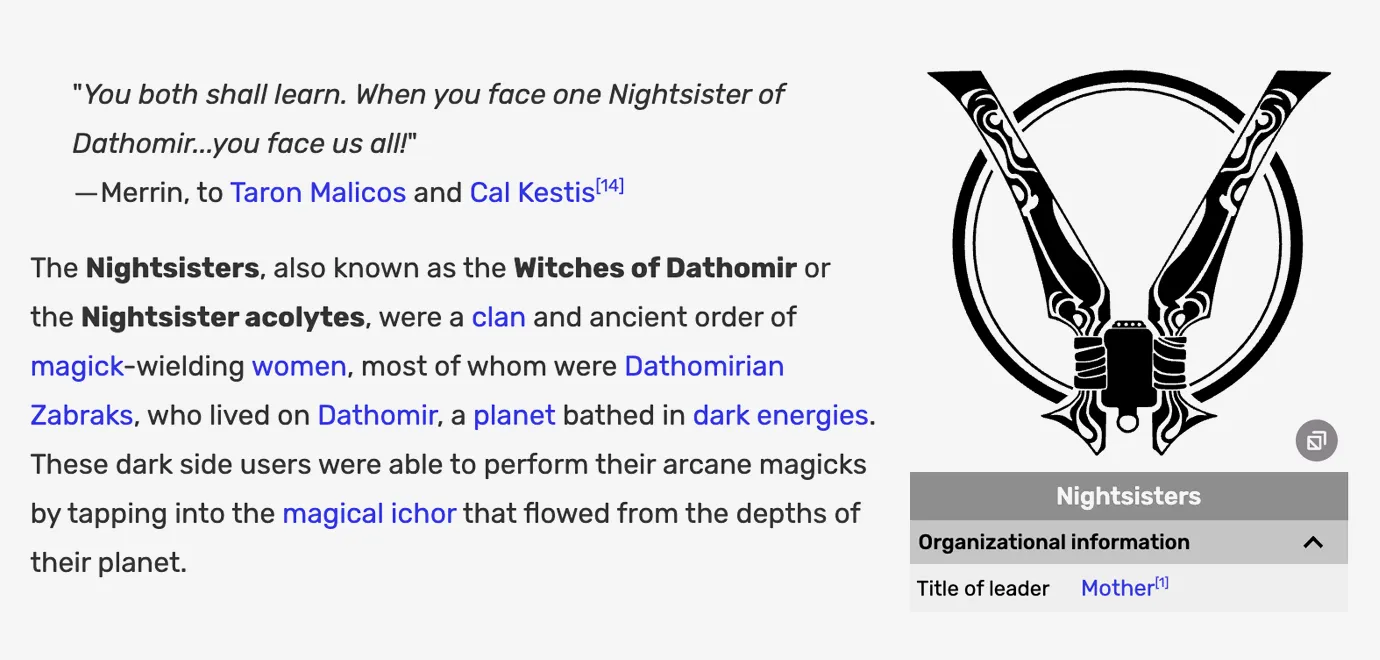
The Nightsister emblem feels ceremonial rather than political. Two decorated blades are bound together inside a circle, and their long curved shapes almost resemble bones wrapped in cloth. It suits a clan built around ritual and occult. The paired weapons can also suggest the idea that facing one Nightsister means facing the whole order. I have not yet found the mark in a film, series, comic or game, so the Wookieepedia canon page serves as the visual reference.
059
Death Watch
The Mandalorian, S1E8: Redemption
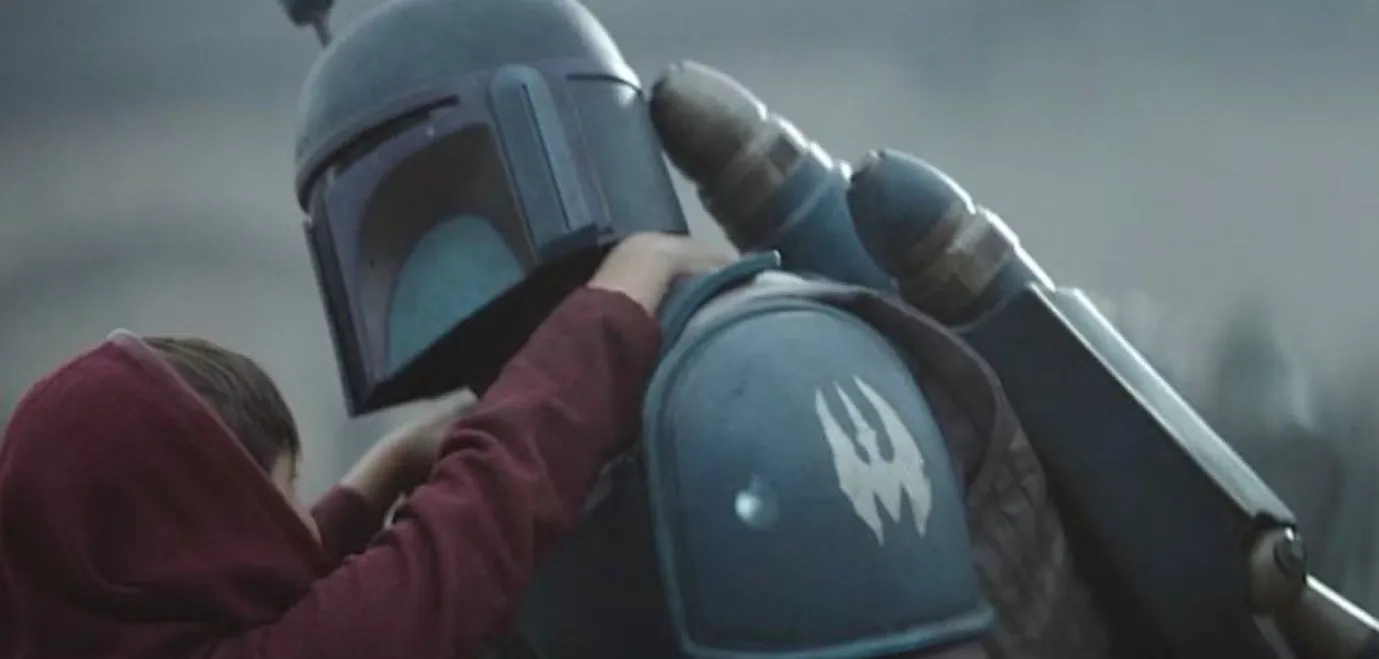
At first, the Death Watch emblem might look like three claw marks cut into a surface. It is actually a stylised shriek-hawk diving towards its prey. The mark began as the sign of Clan Vizsla and was later adopted by Death Watch, the Mandalorian faction led by Pre Vizsla that sought to overthrow Mandalore's pacifist government. In The Mandalorian, it appears on the shoulder of the warrior who rescues Din Djarin as a child. The brief detail connects his past to an older and more militant part of Mandalorian history.
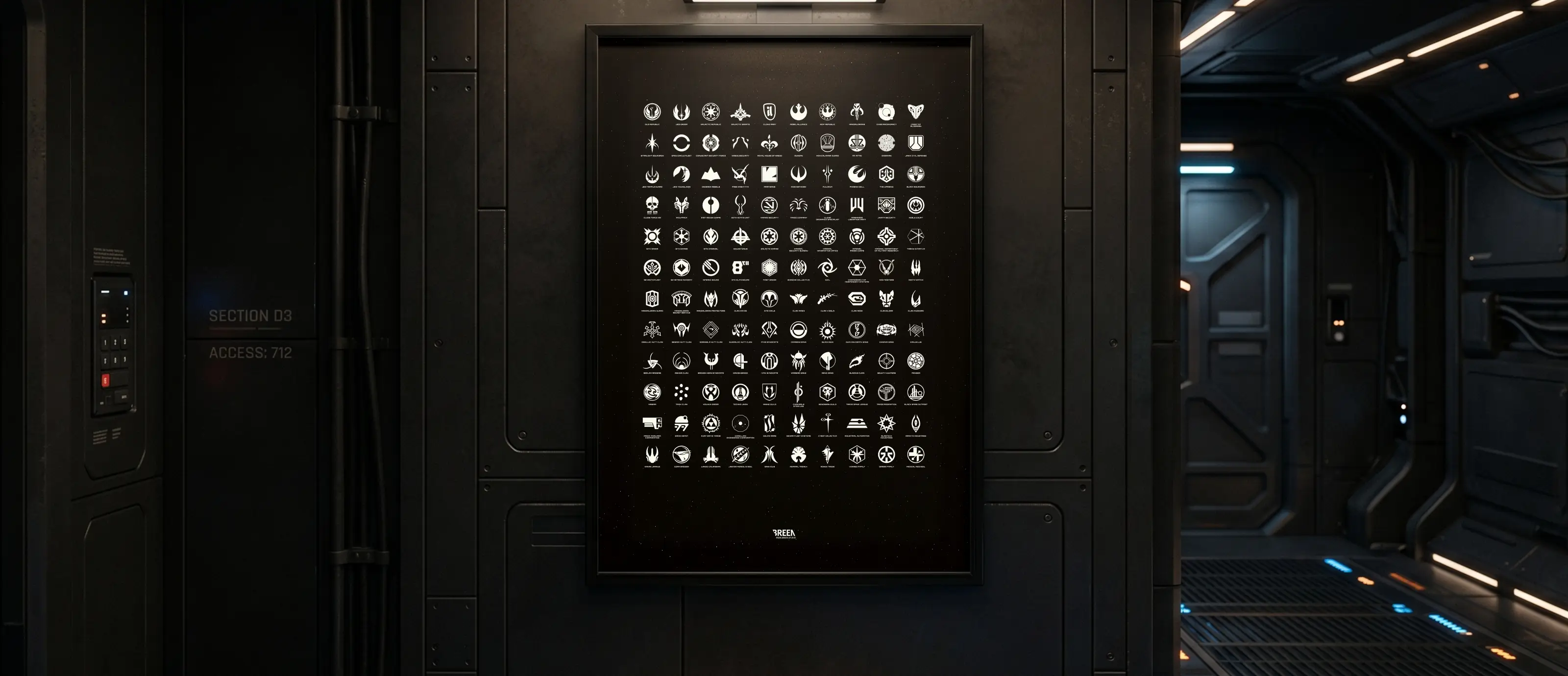
Star Wars Symbols Poster
Product Details
Size
A2 (420 × 594 mm / 16.5 × 23.4 in)
Paper
200gsm matte finish, minimal reflections
Print
Giclée fine art - the same archival method used by museums and galleries
Shipping & Returns
Shipping
Orders ship within 2–5 business days from the Netherlands. €4.90 NL / €9.90 EU / €14.90 ROW.
Delivery
EU: 3–7 business days. UK/US/CA: 5–12 business days. Rest of world: 7–21 business days.
Returns
If your poster arrives damaged or misprinted, email a photo within 30 days and we'll send a replacement, no questions asked. Lost in transit? We'll reship at no cost.
Mandalorian Symbols
Back to top060
Mandalorian Guard
The Clone Wars, S3E5: Corruption
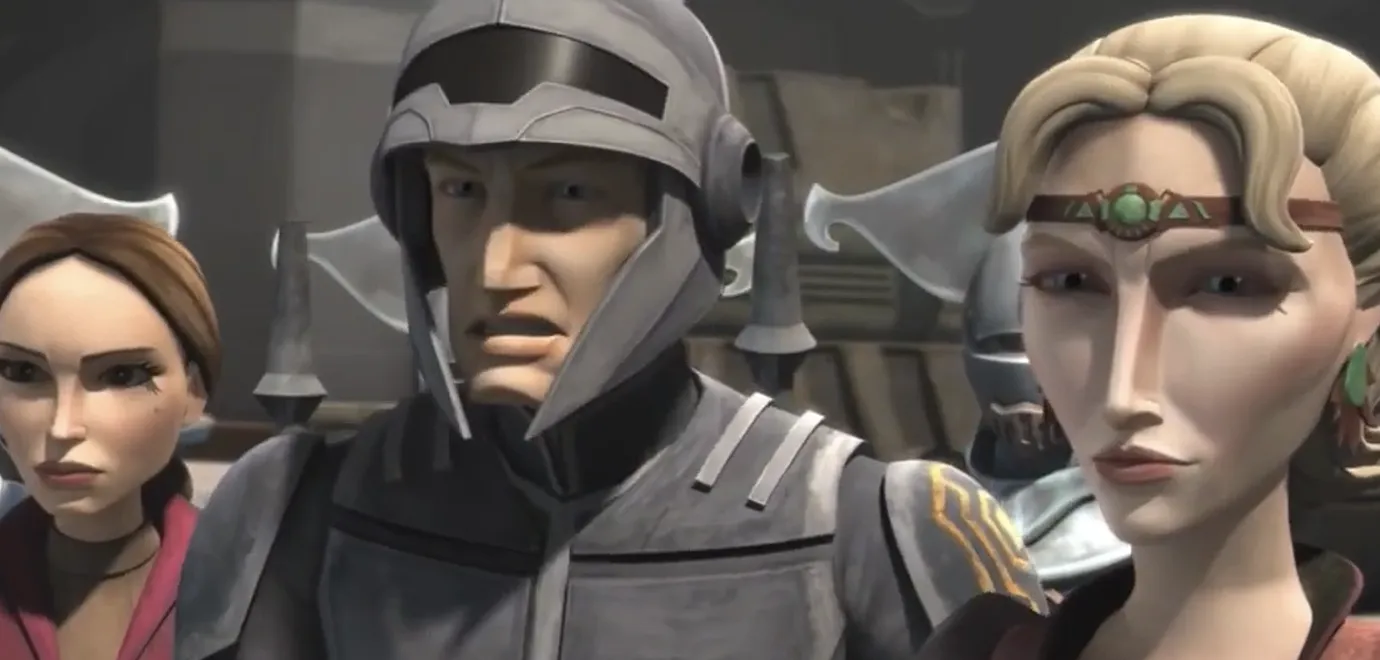
The Mandalorian Guard badge is built like a shield within a shield. Its nested hexagons and heavy vertical lines suggest protection and order. The Guard served as Mandalore's police and peacekeepers under the pacifist New Mandalorian government. In "Corruption," the still shows one of its officers between Duchess Satine and Padmé as they investigate poisoned supplies. I use this civic emblem to open the Mandalorian section before moving into the marks of clans and warrior groups.
061
Mandalorian Secret Service
The Clone Wars, S3E6: The Academy
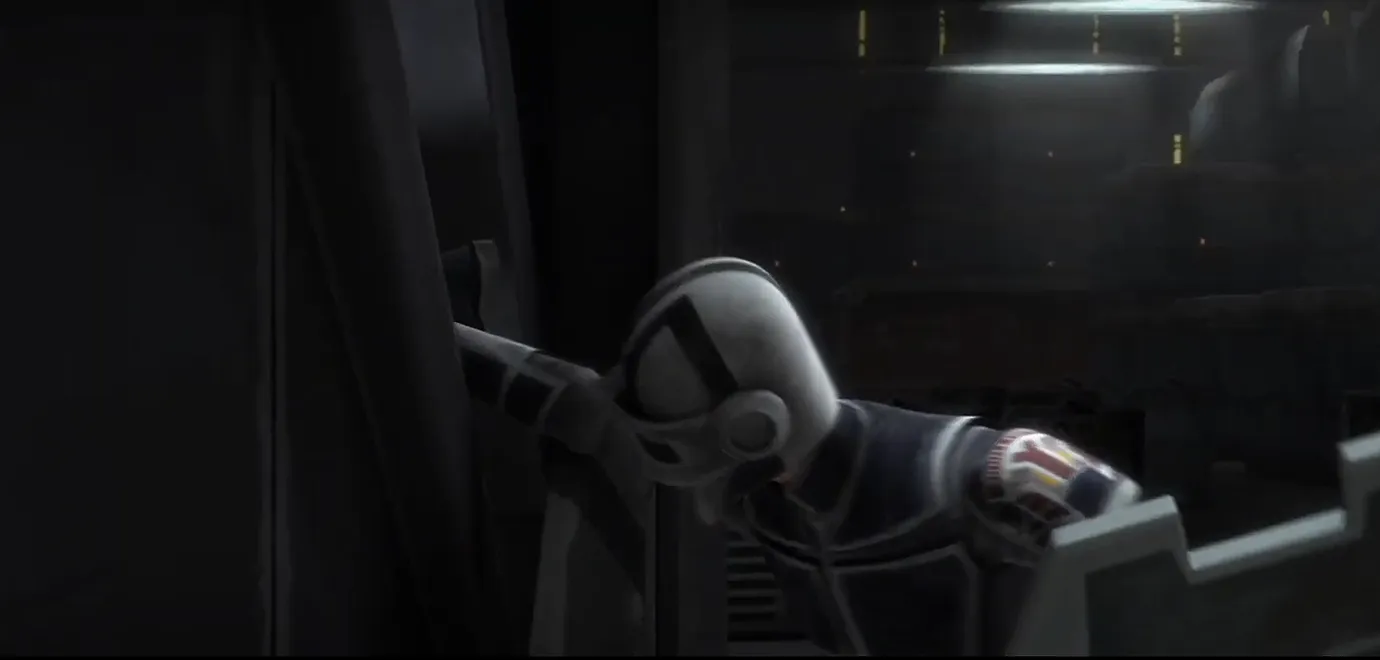
The Mandalorian Secret Service badge resembles a fortified gate or enclosed arena, built from heavy lines around a protected centre. The writing above it is Mandalorian script, spelling "In Defense of Mandalore." That makes the crest feel almost like an official promise. The Secret Service was an elite branch of the Mandalorian Guard, although several of its officers served Prime Minister Almec's corrupt plans. In "The Academy," the emblem appears on the shoulder of a guard sent to arrest Satine, Ahsoka and the cadets.
062
Mandalorian Protectors
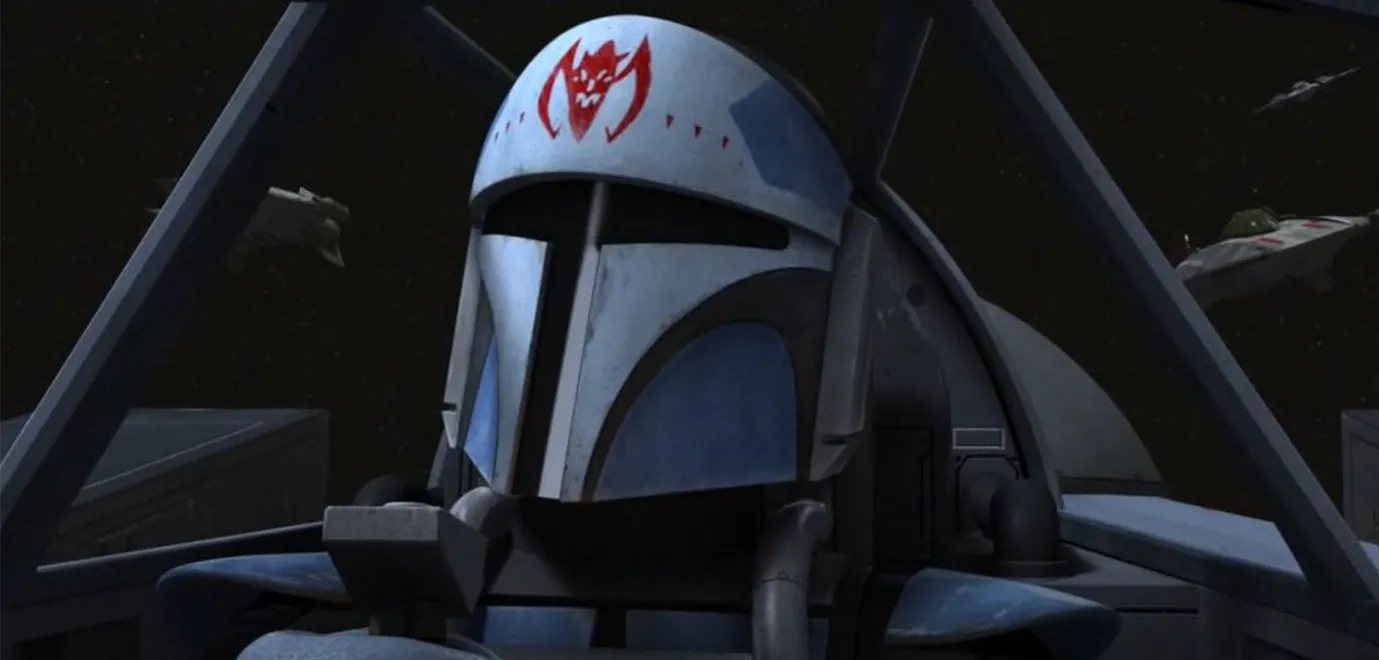
Star Wars Rebels, S2E13: The Protector of Concord Dawn
The Mandalorian Protectors use a creature-like face framed by two long curved forms. They could be seen as wings, horns or open claws, giving the badge a watchful and threatening quality. Under Fenn Rau, the Protectors guarded Concord Dawn, first working with the Empire and later siding with the rebels. In Star Wars Rebels, the red mark is painted directly on Rau's helmet, where it works as both identification and a warning.
063
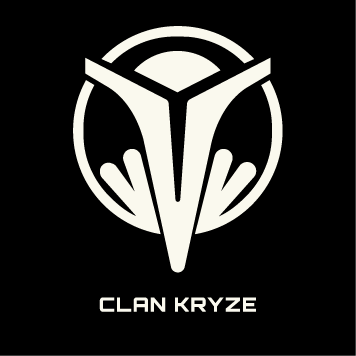
Clan Kryze
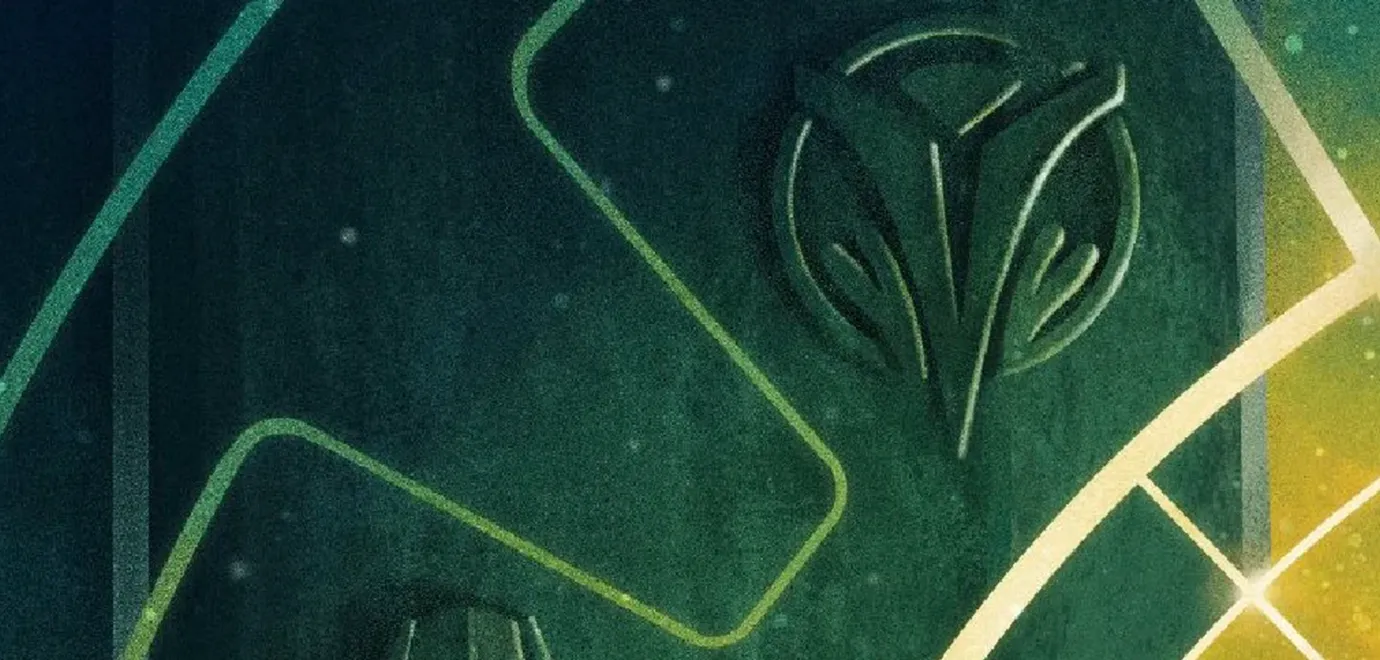
The Mandalorian Season 3 promotional poster
The Clan Kryze emblem looks like a figure with its arms spread inside a circle. It could also be seen as a helmet or a stylised bird. Clan Kryze followed Bo-Katan in resisting Imperial rule and trying to restore Mandalore, which gives the upright form a fitting sense of leadership and return. I could only find the crest clearly in The Mandalorian Season 3 promotional artwork, so I had to reconstruct it from that small detail for the poster.
064
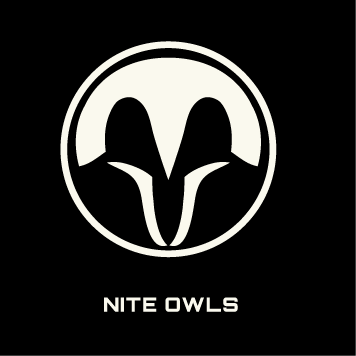
Nite Owls
The Mandalorian, S3E3: The Convert
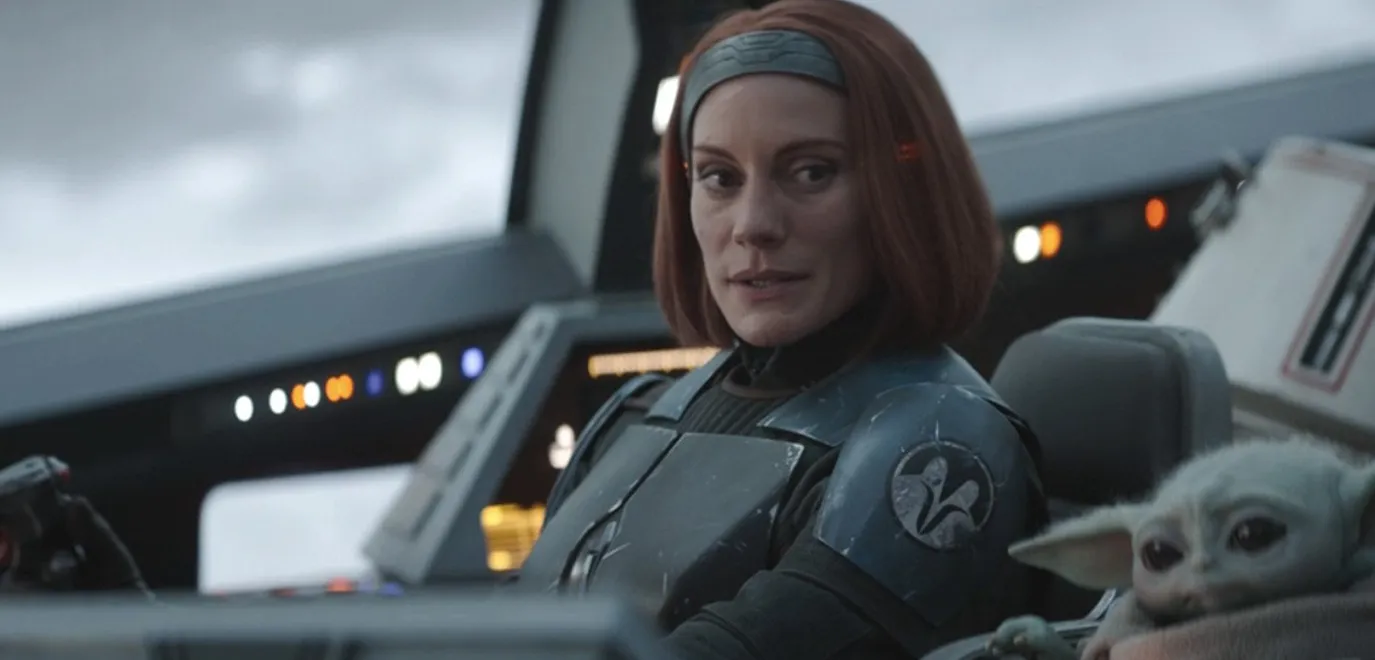
The Nite Owls began as an all-female Mandalorian unit led by Bo-Katan Kryze within Death Watch. Their name shapes the whole identity. The shoulder mark is a stylised owl, and even the narrow helmet visor was inspired by the face of a barn owl. In The Mandalorian, Bo-Katan wears the emblem as part of her armour. The name, mark and helmet all point to the same idea, making this one of the clearest visual identities in the collection.
065
Clan Wren
Star Wars Rebels, S3E16: Legacy of Mandalore
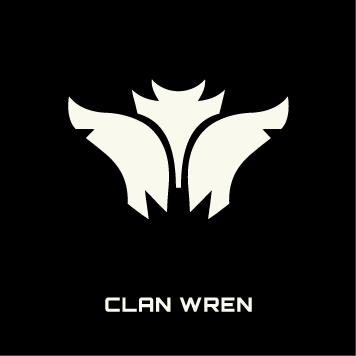
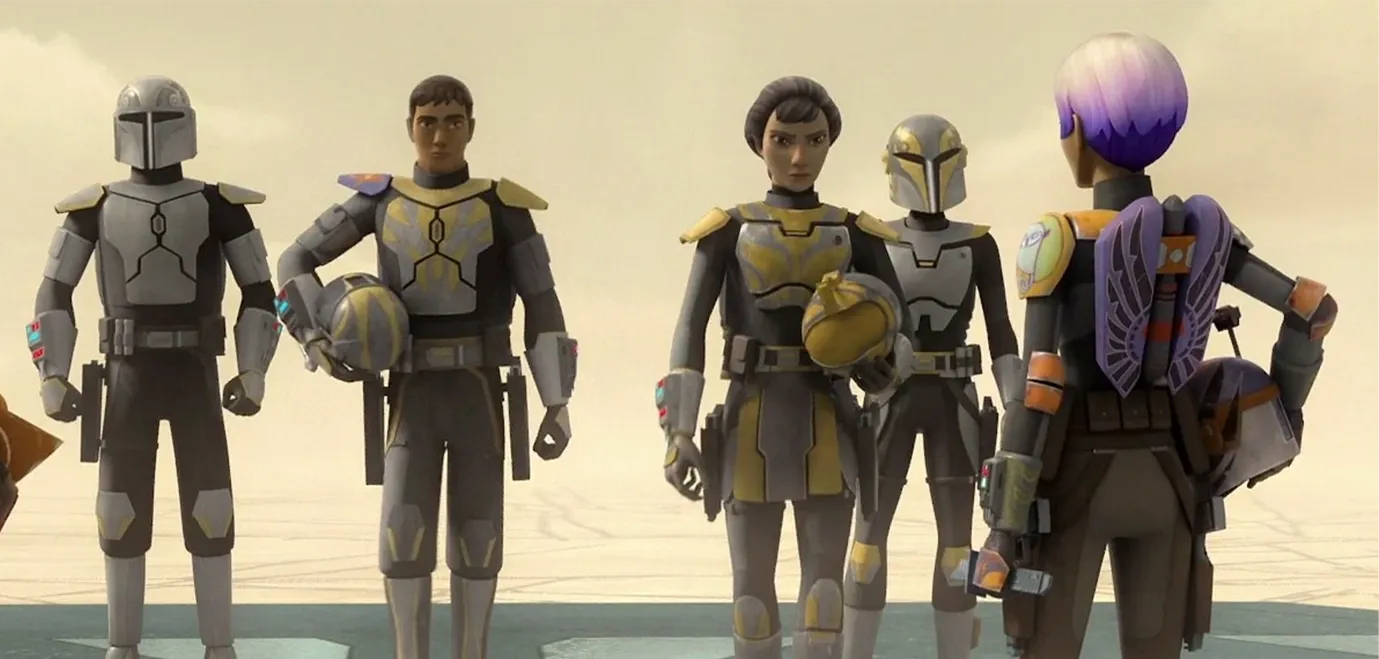
Clan Wren is a Mandalorian family within House Vizsla, led by Ursa Wren when Sabine returns home in Star Wars Rebels. The repeated mark on the warriors' armour gives the clan a shared identity, although I could not find an official explanation of its shape. To me, it resembles a bird seen from the front, with its wings spread. That would fit the Wren name, but it remains a visual interpretation.
066
Clan Vizsla
Star Wars Rebels, S4E1: Heroes of Mandalore
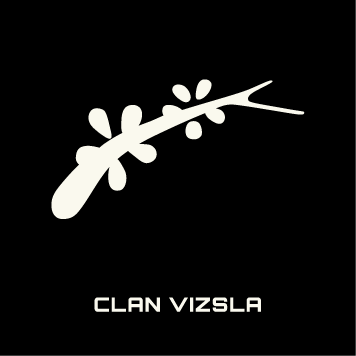
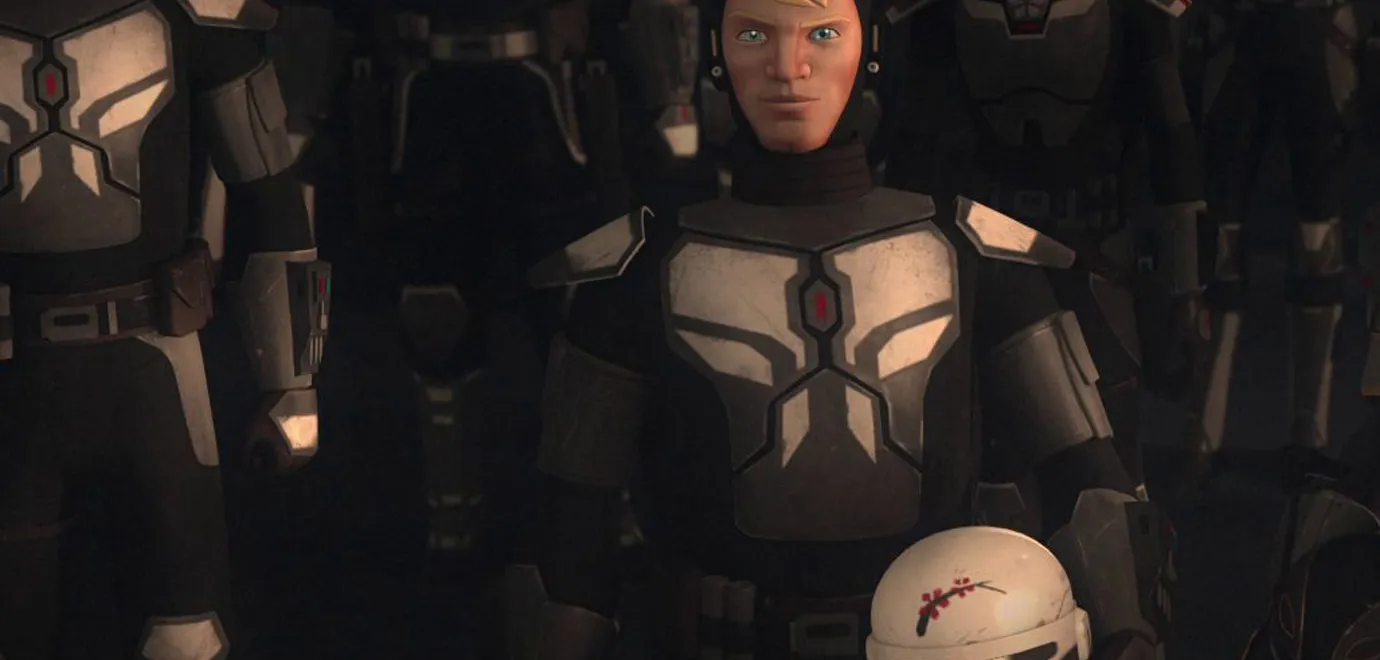
Clan Vizsla is one of the oldest Mandalorian families, and its history runs through the Darksaber, Death Watch and the struggle to rule Mandalore. The clan's older shriek-hawk signet was adopted by Death Watch, making the two hard to separate visually. By the Imperial era, Vizsla warriors wear a different emblem: a flowering branch, seen on their armour when they pledge themselves to Bo-Katan in Star Wars Rebels. I could not find an official reason for the change, but the softer plant form creates a clear break from the predatory symbol that came before it.
067
Clan Rook
Star Wars Rebels, S4E2: Heroes of Mandalore: Part 2
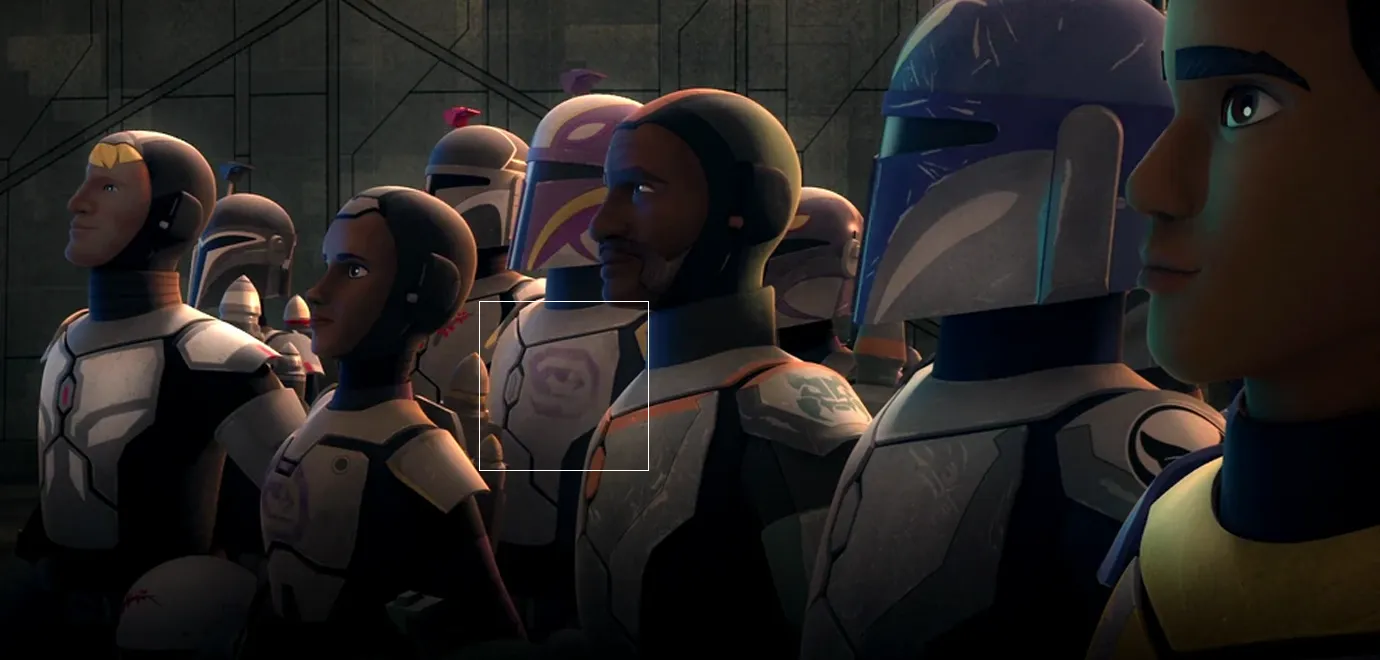
At first glance, Clan Rook's signet resembles an ouroboros, a serpent curled back towards itself. Its identity in Star Wars is more specific. Clan Rook belonged to House Kast, whose crest depicts a coiled vexis, a serpentine creature found on Pasaana. The mark appears on a warrior's shoulder as the Mandalorian clans gather behind Bo-Katan in Star Wars Rebels. The closed, circular shape still suggests continuity and renewal to me.
068
Clan Eldar
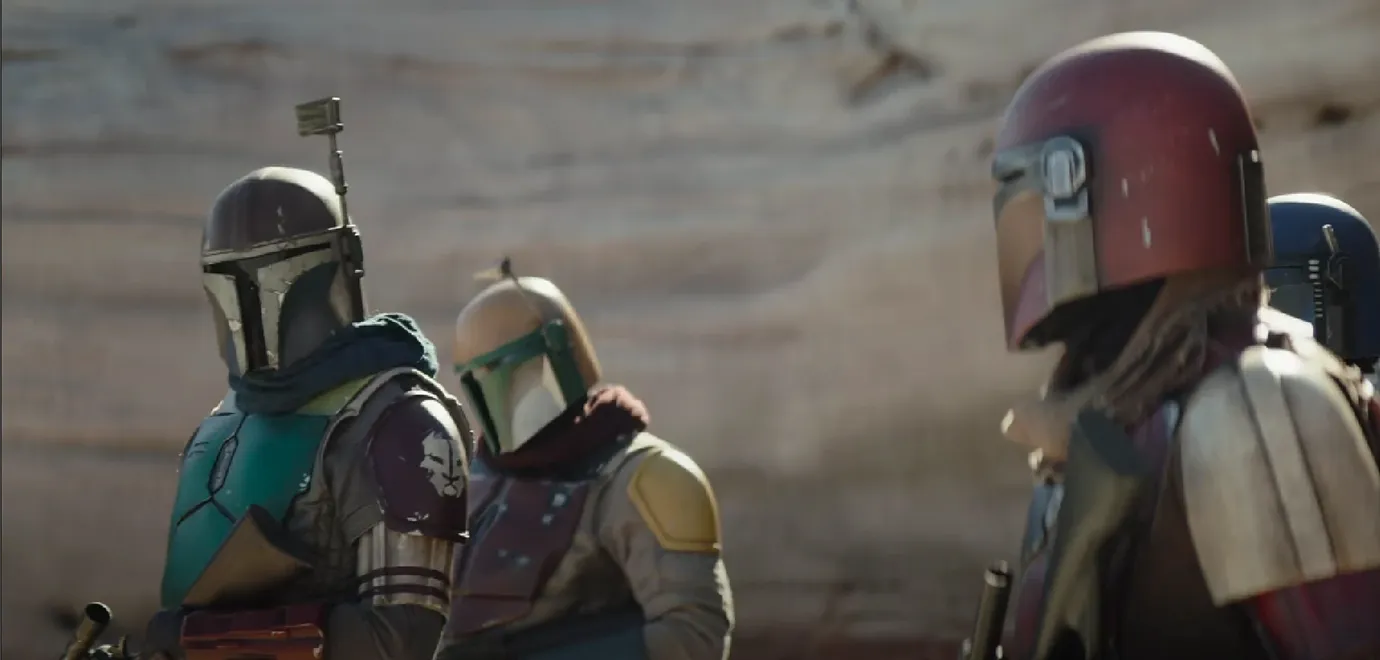
The Mandalorian, S3E5: The Pirate
Clan Eldar's signet is one of the more literal Mandalorian marks. An official reference book identifies it as the face of a lion, reduced to pointed ears, narrow eyes and a heavy muzzle. The clan first appears in Star Wars Rebels, where its warriors join Bo-Katan's resistance against the Empire. Years later, the same face returns on a shoulder plate among the Children of the Watch in The Mandalorian.
069
Clan Mudhorn
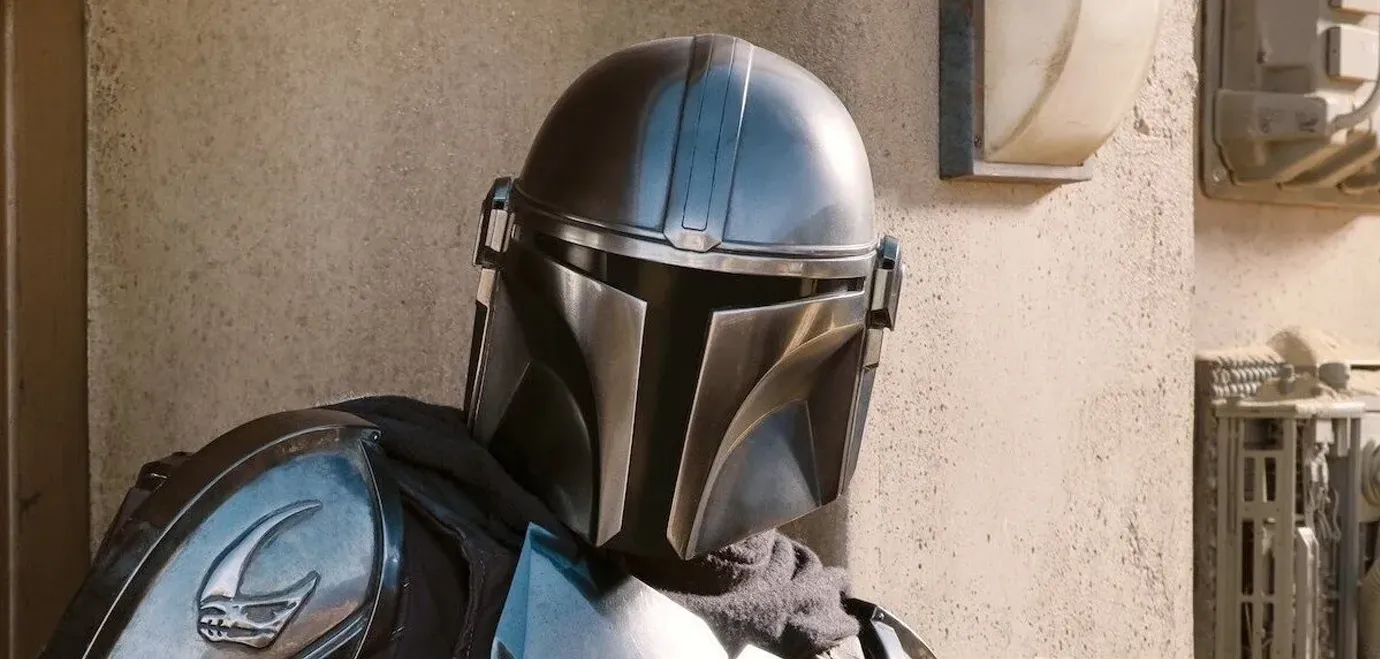
The Mandalorian, S2E1: The Marshal
Unlike the older Mandalorian clans, Clan Mudhorn begins with an event we see happen. Din Djarin kills a mudhorn on Arvala-7 after Grogu uses the Force to save him. The Armorer later turns the creature's skull into their signet and declares them a clan of two. Rather than being painted onto Din's armour, the mark sits in relief on his beskar shoulder plate, giving it the permanence of something earned. Grogu later receives the same signet on his own armour, completing the bond behind the symbol.
Crime Syndicates
Back to top070
Desilijic Hutt Clan
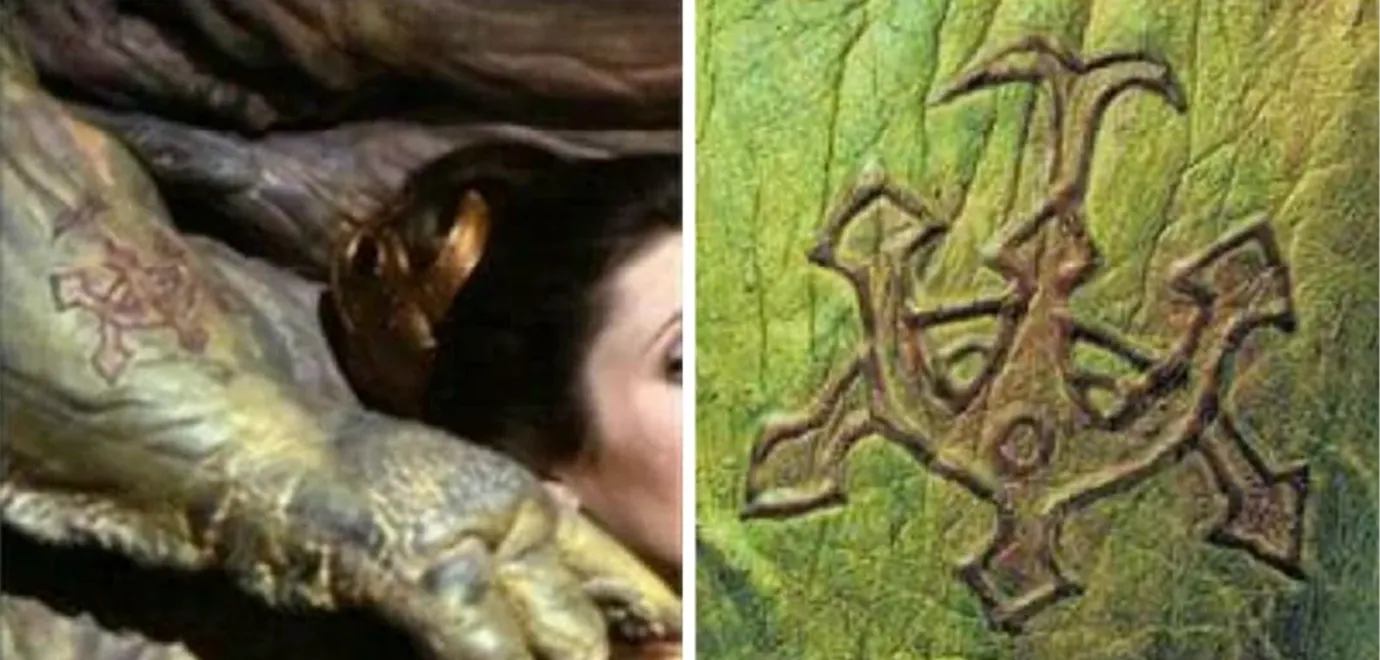
Episode VI: Return of the Jedi
The Desilijic mark is easy to miss in Return of the Jedi because Jabba carries it as a tattoo on his right arm. Its three hooked points resemble an ornate trident, but the uneven curves give it the character of a personal or family mark. Desilijic is the powerful Hutt crime family found in Jabba's full name, Jabba Desilijic Tiure. I placed it first in the Crime Syndicates section because it introduces the most well know family within the Hutt clans.
071
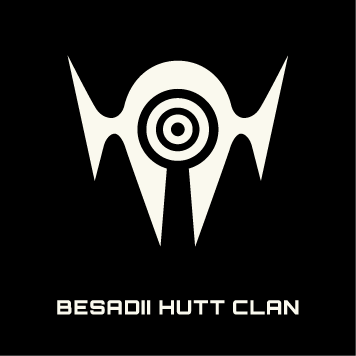
Besadii Hutt Clan
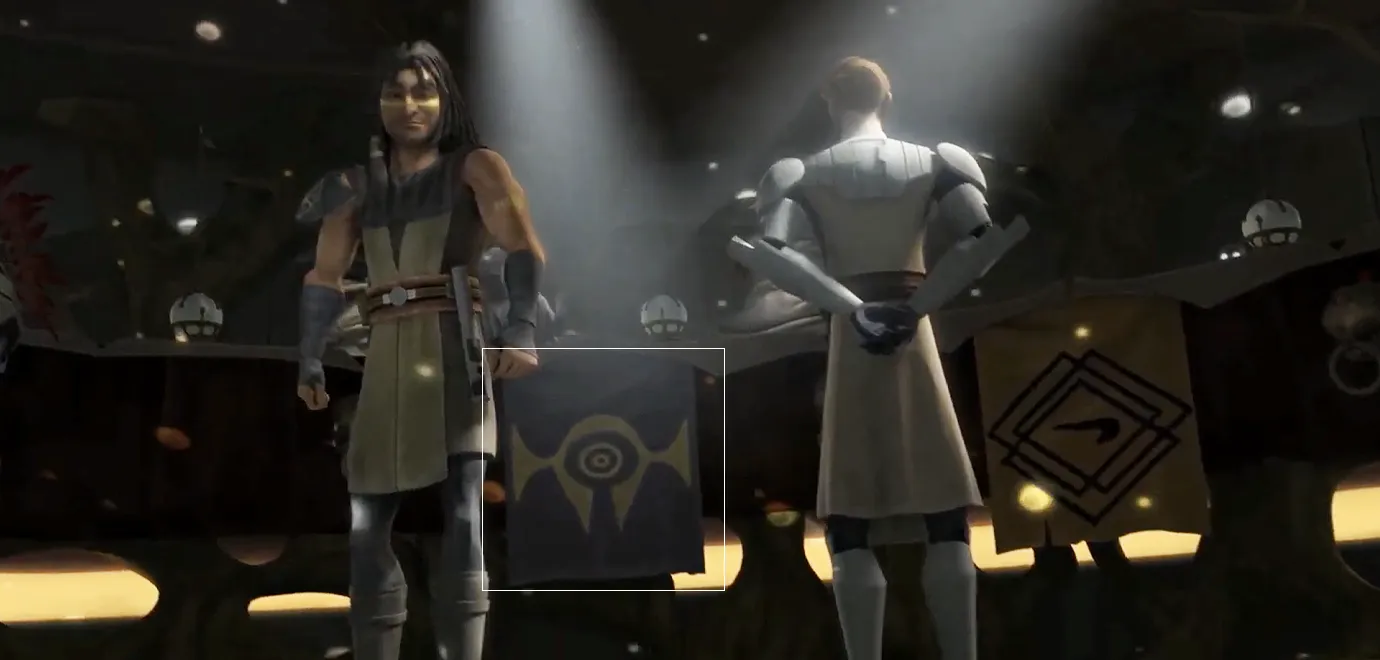
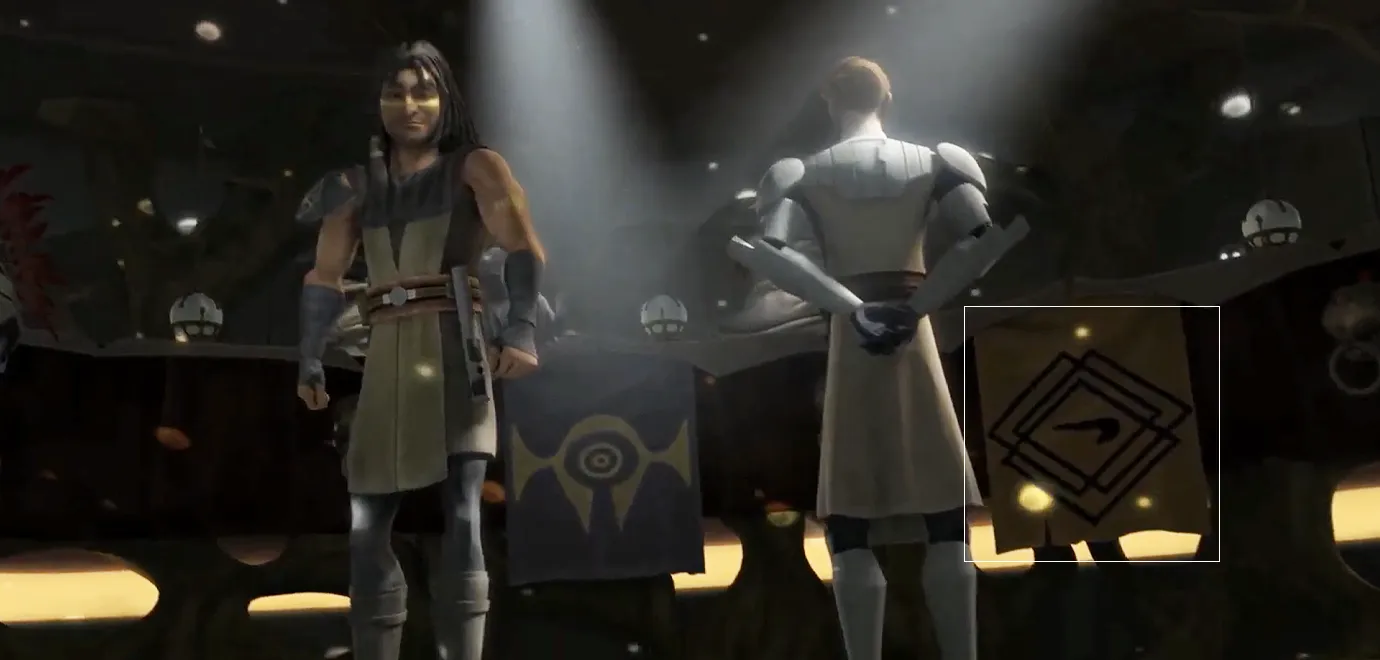
The Clone Wars, S3E9: Hunt for Ziro
Like Jabba's Desilijic mark, the Besadii symbol was also worn as a tattoo. Arok, the clan's representative on the Hutt Council, carried it on his upper left arm. In The Clone Wars, the same design appears more clearly on a banner beside the symbols of other Hutt families. Its concentric circles and four pointed arms resemble an eye or target, although I could not find an official meaning. The scene shows how the Hutts used the same marks as both personal signs of loyalty and public displays of family power.
072
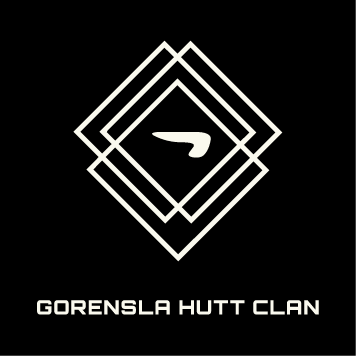
Gorensla Hutt Clan
The Clone Wars, S3E9: Hunt for Ziro
The Gorensla mark hangs beside the Besadii banner in the Hutt Council chamber, but the two share little visual language. Nested diamonds enclose a small hooked shape, making this emblem more geometric and contained than the pointed Besadii design. Gorensla was represented on the council by Oruba, one of the Hutts involved in the search for Ziro's incriminating records. I'm using the same reference image as the Besadii entry as both clans are represented in this scene.
073
Qunaalac Hutt Clan
The Clone Wars, S3E9: Hunt for Ziro
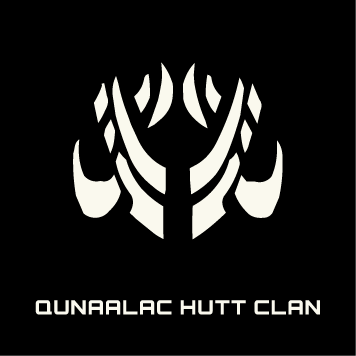
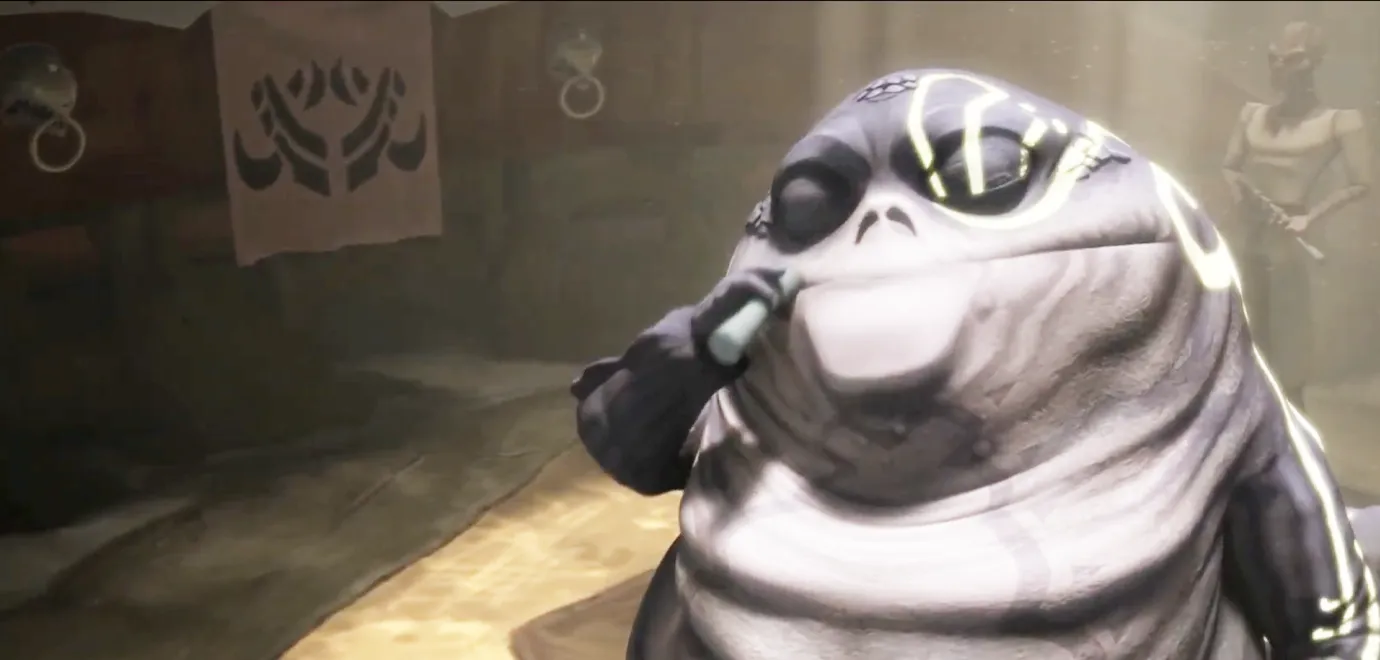
Marlo carries the Qunaalac design across his body while a larger version hangs behind him in the Hutt Council chamber. Its separate shapes gather around a dark centre and, to me, resemble an open jaw lined with teeth. Unlike the compact Besadii and Gorensla marks, this one feels deliberately fragmented. The symbol itself appears in canon, although the Qunaalac name comes from later Legends material rather than the episode.
074
Pyke Syndicate
Star Wars Outlaws
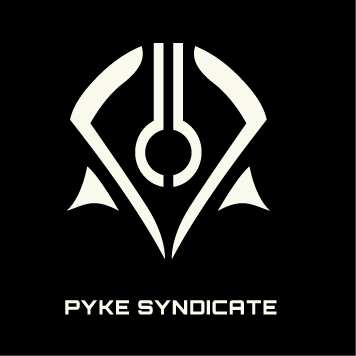
We were already familiar with The Pykes from The Clone Wars, but this crest is a recent addition to their visual identity. It first appeared in Star Wars Outlaws, where the design is repeated throughout Pyke-controlled spaces. Kay Vess can also receive a small version from the syndicate after earning its trust. To me, the pointed outline and central ring resemble the narrow head and mask of a Pyke, although I could not find an official explanation of the design. Unlike the Hutt family marks, this crest works mainly as a territorial sign: a clear warning about who controls the area.
075

Crimson Dawn
Star Wars: Crimson Reign #4
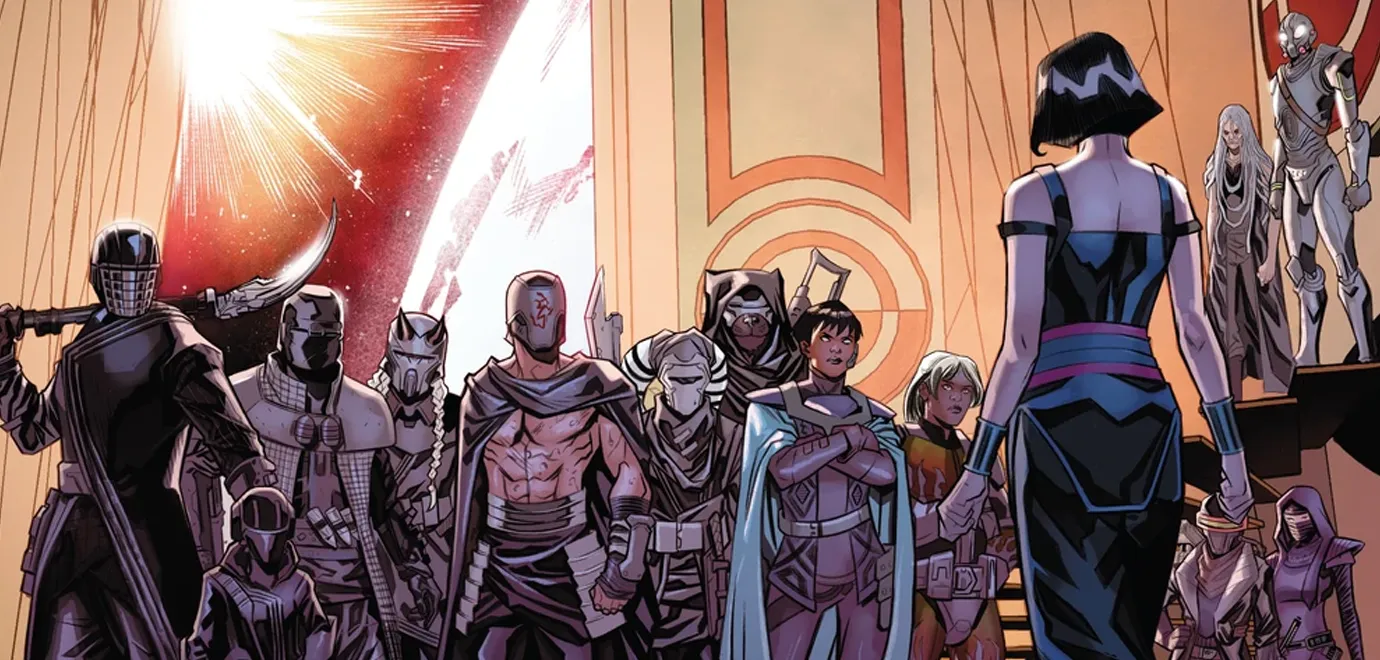
Unlike the Hutt clan tattoos, the Crimson Dawn mark follows Qi'ra through a change in power. In Solo, she wears half of the crest as a gold necklace, while Dryden Vos had the full symbol branded on her forearm and the back of her neck. The circle divided by a horizontal line resembles a sun rising over a horizon, which fits the name. In Crimson Reign #1, the emblem appears enlarged behind Qi'ra as she gathers her agents. A mark that once showed her place within the syndicate has become the banner of the syndicate she now leads.
076
Black Sun
The Clone Wars, S5E14: Eminence
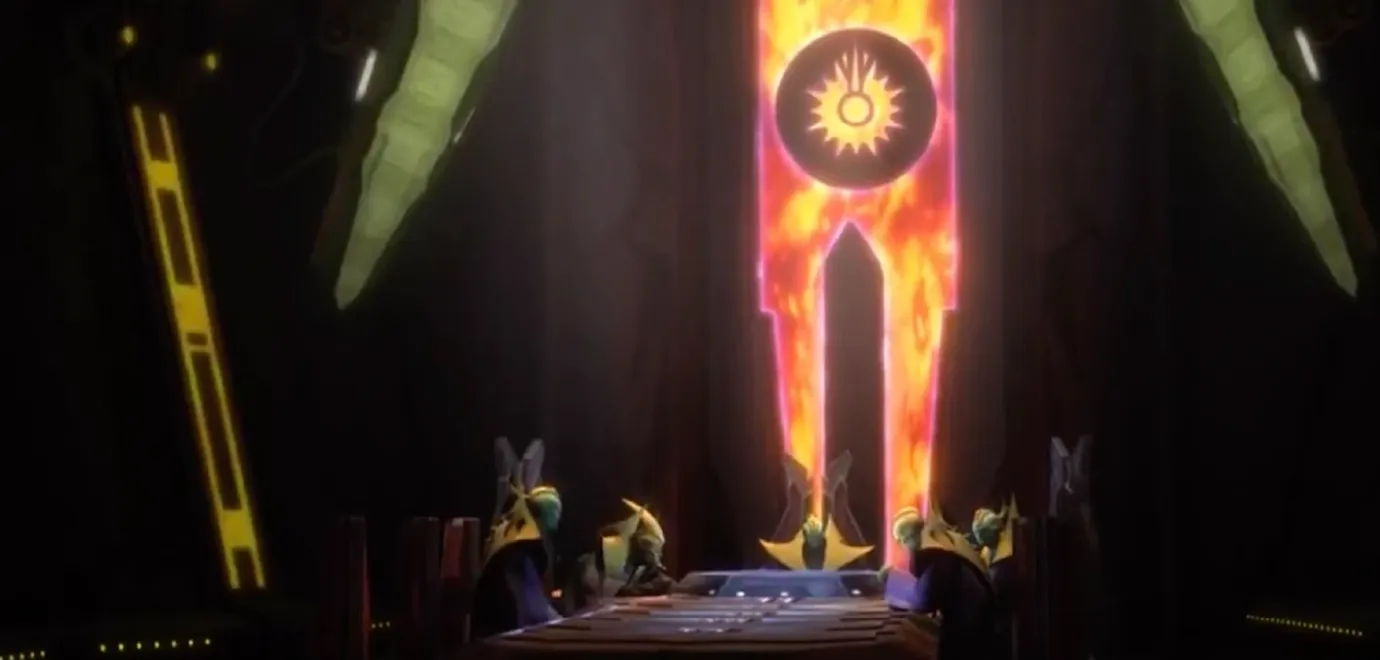
Black Sun began in the former Expanded Universe, but The Clone Wars carried its established emblem directly into canon. In "Eminence," the sunburst fills the syndicate's council chamber and also appears on the clothing of its Falleen leaders. The ring, bright centre and uneven rays make the name visible before anyone explains it. To me, it suggests a sun whose light has been turned into something darker. The symbol therefore works less like a hidden criminal mark and more like the crest of an organisation confident enough to display its power openly.
077
Guavian Death Gang
Wookieepedia
The Guavian Death Gang uses a compact vertical mark enclosed by two rings. Because the first and last glyphs repeat, I first thought it might spell the initials G-D-G. The shapes do not match a straightforward use of standard Aurebesh, however, and I could not find an official explanation of their meaning. The strict circle and stacked forms still suit a gang known for silent, cybernetically enhanced soldiers in uniform red armour. I have not yet found the emblem clearly displayed inside the Star Wars universe, so this entry remains based on the canon reference image.
078
Ohnaka Gang
The Clone Wars, S5E7: A Test of Strength
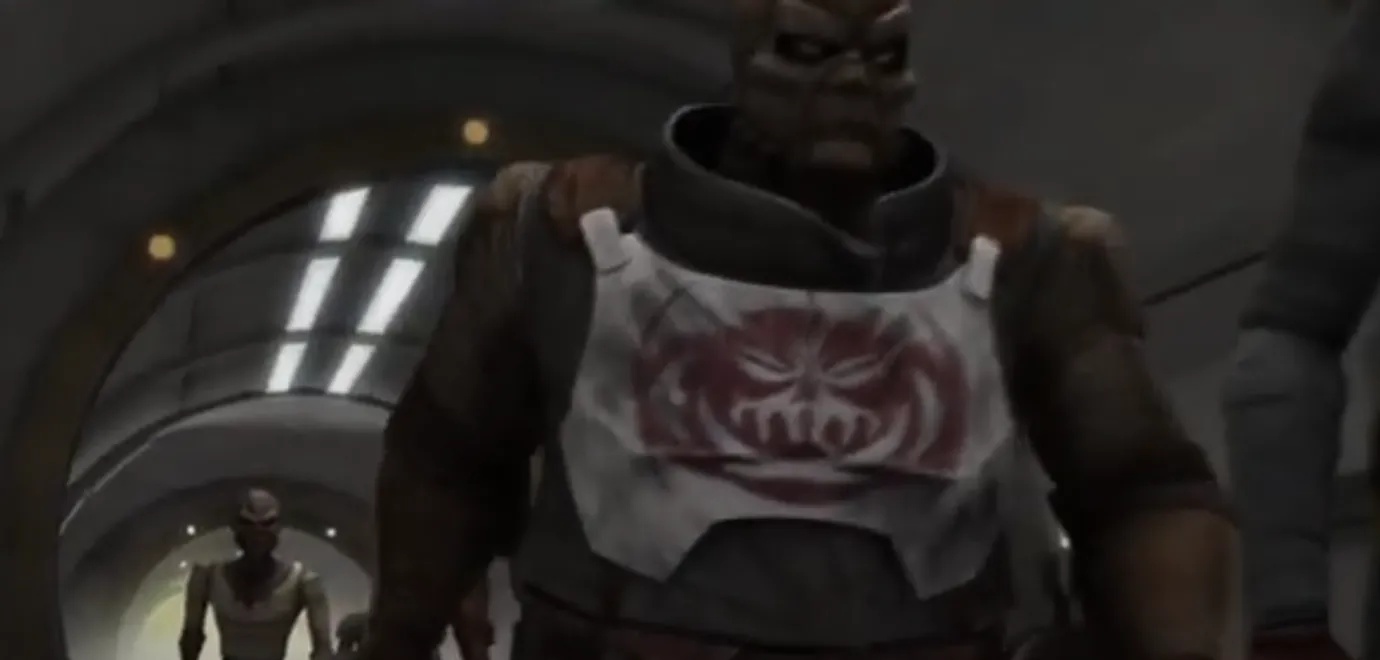
The Ohnaka Gang symbol looks like an angry crab looking for a fight. In A Test of Strength, Hondo's pirates wear it large across their chest plates while attacking Ahsoka and the Jedi younglings. The emblem later returns on Hondo's clothing and on banners, including one at Maz Kanata's castle. The gang may fall apart, but its rough pirate identity survives with Hondo.
079
Kanjiklub
Wookieepedia
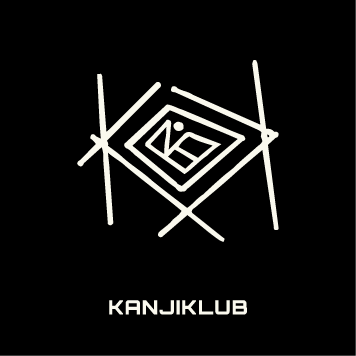
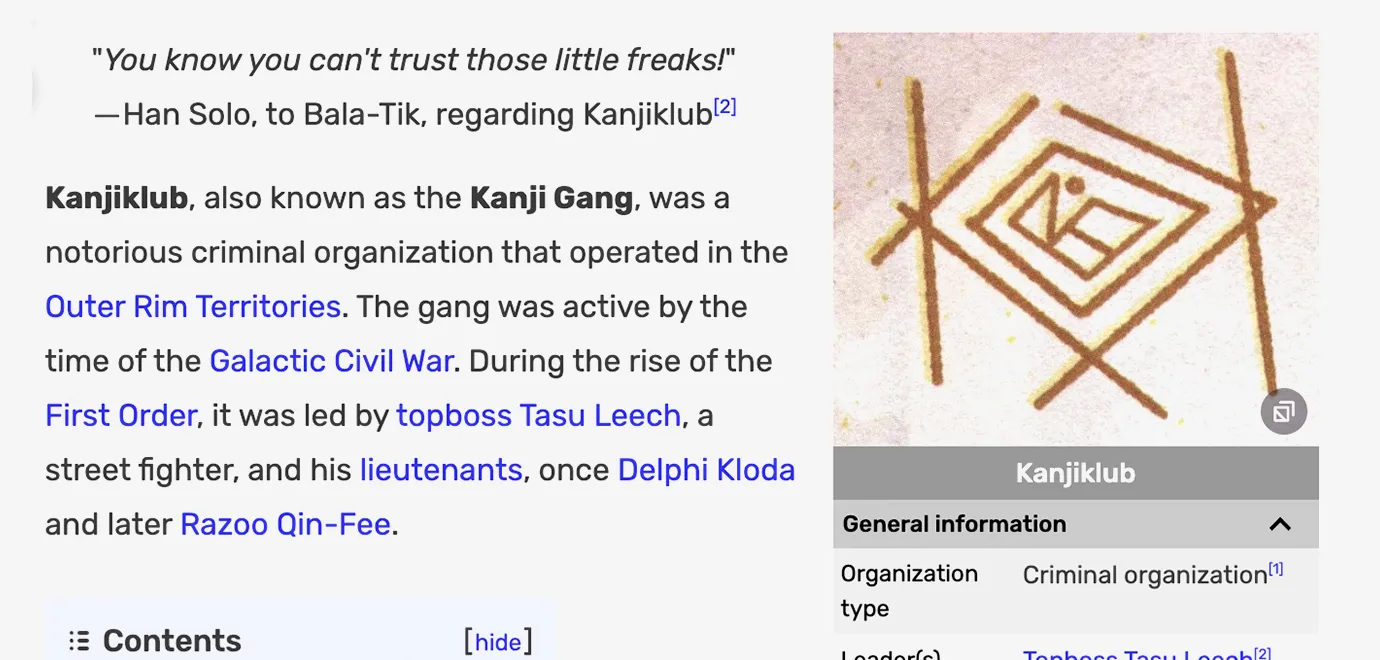
Kanjiklub's mark has the rough construction of a street sign: nested diamonds surround an angular centre while loose lines cross the frame. I have not found an official explanation of the design, but its improvised look suits a gang of former Hutt slaves known for patchwork armour, makeshift weapons and close-range fighting. Kanjiklub's main rivals were the Guavian Death Gang, whose clean circular emblem and uniform red armour offer a sharp visual contrast. I have not yet found the Kanjiklub mark clearly displayed in The Force Awakens, so this entry relies on the canon reference image.
080
Bedlam Raiders
Jedi: Survivor
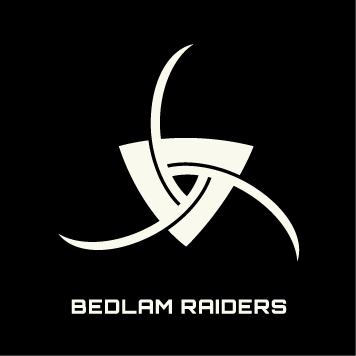
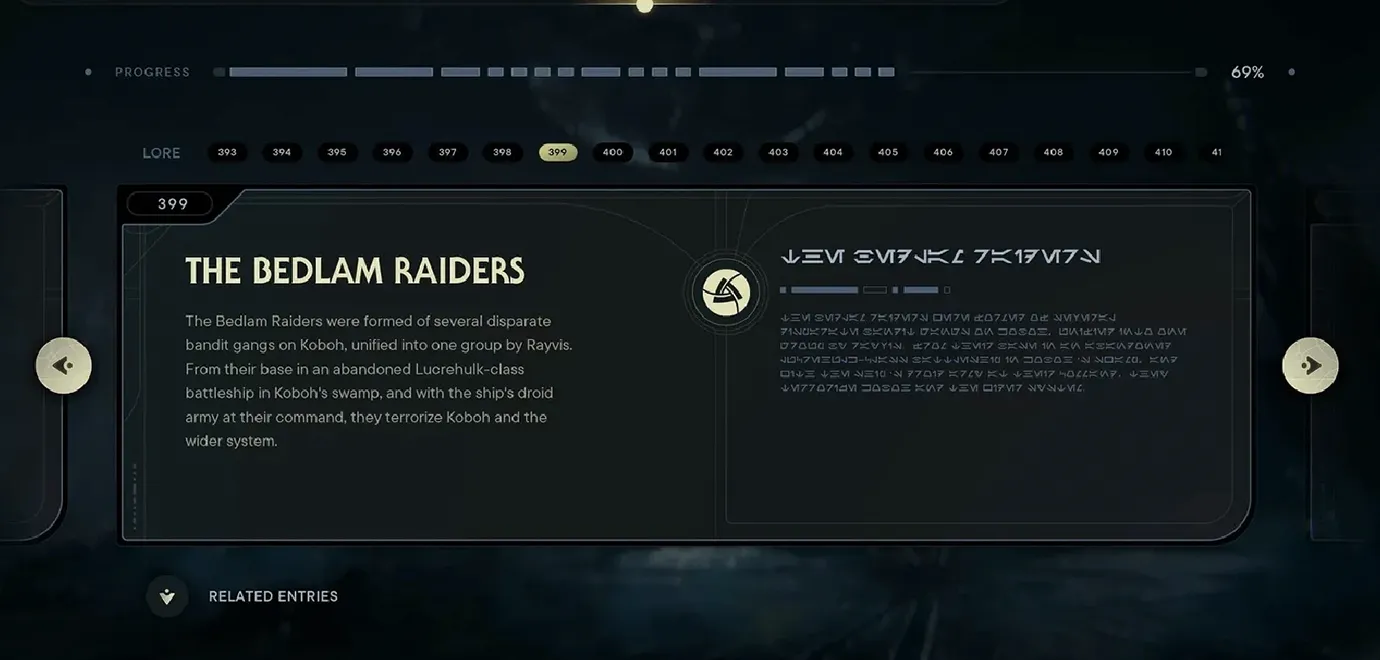
The Bedlam Raiders turn their goal into their emblem. What first looks like three curved blades is based on the three arrays that once created a safe passage through the Koboh Abyss towards Tanalorr. Rayvis had united several bandit groups on Koboh, but Dagan Gera gave them a larger purpose: reclaiming the hidden world. The mark therefore works almost like a map of their ambition. I found it most clearly in the databank of Jedi: Survivor, the game in which the group and symbol were introduced.
081

Ashiga Clan
Star Wars Outlaws
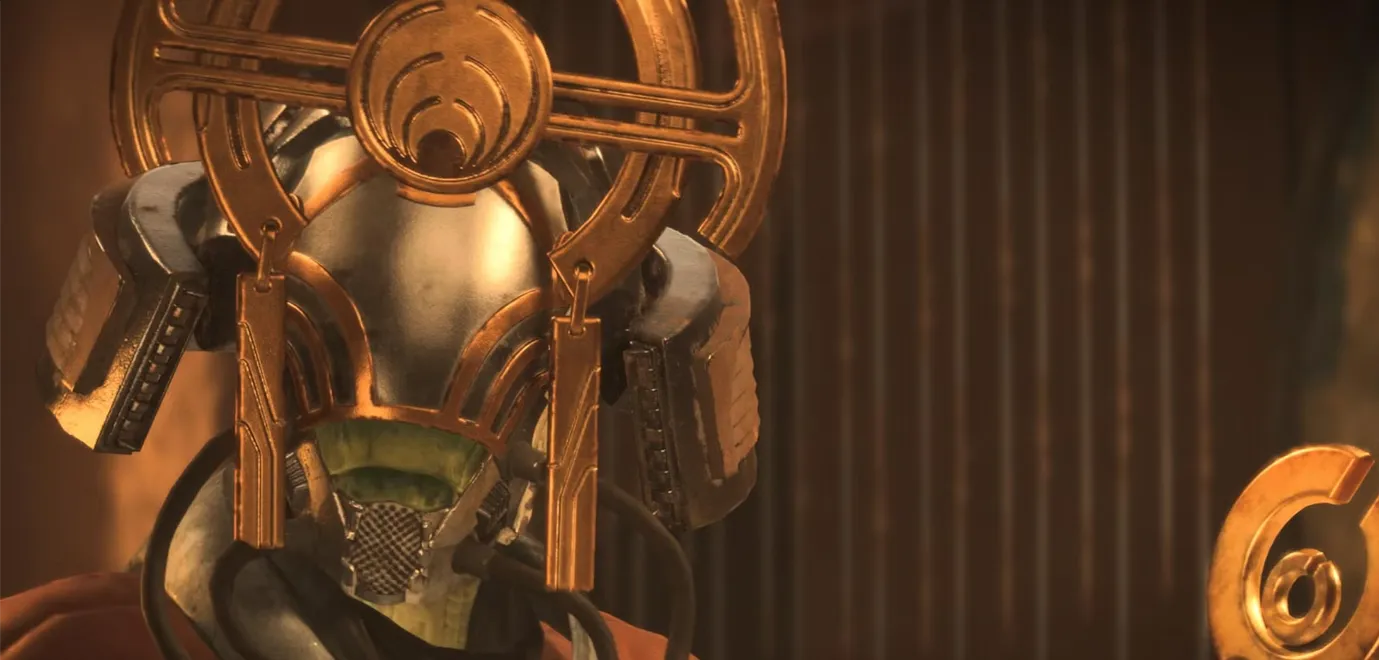
The Ashiga Clan is built around rank and loyalty to its queen, and its crest works as a sign of both identity and status. Queen Ashiga gives a small version of it to the strongest myrmites in the hive and to trusted allies. In Star Wars Outlaws, Kay earns one only after reaching an excellent reputation with the clan. The concentric arcs also sit above Queen Ashiga's head almost like a crown, which fits the clan's strict hierarchy.
082
Broken Horn Syndicate
Star Wars Rebels, S2E6: Brothers of the Broken Horn
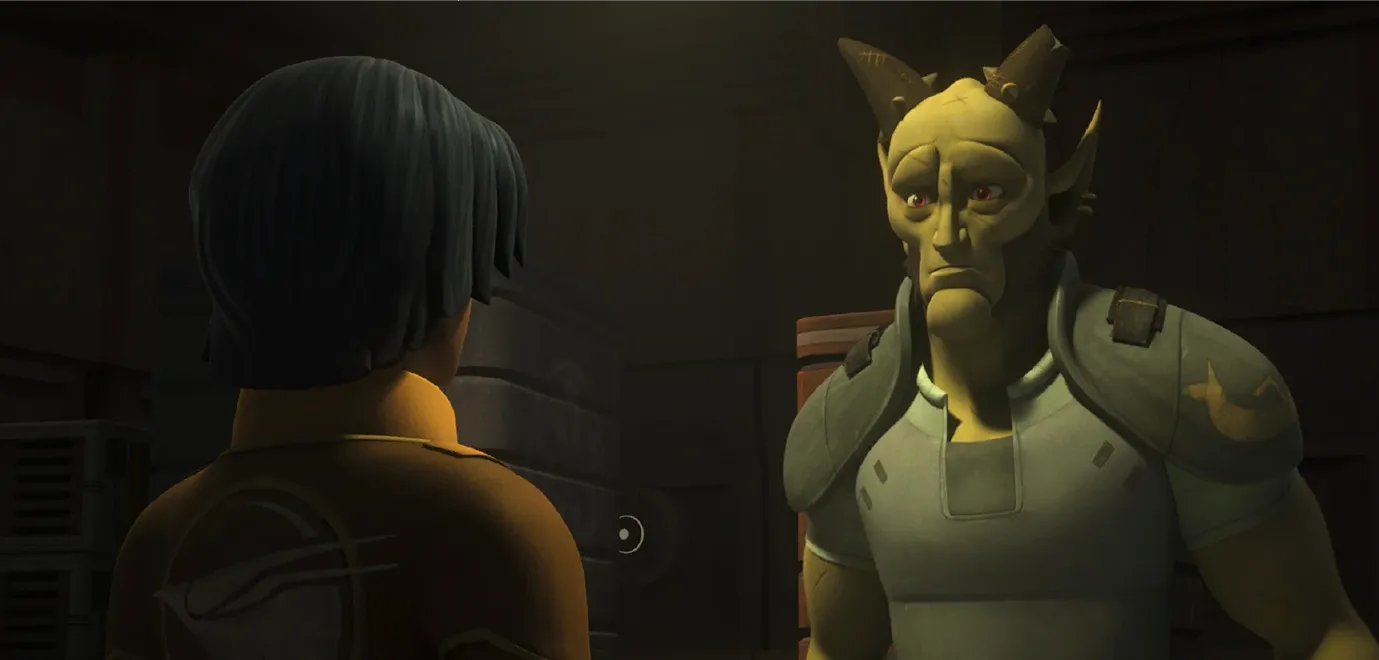
The name is drawn directly into the crest. Two horns curve upwards, but one ends in a blunt break. The smaller shapes below are harder to explain. Vizago led the Broken Horn Syndicate through Lothal's underworld, trading information and illegal goods with anyone willing to meet his price. Even his flagship carried the Broken Horn name.
083
Haxion Brood
Jedi: Fallen Order
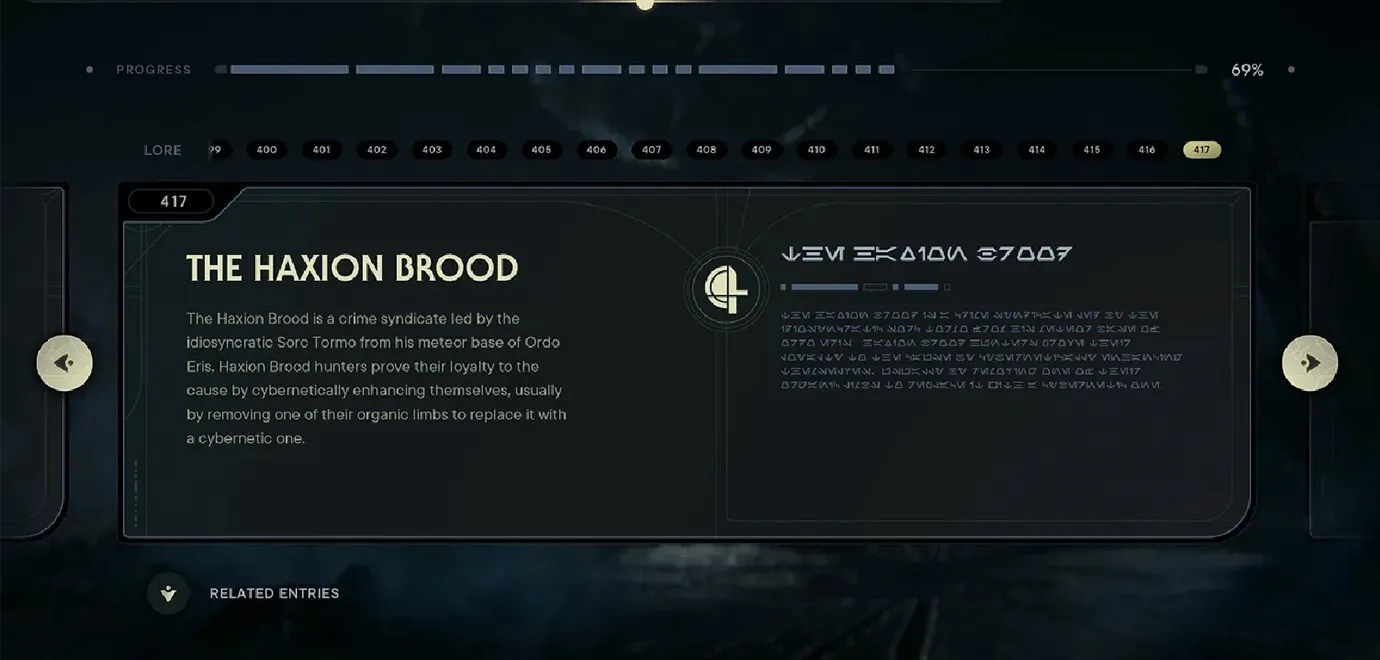
If I had to choose a favourite symbol from the poster, this might be it. Its flat shapes seem to pass over and under each other, giving the mark depth. I could almost imagine it as a lowercase "q" for a company, which makes it feel unexpectedly controlled for a criminal syndicate. The Haxion Brood operated across the Outer Rim under Sorc Tormo, using bounty hunters and an arena on its asteroid stronghold of Ordo Eris. In Jedi: Fallen Order, the cleanest view of the symbol appears in the game's databank.
084

Ivax Syndicate
Wookieepedia
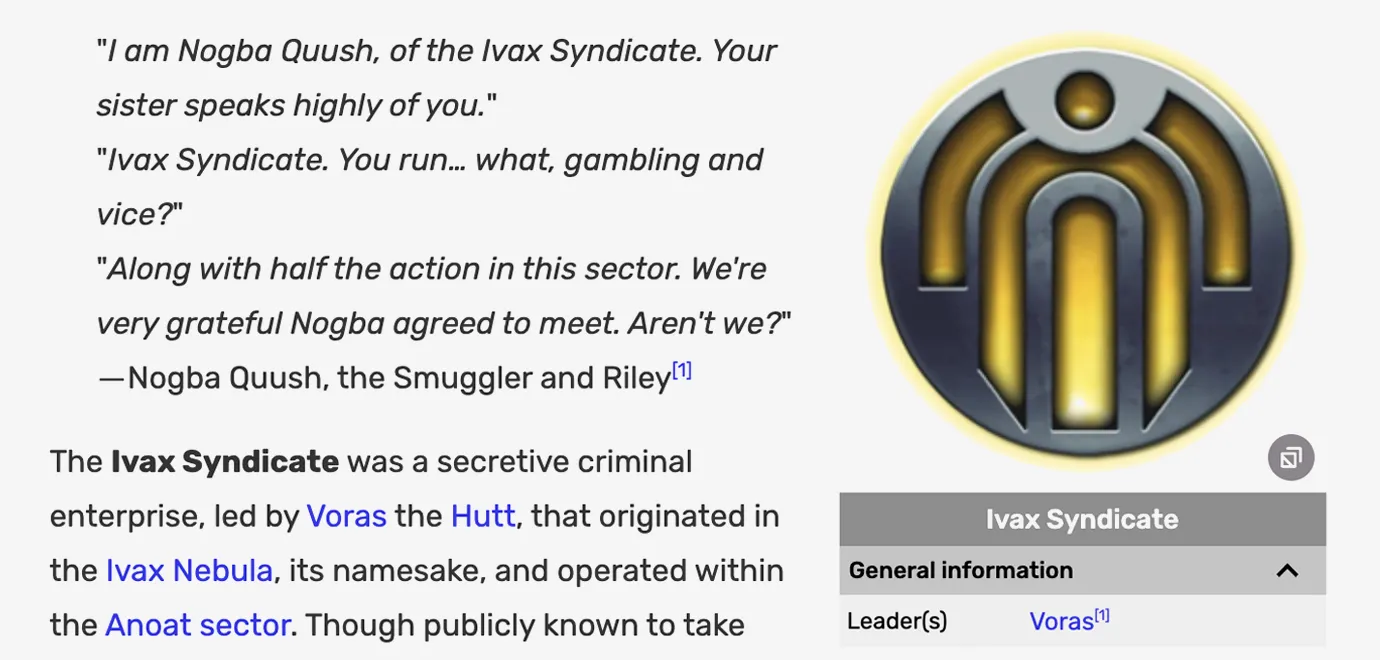
I have not been able to retrace this symbol in Star Wars: Uprising, so this is one of the entries where I have to rely on Wookieepedia's record. The Ivax Syndicate was a secretive criminal network led by Voras the Hutt, known for gambling, racing and blood sports across the Anoat sector. To me, the tall opening and the bars around it resemble a locked gate or cell door. That feels fitting for a group whose real strength came from control and influence.
085
Warbird Gang
The Mandalorian, S1E3: The Triple Dark
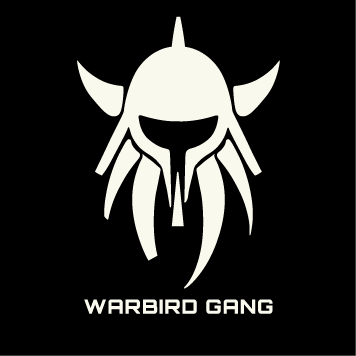
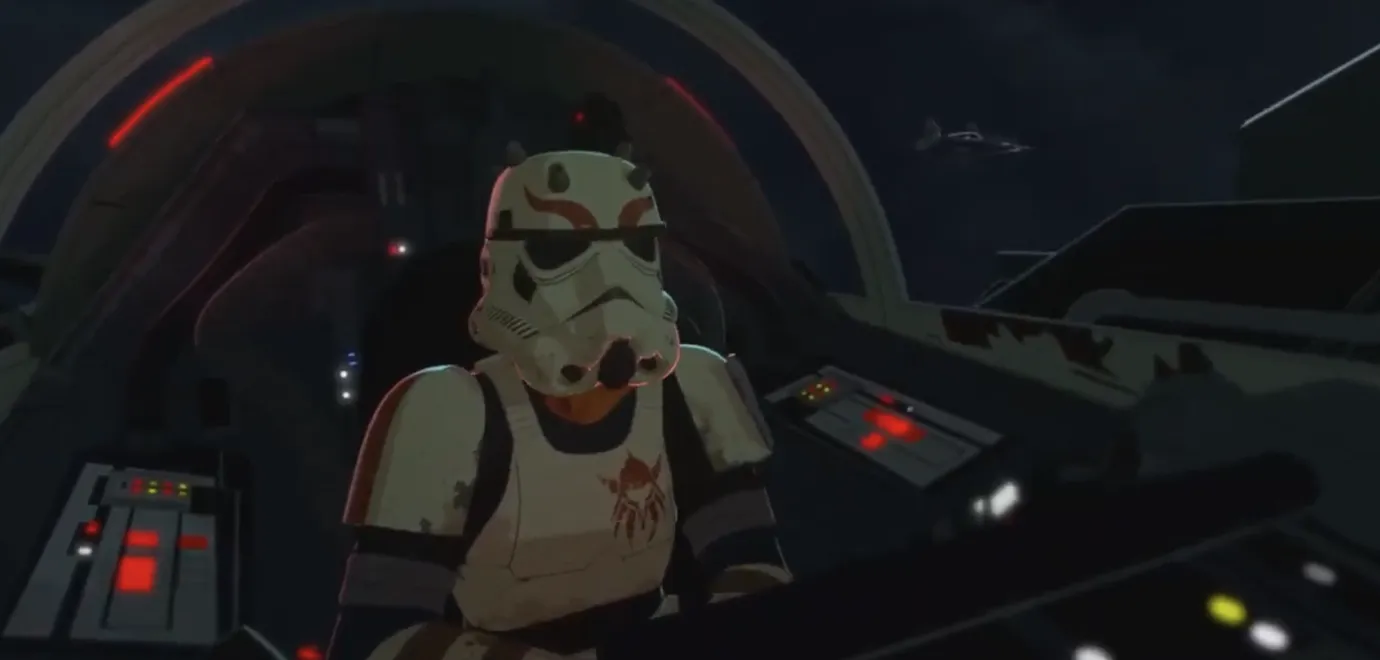
The Warbird mark resembles a horned helmet or bird-like mask, with long shapes hanging below like feathers. It reminds me of some Mandalorian clan symbols. In Star Wars Resistance, the emblem appears directly on the pirates' armour. That rough use suits the gang: their equipment was assembled from old Imperial parts supplied through a deal with the First Order. The symbol feels less like a formal crest and more like a mark painted onto whatever the pirates could reuse.
086
Ranc Gang
Star Wars: Poe Dameron #8
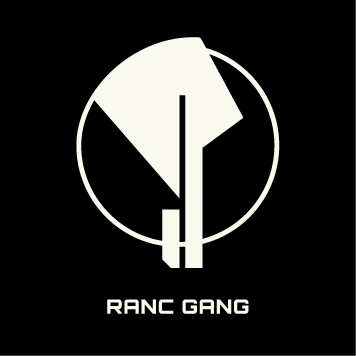
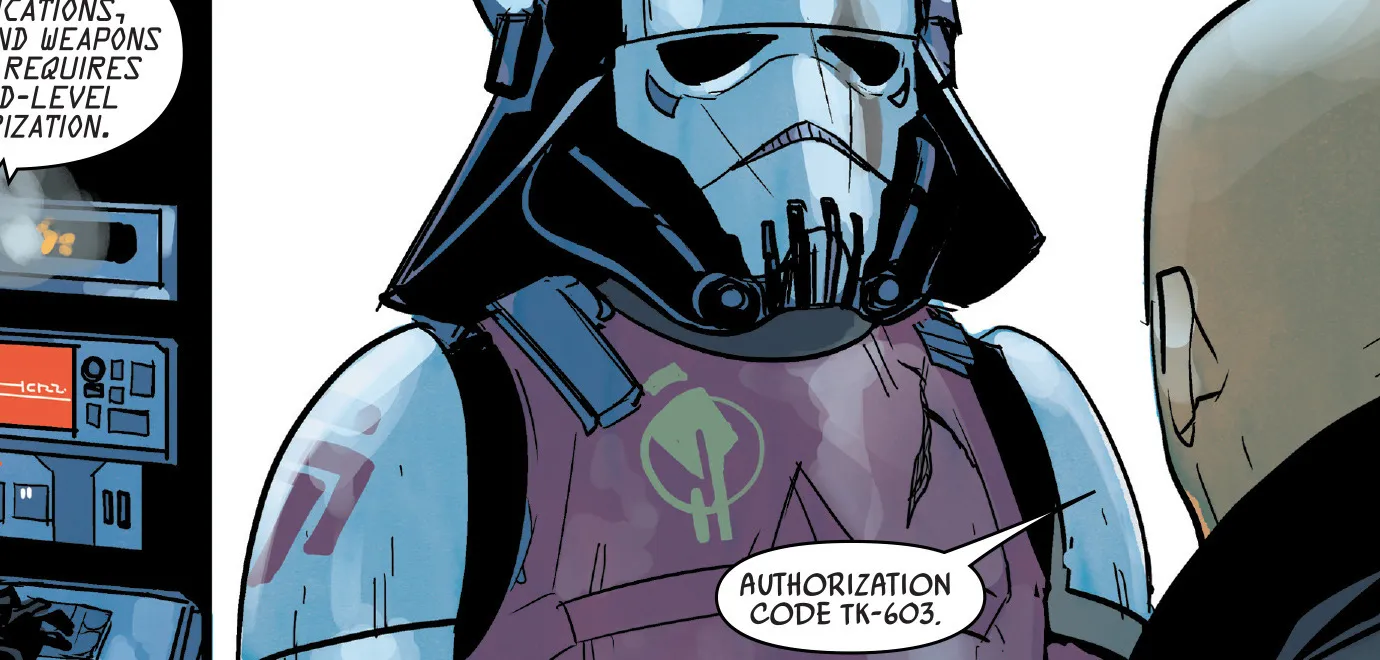
The meaning of this abstract mark is never explained, but its placement says something about the gang. It is painted over a modified stormtrooper breastplate, replacing the identity the armour once carried. That's how the Ranc Gang works, a criminal group on Kaddak that also worked as a repair and salvage operation. Its members built ships from wreckage left after the Galactic Civil War and were later led by the former Imperial stormtrooper Terex.
087
Blazing Claw
Wookieepedia
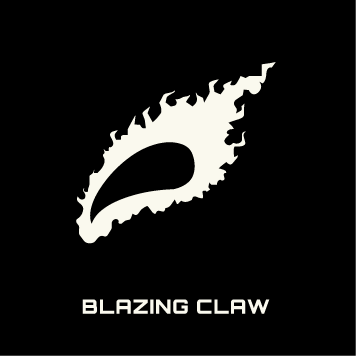
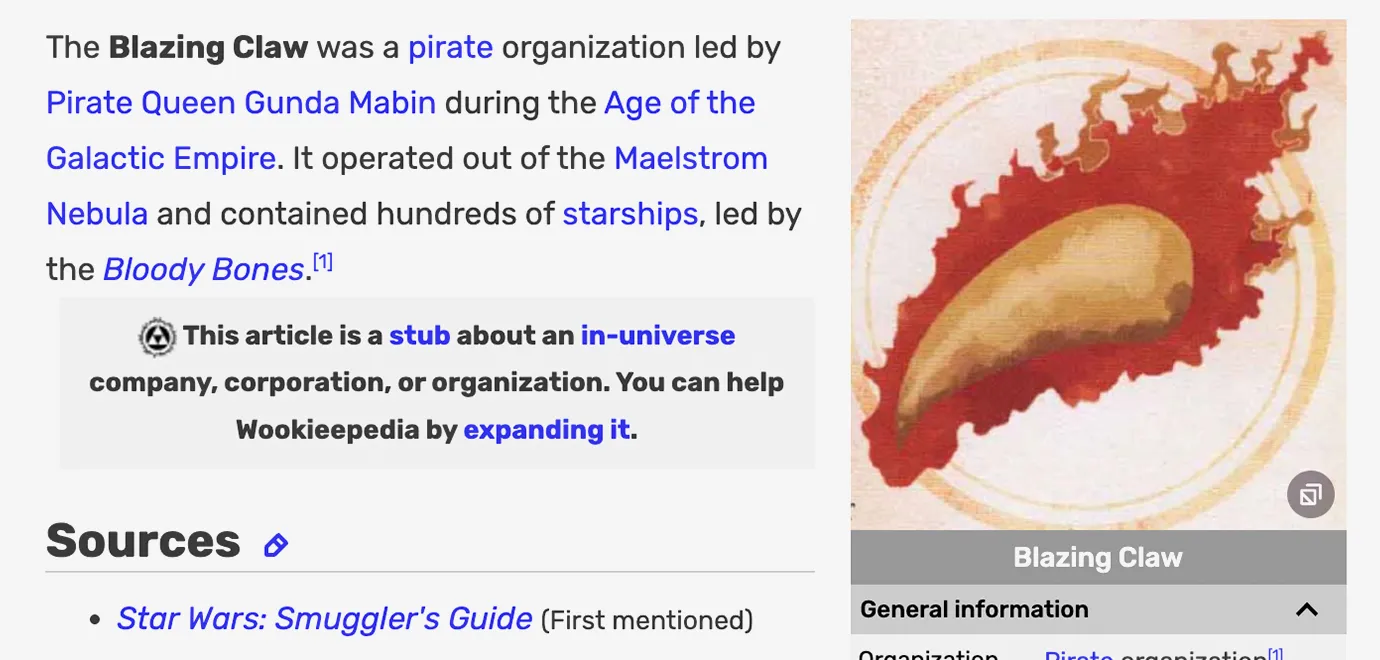
This is one of the most literal symbols in the collection: a claw surrounded by flames. The Blazing Claw was a large pirate organisation led by Gunda Mabin from the Maelstrom Nebula, with hundreds of ships gathered around the Bloody Bones. I have not yet found the crest used in a scene or on an object in the Star Wars universe. The group is documented in Star Wars: Smuggler's Guide, while the only clear image I could find was too small to use, so I redrew the mark for the poster. It is not one of my favourite designs, but nobody could mistake the name behind it.
088
Bounty Hunters
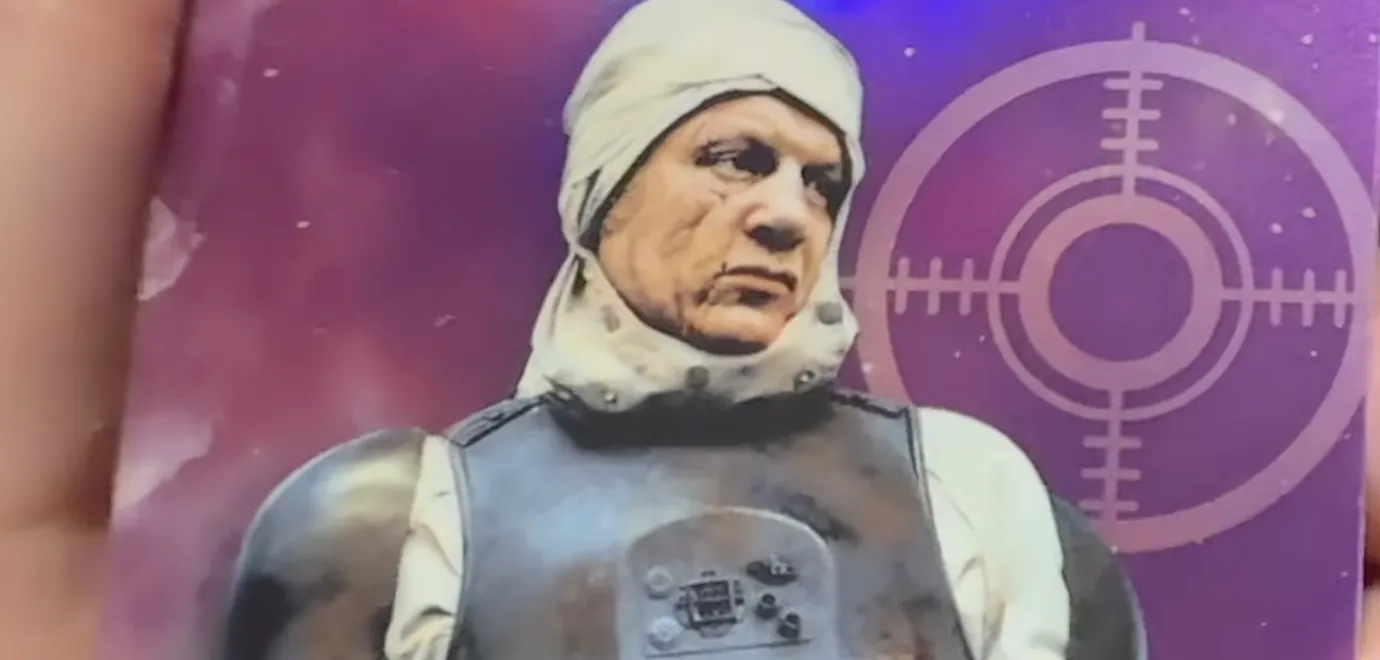
2022 Topps Star Wars T206 Dengar card
Unlike most marks in this section, this one does not seem to belong to a single organisation inside the Star Wars universe. Topps uses it to group bounty hunters such as Dengar on its trading cards. The design is direct, perhaps too direct: a profession reduced to a target and crosshairs. Since bounty hunters work as individuals for hire rather than as one faction, I treat this as an official category symbol that I have yet to find in universe.
089
Fringer
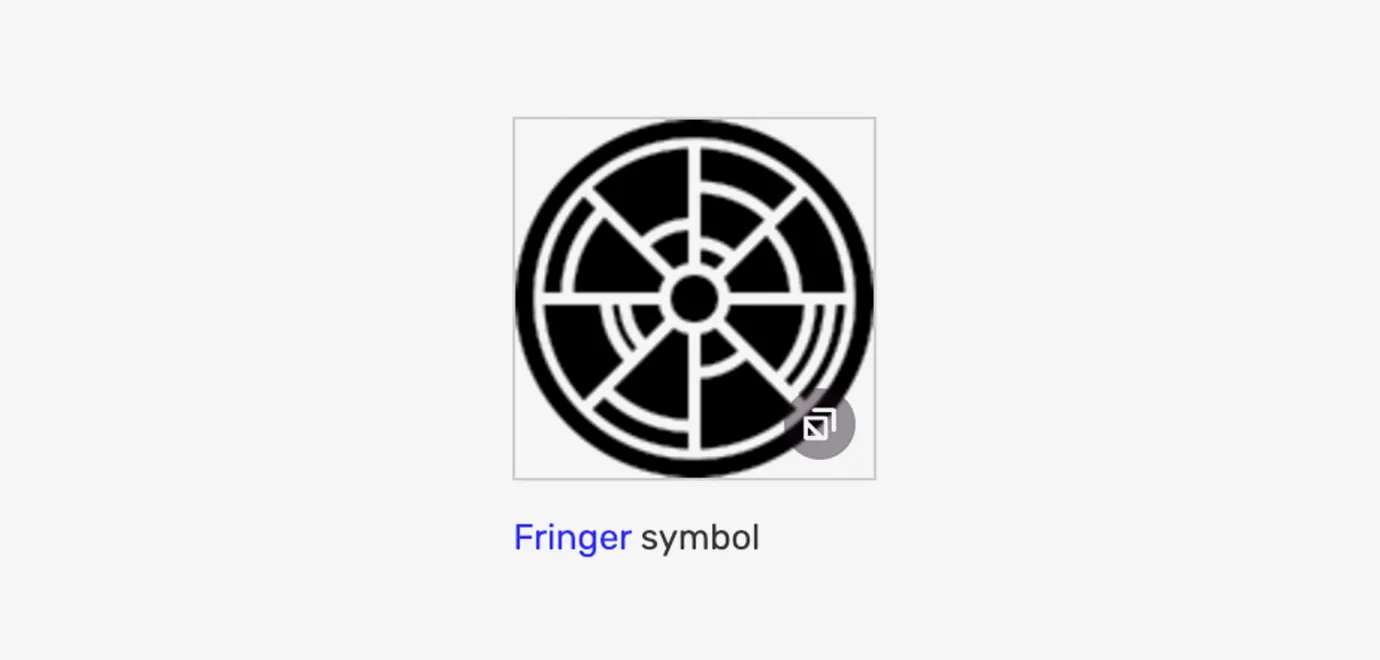
Wookieepedia
Unlike bounty hunting, "fringer" is not a profession or a single organisation. It is a loose name for people who live on the edges of galactic society, including smugglers, pirates and other independents who value their freedom from central authority. The divided circles make me think of separate paths joining around one centre, which fits such a mixed group. I have not been able to trace the symbol to its original source, so for now I rely on the image shown by Wookieepedia.
090
Mabari
Episode II: Attack of the Clones
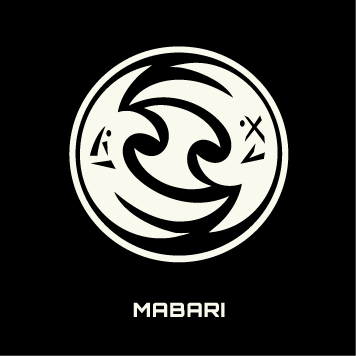
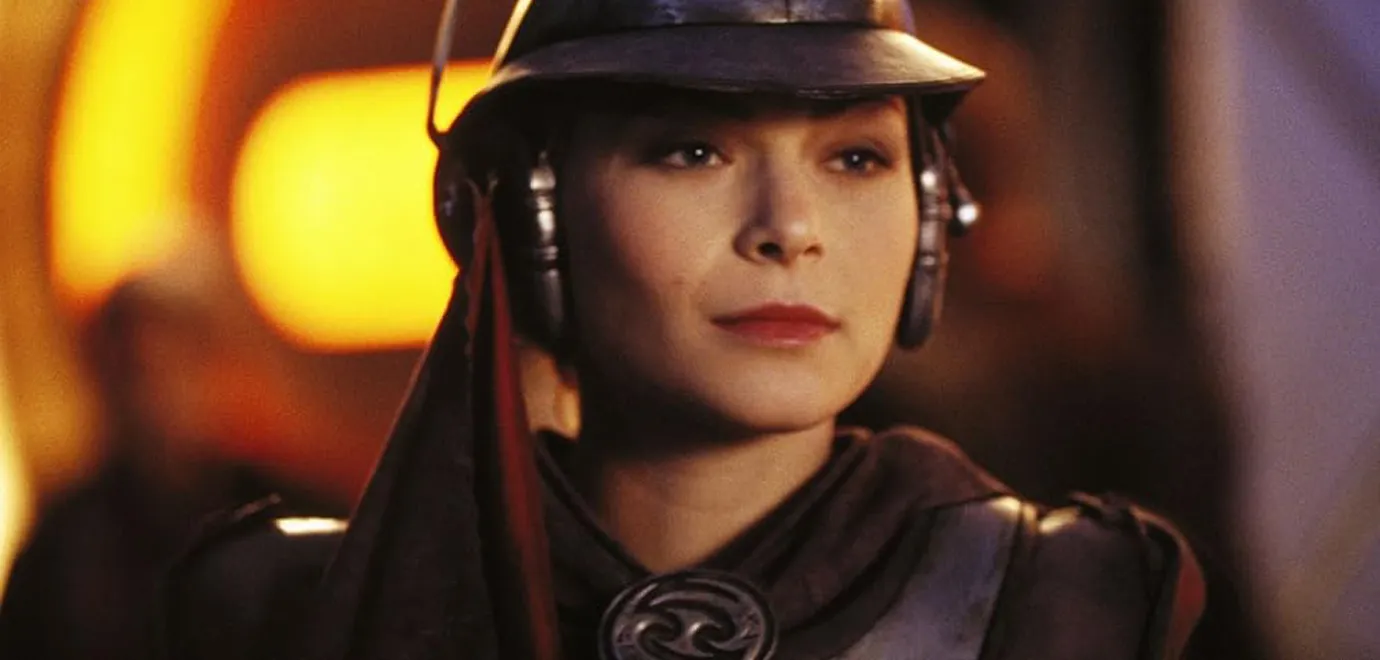
Zam Wesell wears this emblem as a round seal at her collar in Attack of the Clones. It represent the Mabari, an ancient order of warrior-knights from her homeworld of Zolan. Zam trained with the order before leaving to become an assassin and bounty hunter. The curved forms give the mark a sense of movement, while the smaller signs make it feel older and more ceremonial than most symbols in this section. I had to retrace this symbol because it is difficult to find clear images of it.
091
Troik
Skeleton Crew, S1E4: Can't Say I Remember No At Attin
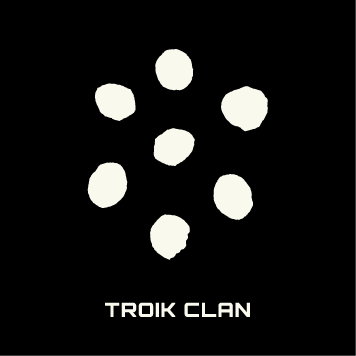
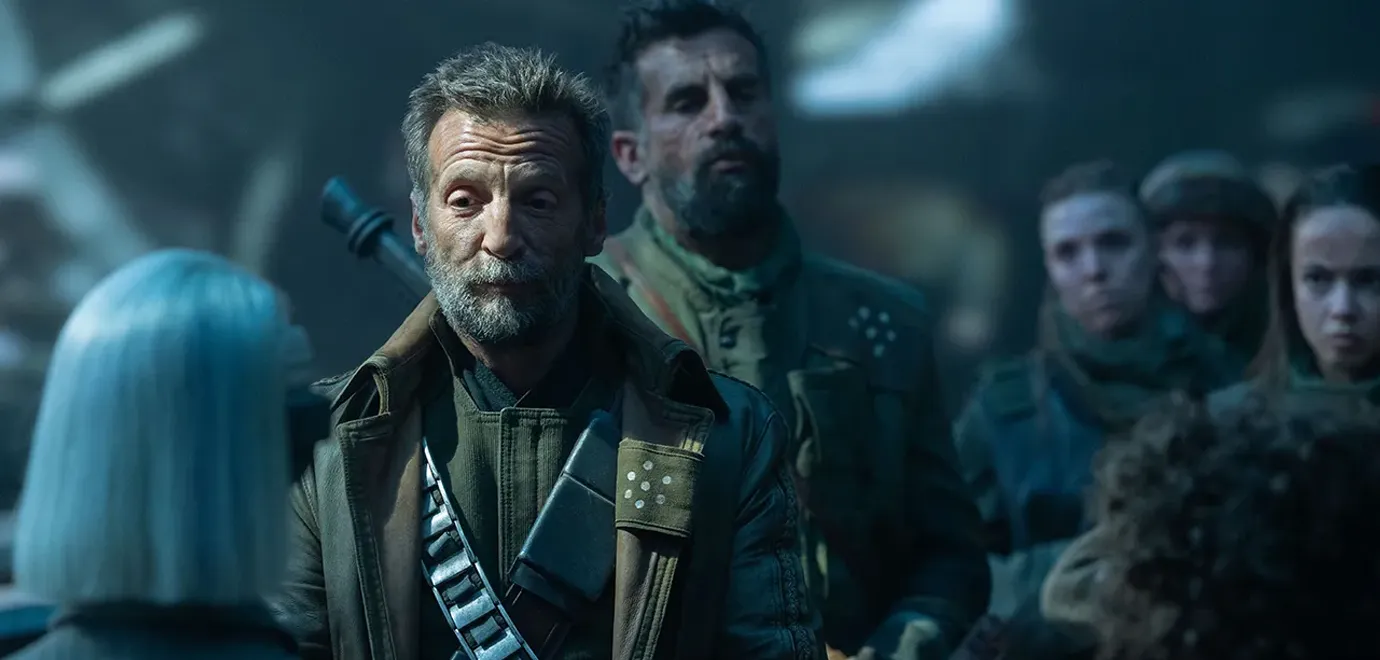
I like that this is barely a symbol at all. Seven uneven dots are enough to separate one side from the other. The Troik wear them on their clothing in Skeleton Crew, where the clan lives on the war-torn world of At Achrann and fights the rival Hattan. The mark feels quickly applied rather than designed for ceremony. In such a harsh place, that makes sense: before anyone knows your name, the dots show which group you belong to.
092
Kouhun Order
Wookieepedia
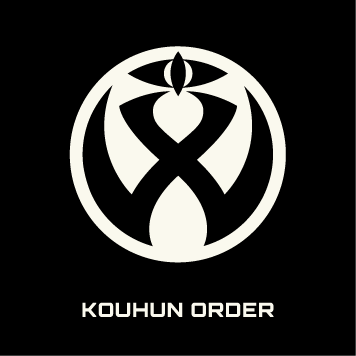
The sharp, interlocking shapes and the eye-like form above them give this mark the feel of a ritual seal. That suits the Kouhun, a secret criminal cult of assassins, blackmailers and political manipulators from the Anoat sector. The order took its name from the venomous kouhun, a creature used for killings that were almost impossible to trace back to the person behind them. I found the crest through Star Wars: Uprising, where the order first appeared. The game was a small part of the wider Star Wars universe, but it introduced a remarkable number of canon groups and symbols.
Companies & Guilds
Back to top093
Techno Union
The Clone Wars, S7E3: On the Wings of Keeradaks
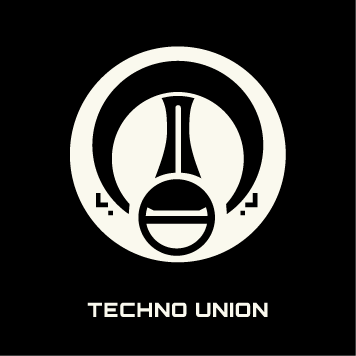
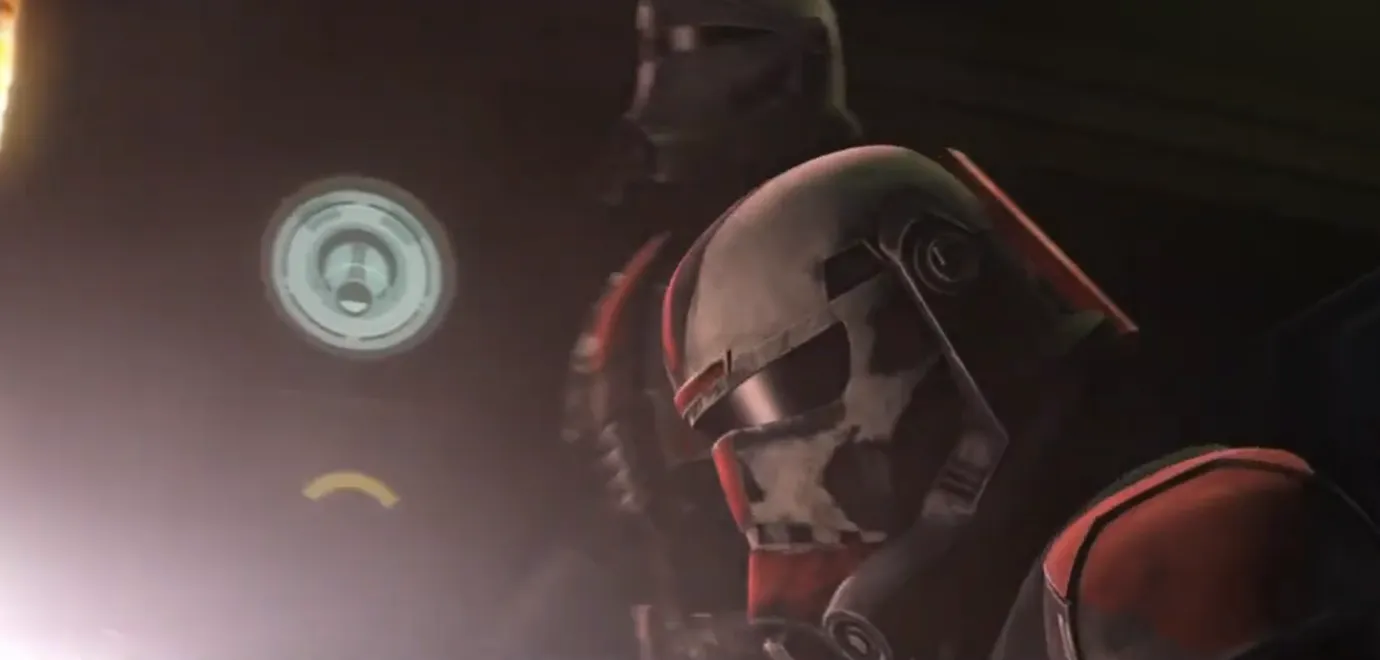
The Techno Union was a powerful guild of technology companies, but its emblem looks more like a machine part than a political crest. The circles, divided centre and narrow vertical form remind me of a technical diagram or a component waiting to be assembled. I have not found an official meaning for these shapes. In The Clone Wars, the mark appears repeatedly throughout the Techno Union base on Skako Minor. That repetition makes it work like a corporate stamp, claiming the building and everything produced inside it. The Union supplied advanced technology and battle droids to the Separatists, so the industrial character feels appropriate.
094
Mining Guild
Star Wars Rebels, S2E15: The Call
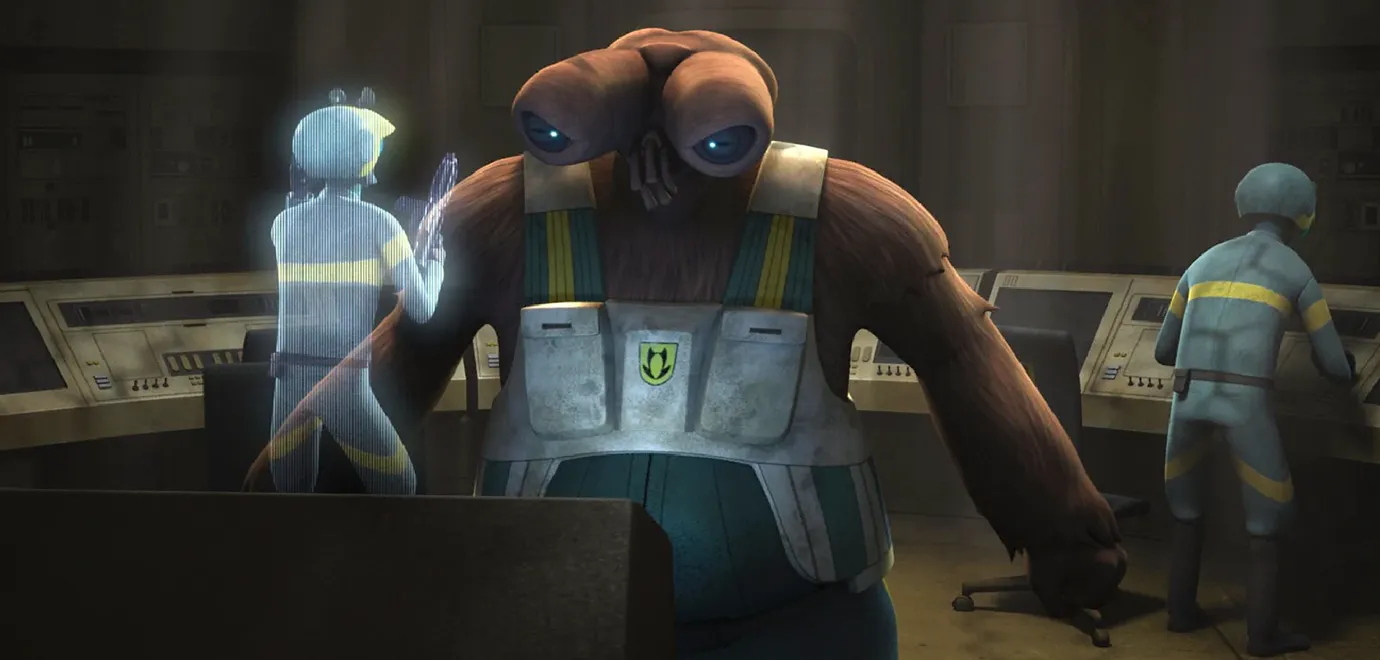
The shield gives the Mining Guild mark an official, almost protective shape, but the form inside is harder to place. To me, it resembles a cowl, helmet or piece of mining machinery, though I found no confirmed meaning for it. In Star Wars Rebels, the emblem is worn openly on workers' gear rather than hidden in the background. The bright yellow suggests industrial warning colours.
095
Chandrila Star Line
The Galactic Starcruiser Terminal, Disney World
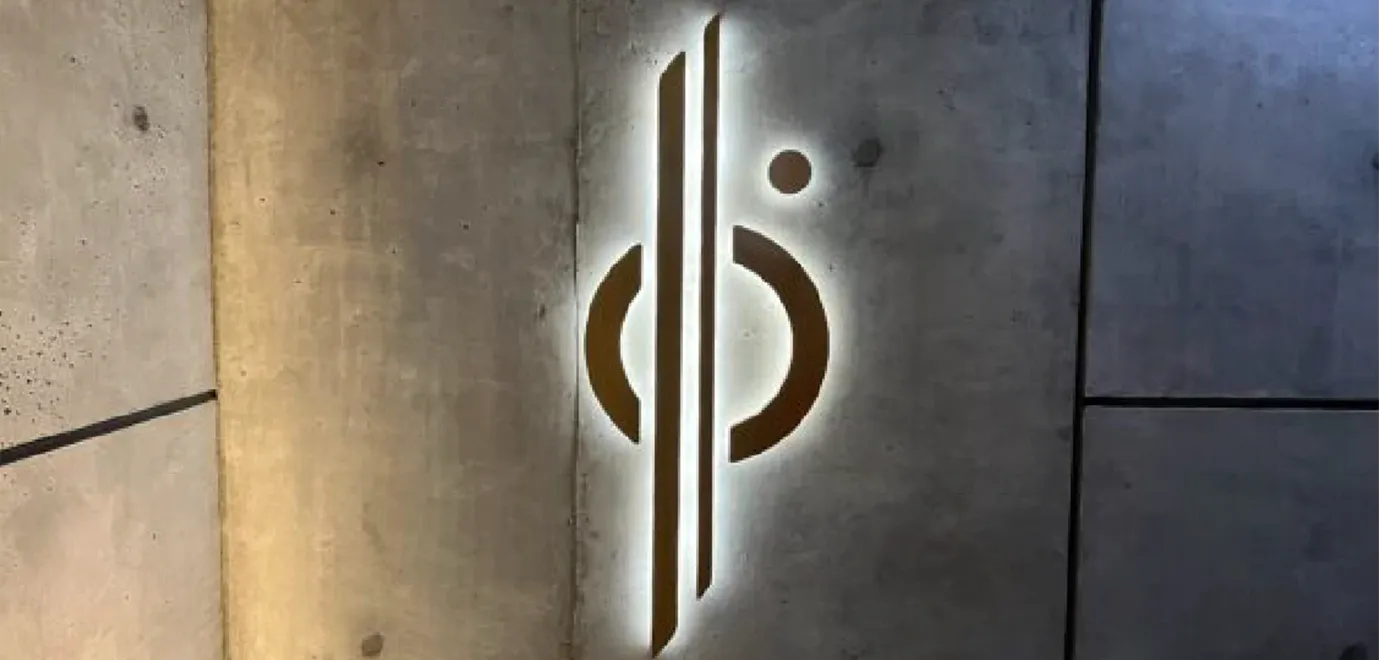
This mark feels made for travel. The circle suggests a planet, while the smaller dot could be a moon or a distant destination. Two long lines pass between them like a fixed route through space, which fits the Chandrila Star Line name. On the Halcyon, the emblem appeared throughout the terminal and ship, from illuminated walls to robes and other passenger items. More than a company badge, it worked as a complete identity for the journey.
096
Bondsman Guild
Batuu Bounty Hunters, Galaxy’s Edge
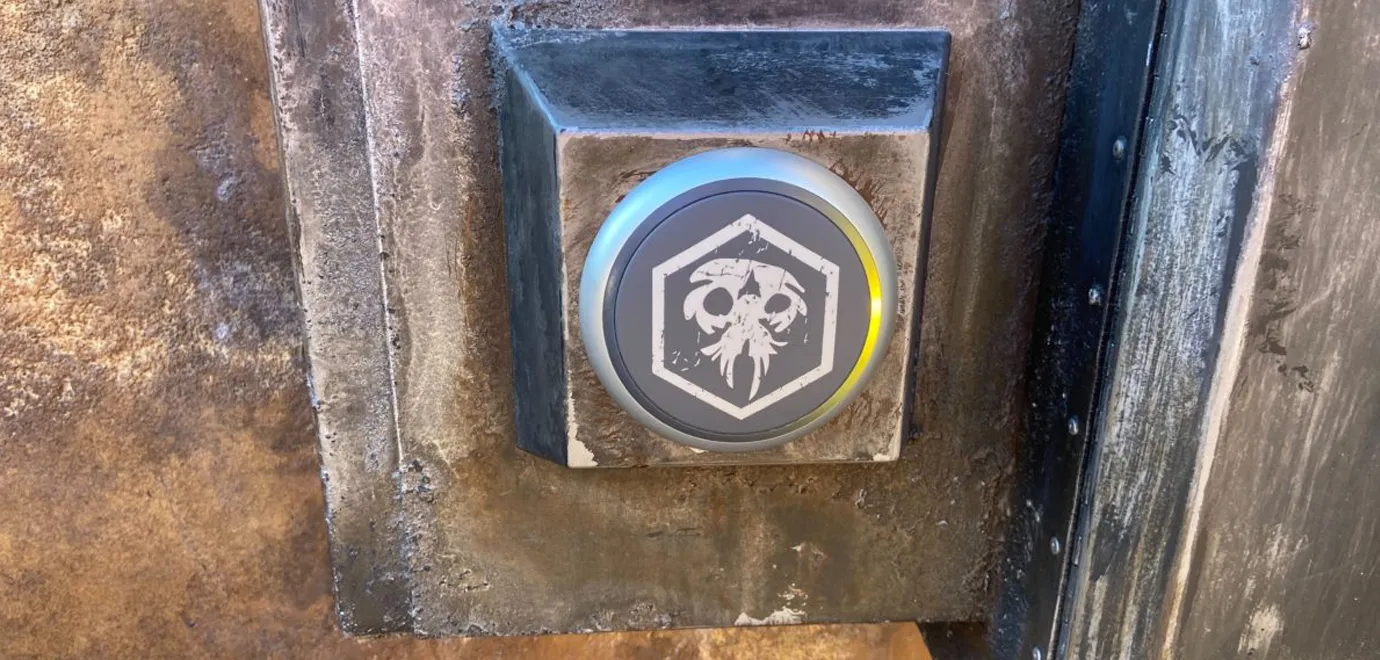
The hexagonal frame gives this mark the look of an official badge, while the skull at its centre suggests the dangerous work of the people who use it. I have not found what creature the skull belongs to. At Galaxy's Edge, the emblem does more than identify the Guild. It marks doors and assignment points throughout Black Spire Outpost, guiding hunters from their first contract to their final reward. I like that visitors can interact with this symbol inside a Star Wars setting, even though it has not appeared in a film or series.
097
Trade Spine League
Wookieepedia
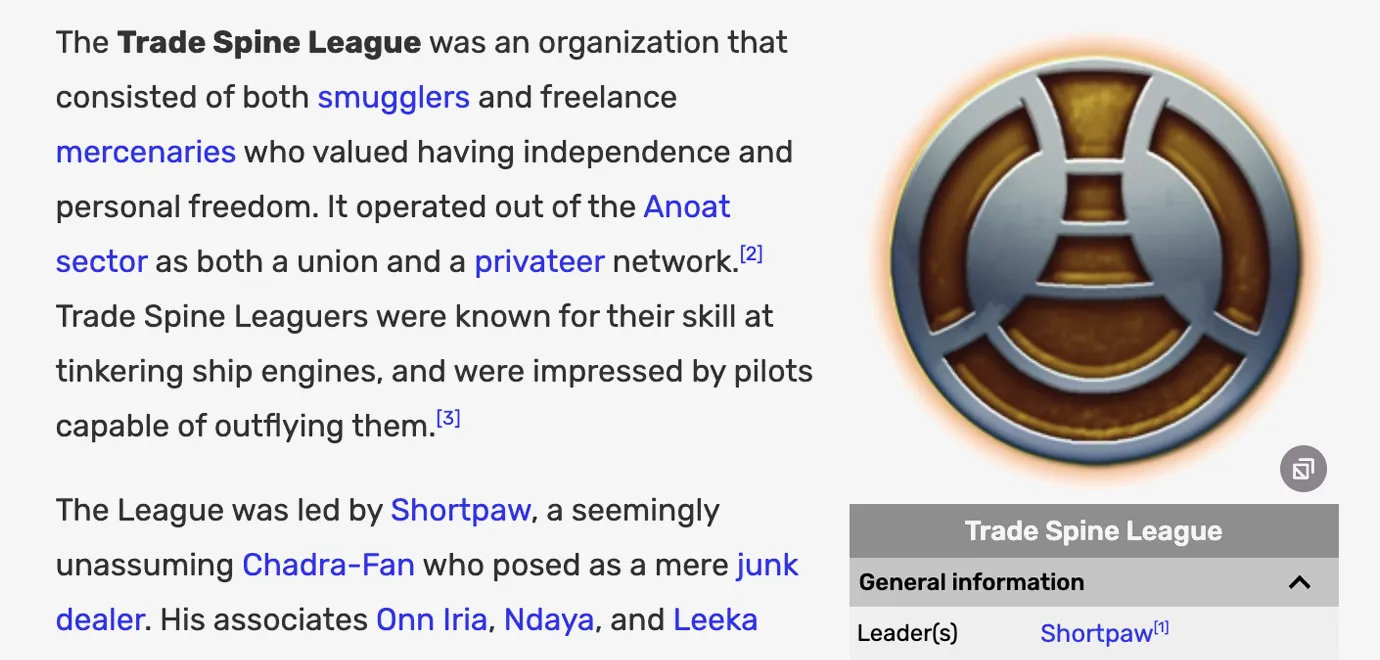
This is the last symbol on the poster that comes from Star Wars: Uprising, and it feels calmer than most of the game's criminal marks. The broad circles and even spacing make it look organised and cooperative rather than threatening. To me, the centre resembles a ship component or navigation instrument, while the vertical shape gives the "spine" in the name a visual form. That suits a league of smugglers and freelance mercenaries who worked as both a union and a privateer network. Its members valued their independence and were known for modifying ship engines. I have not found an in universe depiction of the design, but its mechanical character fits the group well.
098
Trade Federation
Star Wars Propaganda: A History of Persuasive Art in the Galaxy
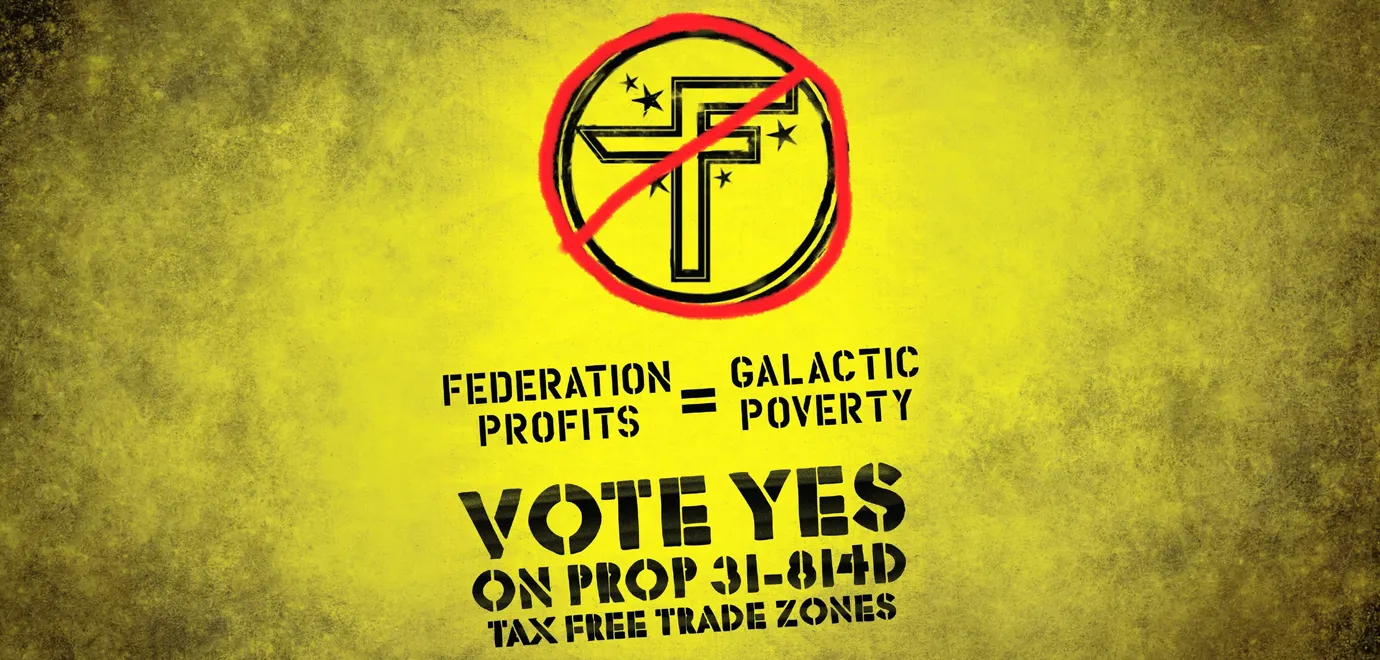
I was sure I remembered this symbol from the films, but I could only trace this version to Star Wars Propaganda. Its angular centre looks like the letters T and F locked together, surrounded by stars and a double circle. It gives the Trade Federation the authority of a state seal rather than the identity of a private company, which suits a corporation powerful enough to influence the Senate and blockade entire worlds. In the book, however, the emblem is crossed out on a campaign poster that links Federation profits to galactic poverty. The corporate seal becomes a target for public anger.
099
Black Spire Outpost
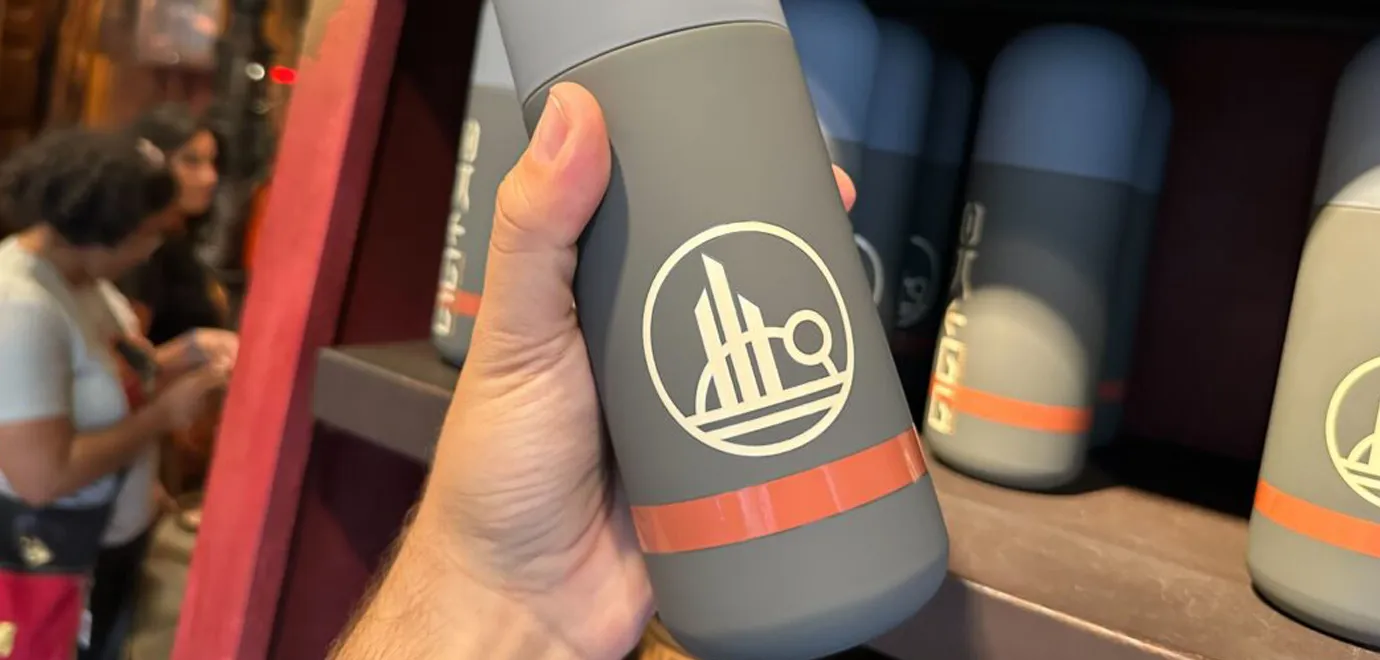
This looks like Black Spire Outpost reduced to a simple skyline. The tall, uneven forms echo the petrified tree spires that gave the settlement its name, while the lines below suggest the buildings or ground beneath them. I read the smaller circle as a sun, moon or waypoint, although I found no official explanation for that part. So far, I have only traced the logo to merchandise from Galaxy's Edge. The Aurebesh on the other side helps the bottle feel like something bought on Batuu. I included it as an official location symbol.
100
Corellian Engineering Corporation
Wookieepedia
This is one of the few company marks that looks less like a logo than a map. A central body sits inside several orbital rings, with smaller objects moving around it, while the octagonal edge gives the whole design the feel of a navigation instrument. The Corellian Engineering Corporation, a major starship manufacturer behind freighters such as the Millenium Falcon. I have found versions with English and Aurebesh lettering, but I have not traced the emblem to a clear appearance inside the Star Wars universe. For now, I rely on the image documented by Wookieepedia.
101
Golan Arms
Wookieepedia
Two polished shapes twist past each other inside a square. They could be armour plates, flames or even abstract versions of the letters G and A, but I found no confirmed meaning for them. What works is the tension between the soft curves and sharp points, which gives the mark an industrial and slightly aggressive character. Golan Arms produced heavy weapons used by both Rebel and Imperial forces, like the big white turrets on Hoth. I have not found the logo placed on the equipment itself, so this remains a company identity known mainly through reference material.
102
Sienar Fleet Systems
Wookieepedia
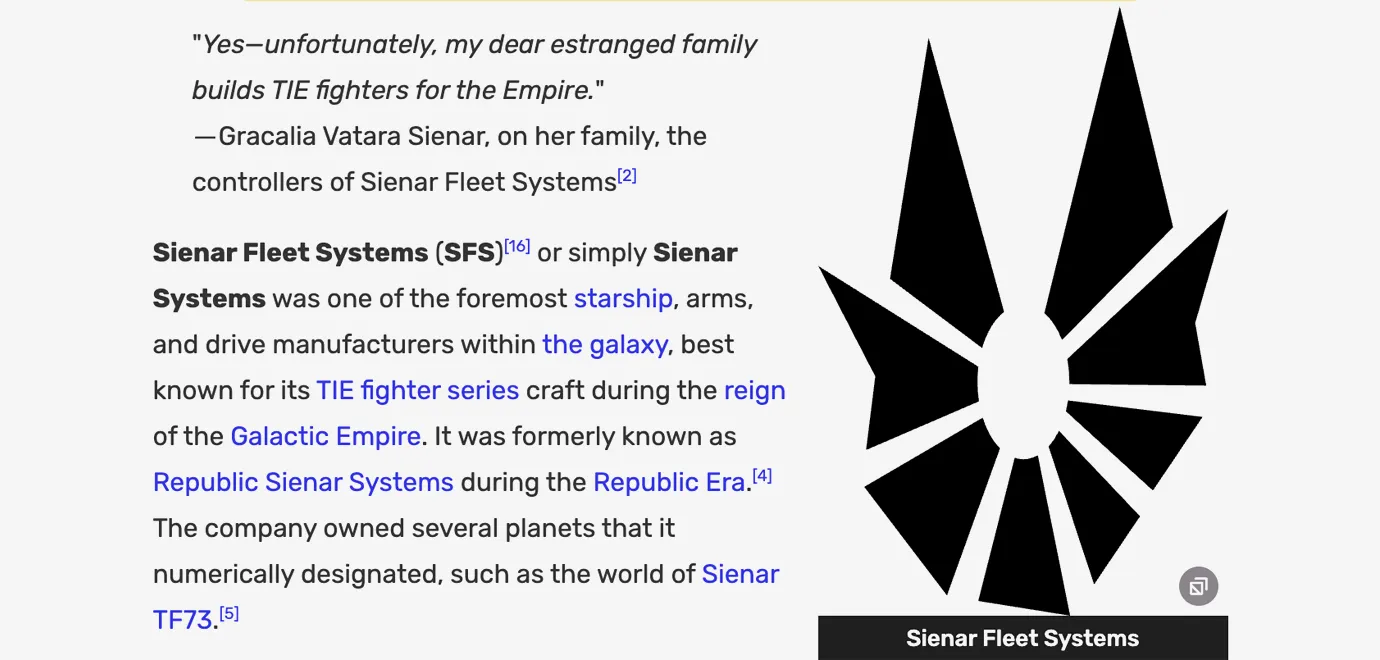
At first glance, this mark may remind you of the Millennium Falcon seen from above, with two long points breaking out of a rough circle. But it can't be that since the Corellian Engineering Corporation built that one. The sharp wedges radiate from a central hub, giving the symbol the mechanical and aggressive character of a company best known for building TIE fighters and other military technology for the Empire in fact.
103
Cybot Galactica
Star Wars Galaxy's Edge trading pin
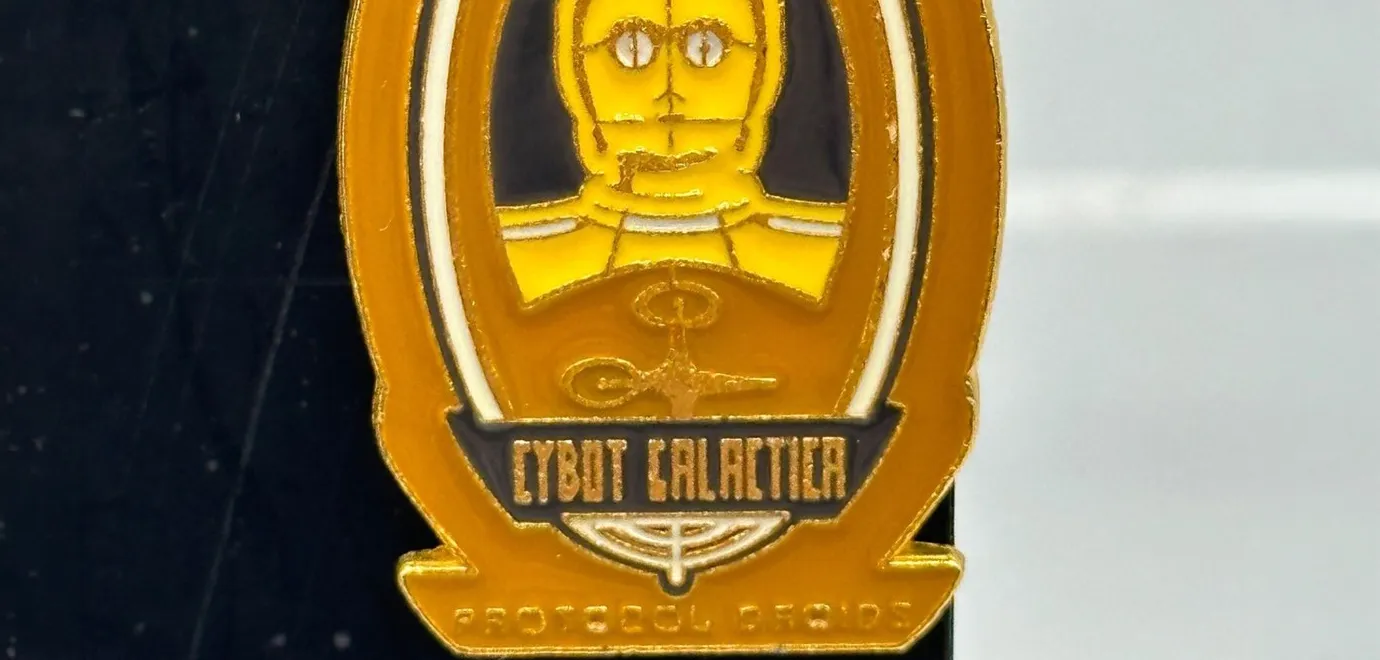
Cybot Galactica, the manufacturer behind the 3PO series and many other protocol, medical and analysis droids. C-3PO did not leave one of its factories as we know him. Anakin Skywalker assembled him from discarded Cybot Galactica parts. I was glad to find a clean version of the mark on this small Galaxy's Edge pin, where it sits beneath the company's most famous design.
104

Industrial Automaton
Official product merchandise
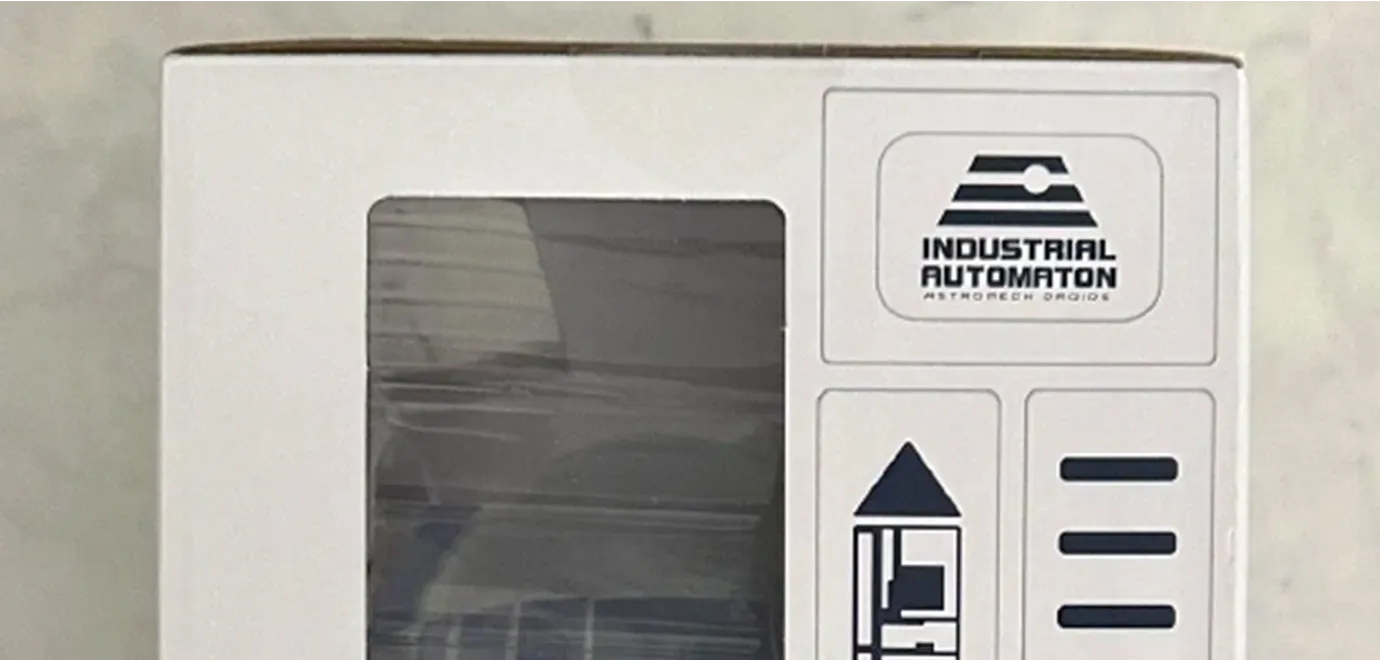
The stepped bands make this mark feel like a production line or a set of machine parts, while the circle could be read as a droid's optical sensor. Its simple geometry suits a company built around mass production. Industrial Automaton developed several major droid families, including the R-series that gave the galaxy R2-D2. I found the symbol on Galaxy's Edge merchandise from Droid Depot, where it is presented as the maker's mark for astromech droids. I have not yet found it placed on a droid or factory inside the story itself.
105

BlasTech Industries
Wookieepedia
The company name may explain the design. Two eight-pointed shapes overlap around a dark centre, creating something between a star and a controlled explosion. BlasTech supplied some of the galaxy's most familiar weapons, including the rifles used by the Rebel Alliance. The logo avoids either side's visual language and presents the company as the technology behind the weapon.
106

Arakyd Industries
Star Wars: Destiny, "Pilfered Goods" event card
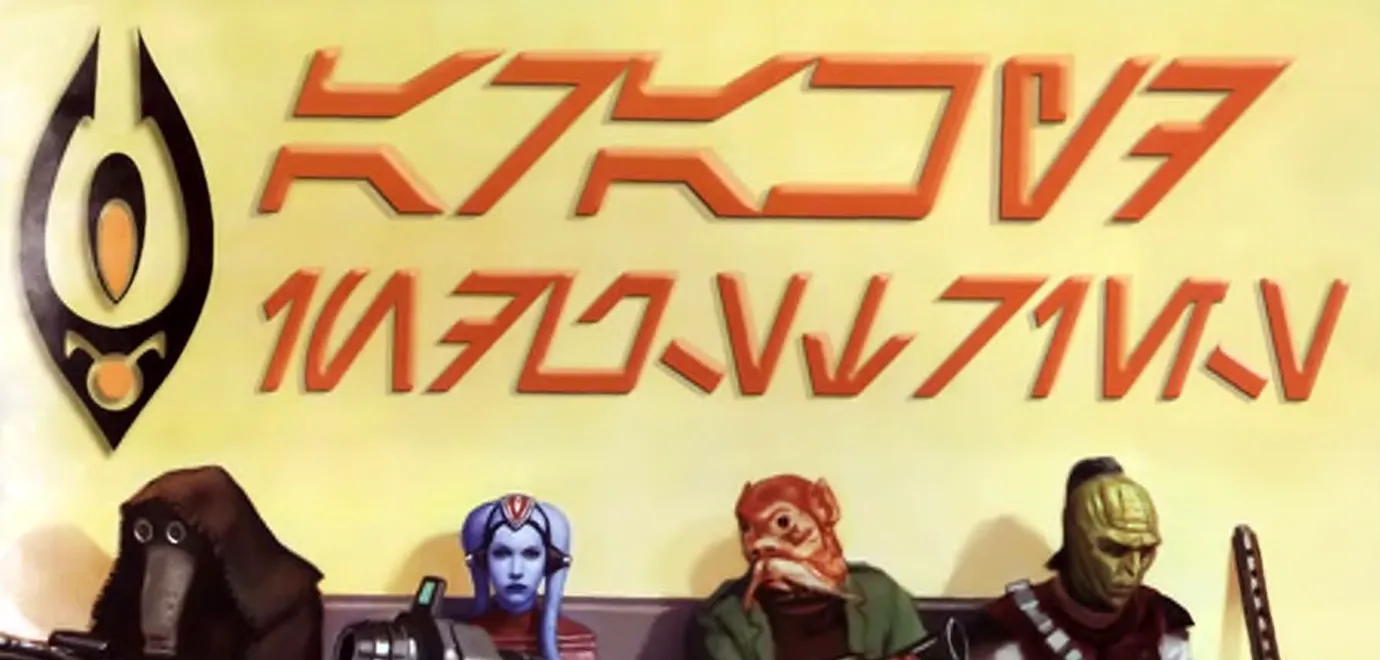
Compared with the rigid geometry of the previous company marks, the Arakyd emblem feels almost biological. Its outer shell surrounds a smaller oval like an eye, seed or probe droid seen from the front. The small circle below adds to the impression of a sensor assembly. Their watchful character suits a company known for probe and reconnaissance droids, including the Viper model used by the Empire. In the artwork for Pilfered Goods, the mark appears as large corporate signage. It gave me a rare clear source for a logo that is otherwise difficult to trace.
107
Preox Morlana Corporation
Andor, S1E3: Reckoning
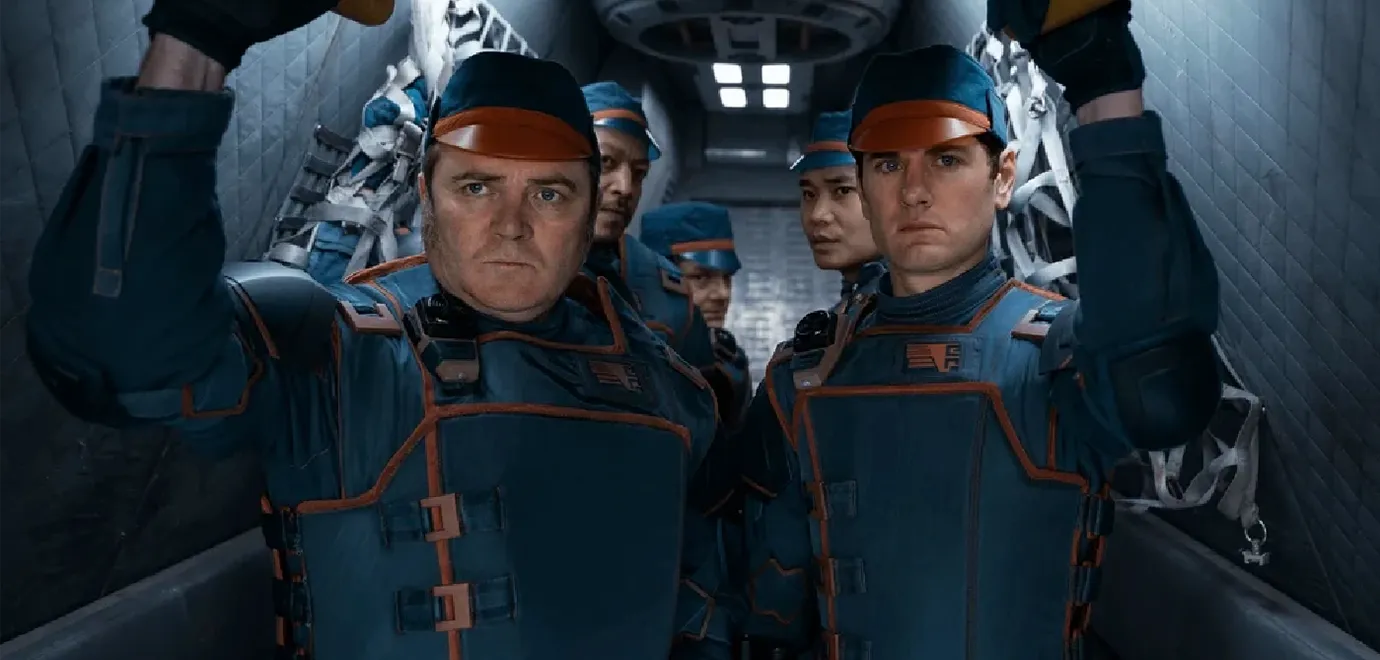
The Preox-Morlana logo does not hide what it is: a squared P and M locked into one hard-edged monogram. Its broad bars and sharp corners give it the controlled, retro-industrial character of a company that values order above personality. In Andor, the mark sits on the officers' chests and fits the strict lines of their blue and orange uniforms. Preox-Morlana was not just a company. Under Imperial supervision, it governed and policed the Free Trade sector through its own security force. That makes the logo feel less like a commercial brand and more like a badge of authority.
108
Droid Depot
Galaxy’s Edge, Disney World
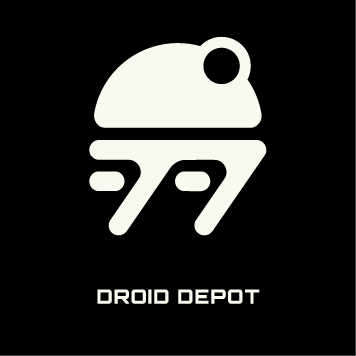
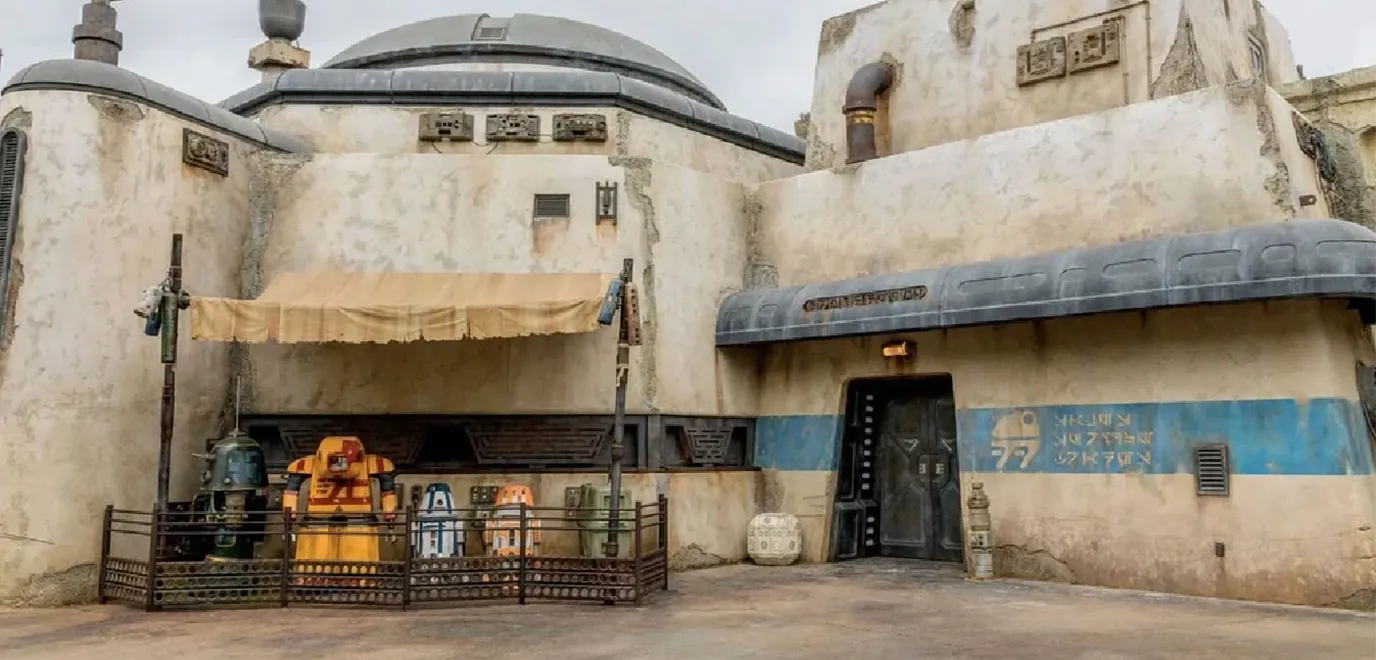
The Droid Depot mark reduces an astromech to its simplest parts: a rounded dome, one circular sensor and two angled legs. It is almost pictographic. At Black Spire Outpost, the symbol is painted directly onto the building beside its Aurebesh lettering. Inside, visitors assemble BB-, C- and R-series droids from separate components. I like how friendly and practical the mark feels. It belongs to a local repair shop rather than a large manufacturer, and it tells you exactly what can be found inside.
109
Kuat Drive Yards
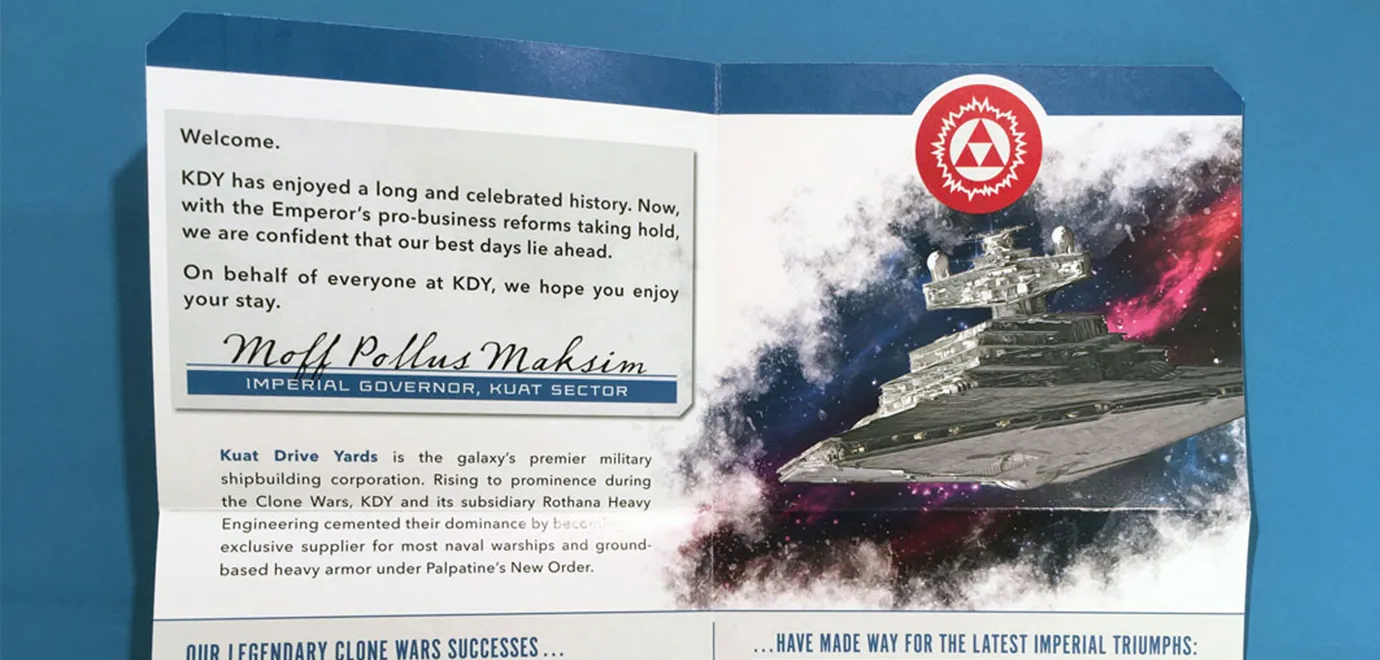
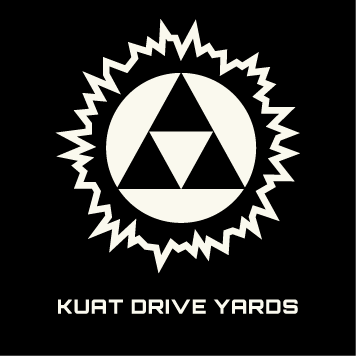
The Kuat Drive Yards emblem is hard to ignore. A ring of sharp points surrounds three triangles locked inside a circle, giving it the force of a warning sign or an industrial seal. Its severe geometry suits one of the galaxy's largest military shipbuilders, responsible for Imperial-class Star Destroyers and heavy walkers such as the AT-AT. I had difficulty tracing the mark until I found it in the Kuat Drive Yards corporate folder included with Star Wars: The Rebel Files. Powerful, technical and slightly intimidating, it feels made for a company that built the machinery of the Empire.
110
Jinata Security
Battlefront II
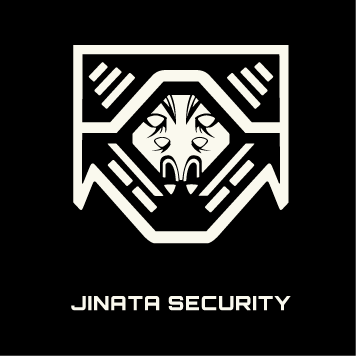
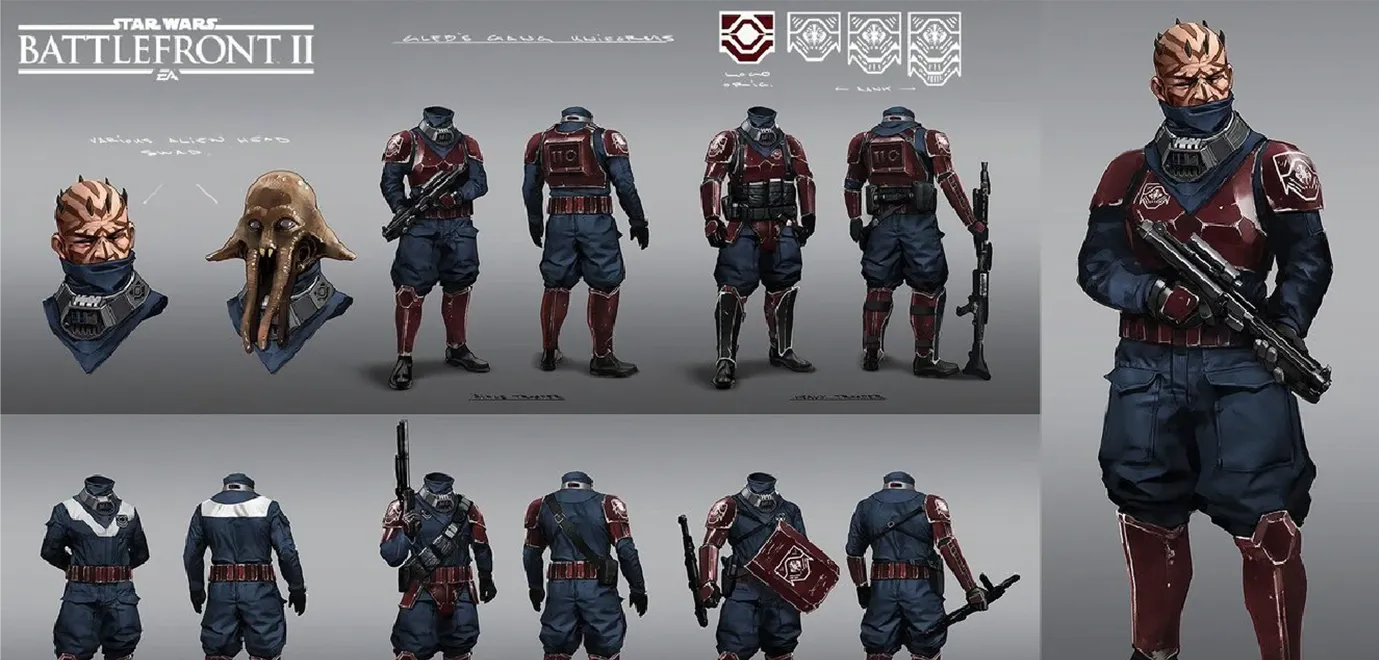
The Jinata Security emblem is one of my favourites in this section. A strange face with several eye-like shapes sits inside a hard geometric frame, making the mark feel both watchful and authoritative. I read those eyes as constant surveillance, although I found no confirmed meaning for them. J-Sec served as the police force of Vardos, an Imperial-controlled world built around loyalty and order. In Battlefront II, the emblem is worn openly on the officers' armour, where its symmetry matches their strict blue and red uniforms.
Personal Marks and Family Sigils
Back to top111

Kanan Jarrus
Star Wars Rebels, S1E12: Vision of Hope
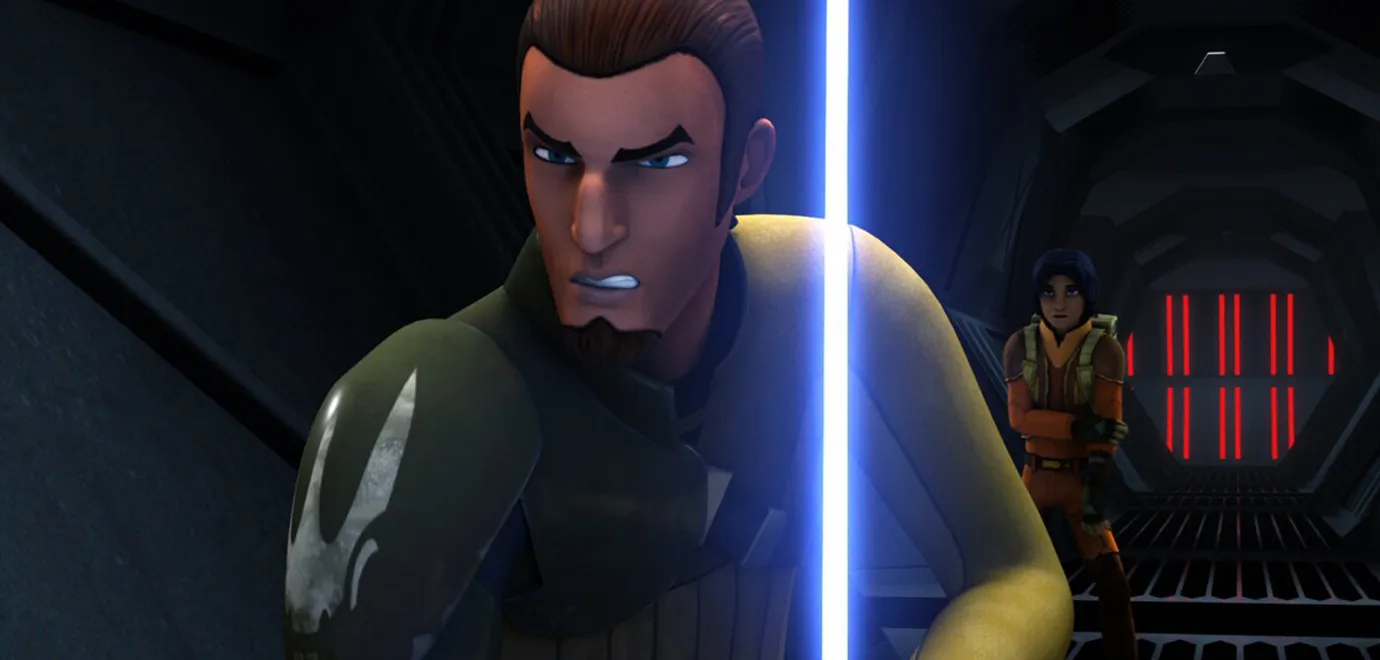
I couldn't find an official name or explanation for the white mark on Kanan's shoulder armour. Its pointed, animal-like shape feels primal and almost Mandalorian, especially beside symbols such as Death Watch. The two raised sides also recall the Rebel starbird. Its strongest meaning arrives later: after Kanan's death, the same mark appears on the forehead of Dume, the great Loth-wolf who guides Ezra. That connection is why I placed it among the personal marks rather than with the Jedi or Rebel symbols.
112
Ezra Bridger
Star Wars Rebels, S1E10: Path of the Jedi
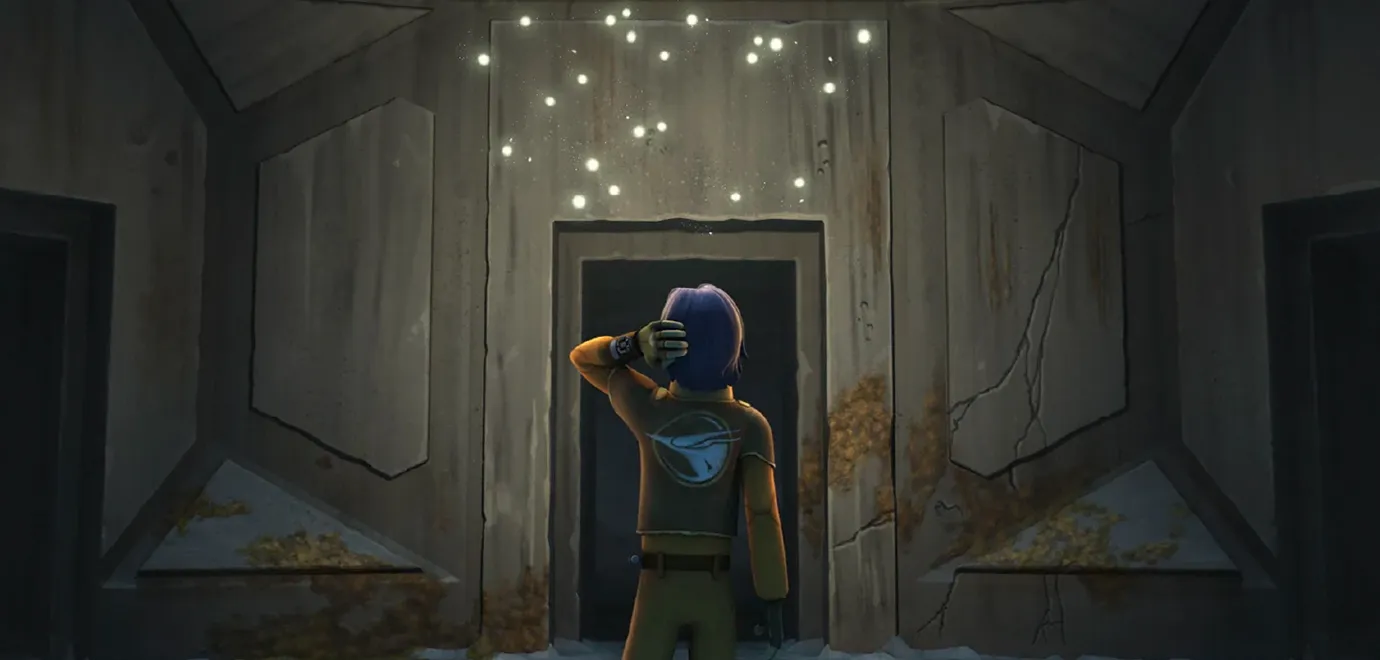
Ezra wears this mark across the back of his jacket throughout the early seasons of Rebels. Its pointed head resembles a Loth-cat, one of the animals native to his homeworld, but I couldn't find an official name or explanation for the design. The resemblance still feels fitting. Ezra grows up alone on the streets of Lothal, and animals from the planet later guide him through the Force. The circular frame and long horizontal stroke also echo the Rebel starbird.
113
Lando Calrissian
Millennium Falcon Owner's Workshop Manual
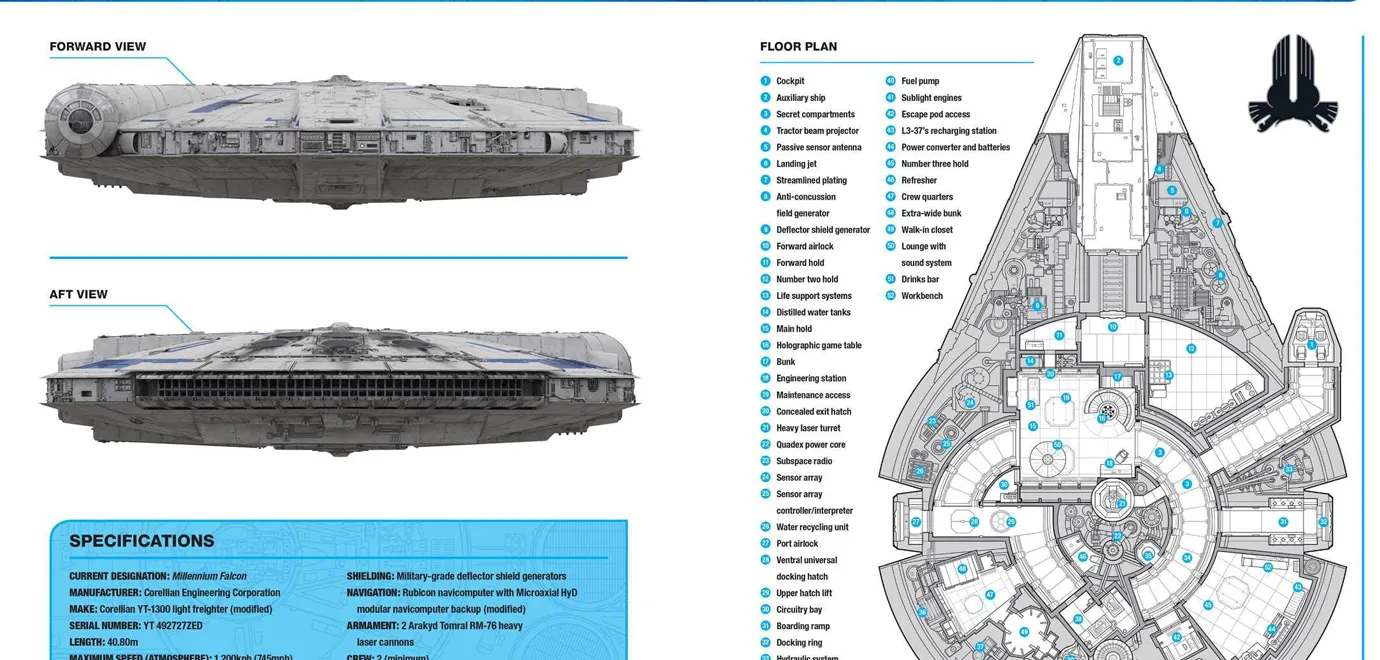
I had no idea Lando had a personal crest until I found it in the Millennium Falcon Owner's Workshop Manual. The book places the mark beside a technical drawing of his version of the ship, but gives no explanation for its meaning. Its tall, symmetrical shape feels more like a polished personal badge than a military insignia. That suits Lando, who kept the Falcon clean, refined and unmistakably his own. I couldn't find the crest worn or displayed in the stories, making it one of the rarer personal marks on the poster.
114
Jaster Mereel's Sigil
The Book of Boba Fett
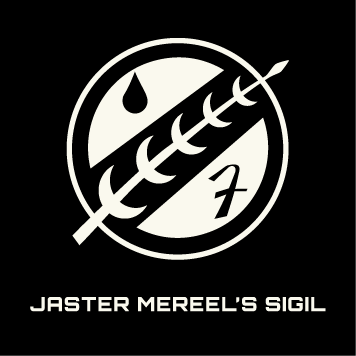
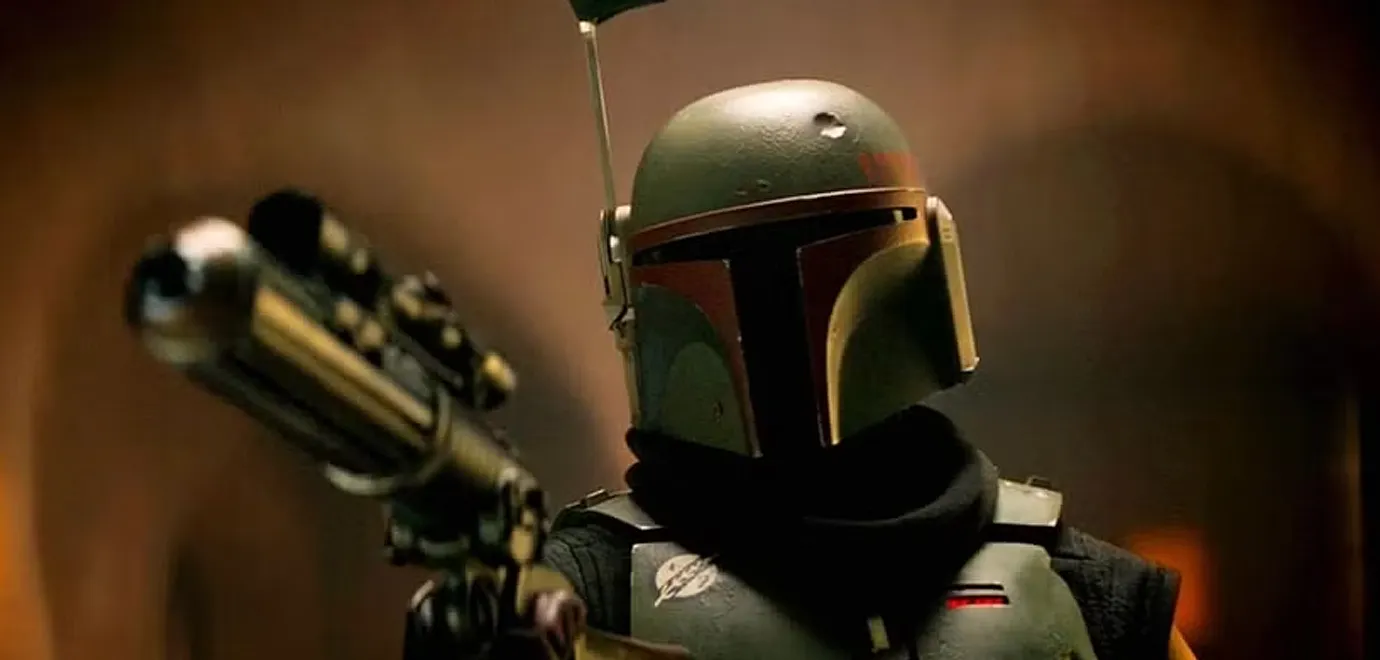
This mark appeared on Boba Fett's chest plate long before it got a story. It was already part of his armour in The Empire Strikes Back, but later Legends material identified it as the sigil of Jaster Mereel, the Mandalorian leader who became Jango Fett's mentor and adoptive father. That makes Jaster a kind of adoptive grandfather to Boba. The diagonal stalk, drop and small glyph asks for interpretation, but I couldn't find an official explanation for their meaning. The Book of Boba Fett simply gives this old costume detail a much clearer appearance.
115
Grievous
2025 Topps Chrome Star Wars #49
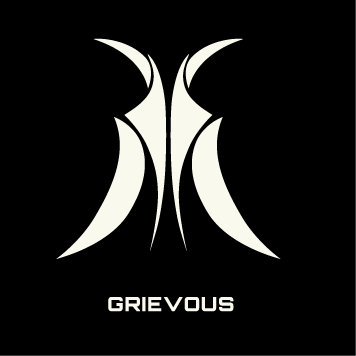
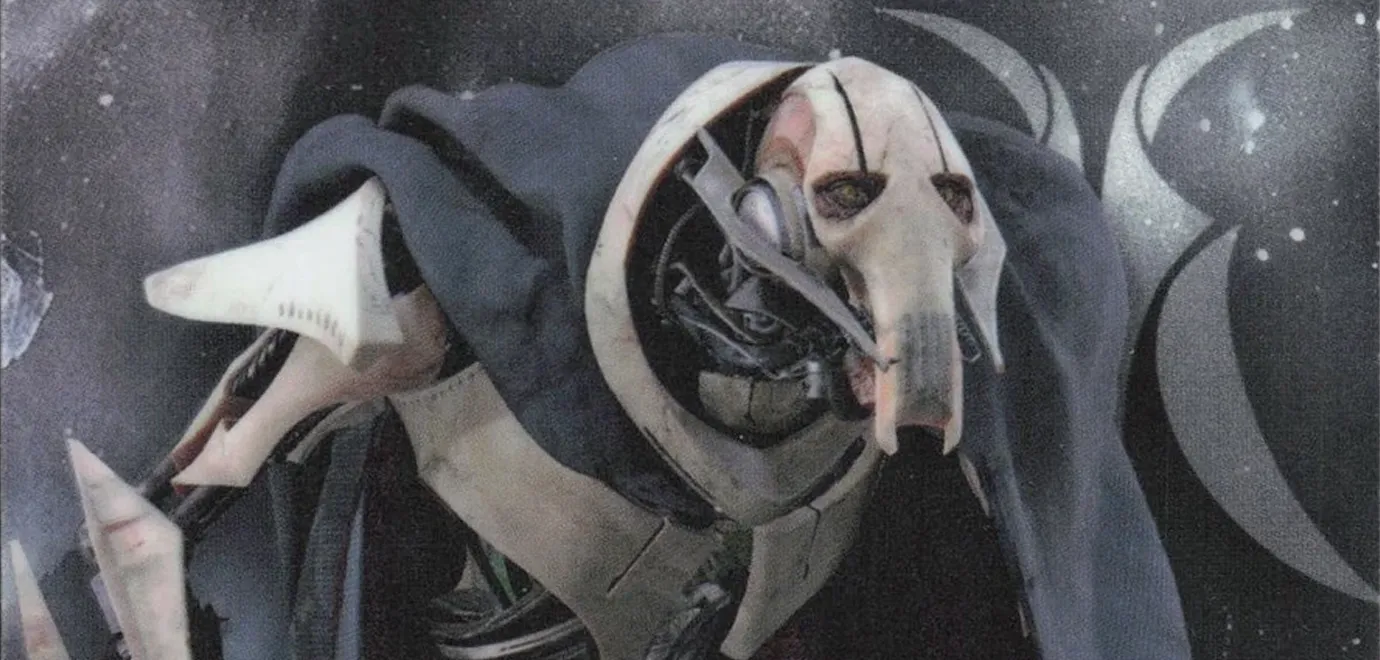
The Kaleesh logo appears on the back of Grievous's cloak, connecting the cyborg general to his former life as a Kaleesh warrior. It is difficult to see in full because the fabric is usually folded or moving, so I relied on this Topps card for a clear view. Similar marks also appear on starfighters used by his MagnaGuards. Its mirrored, blade-like form fits Grievous, although I couldn't find an explanation of what the individual shapes represent.
116
Admiral Trench
The Clone Wars, S2E16: Cat and Mouse
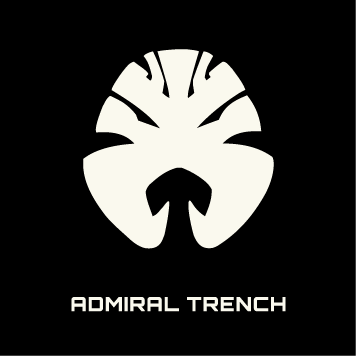
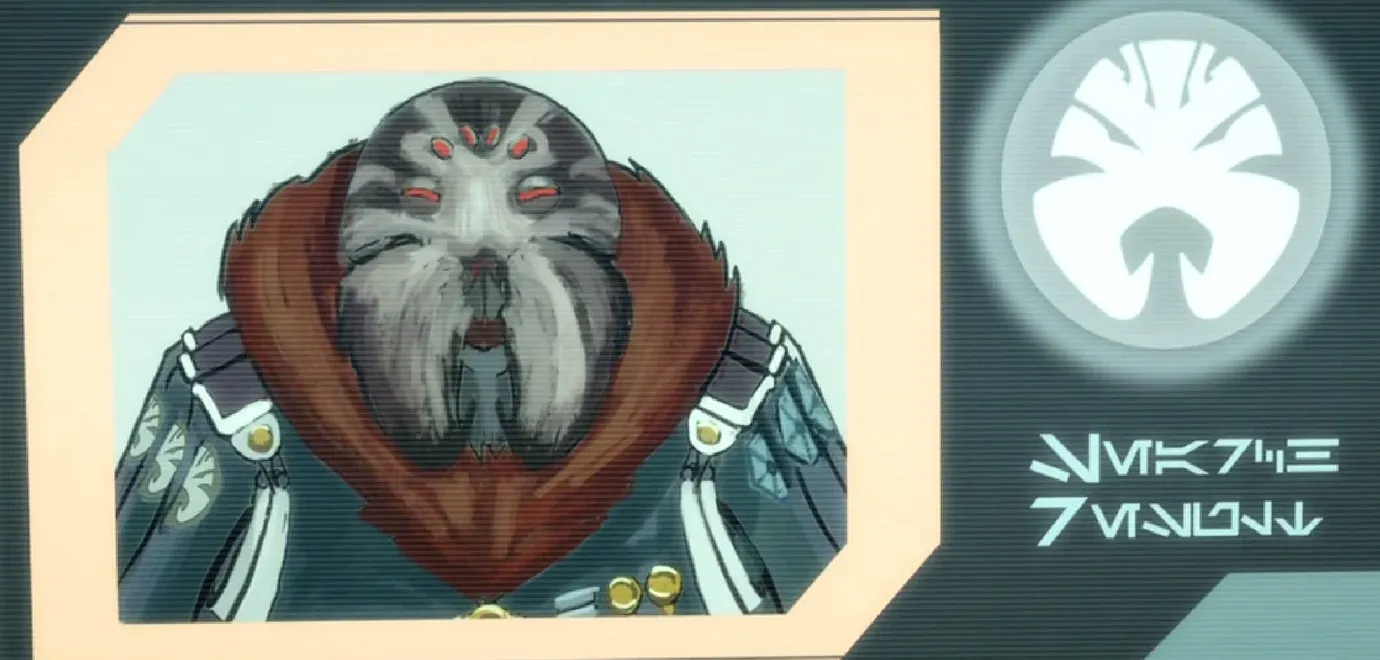
The database screen in Cat and Mouse episode makes the idea clear: Trench has turned his own spider-like face into a military crest. Admiral Yularen recognizes the mark on the Separatist flagship Invincible before Trench appears, having encountered it during an earlier battle. Trench also wears it on his uniform, while a tactical droid under his command later carries the same crest. I found no evidence that it represents the Harch as a species. It seems to mark Trench's personal command instead. I also like how the negative space forms an upward arrow, giving the face a second shape.
117
Ronen Tagge
Doctor Aphra
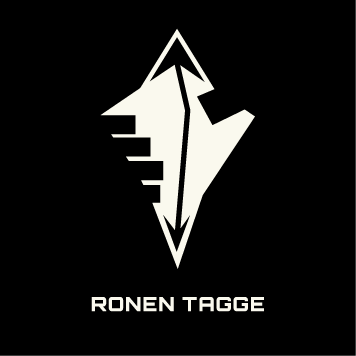
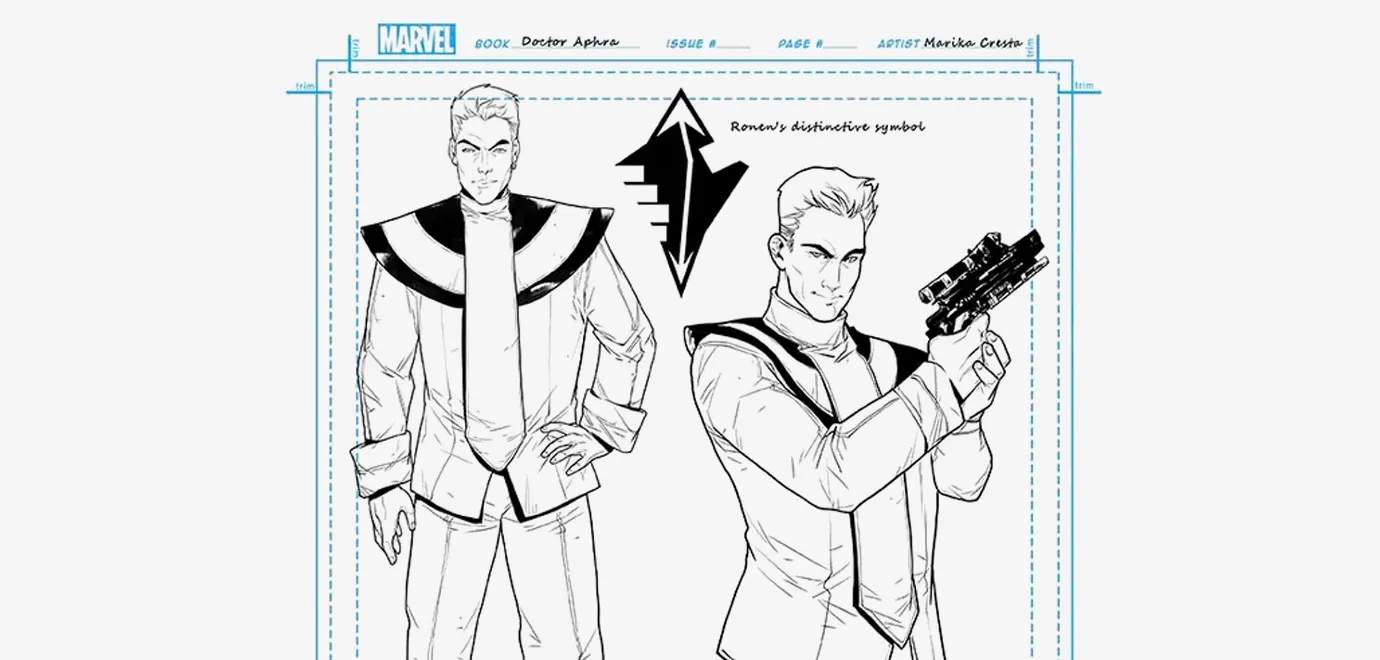
Ronen's character study calls this his "distinctive symbol," but never explains what it means. I see two arrows joined together, one pointing up and the other down. That contrast suits a wealthy heir who collects rare objects only to destroy them. It could stand for ambition and downfall, although that is my interpretation. The mark first appeared as part of Marika Cresta's early design for the character.
118
Vonreg Family
Wookieepedia
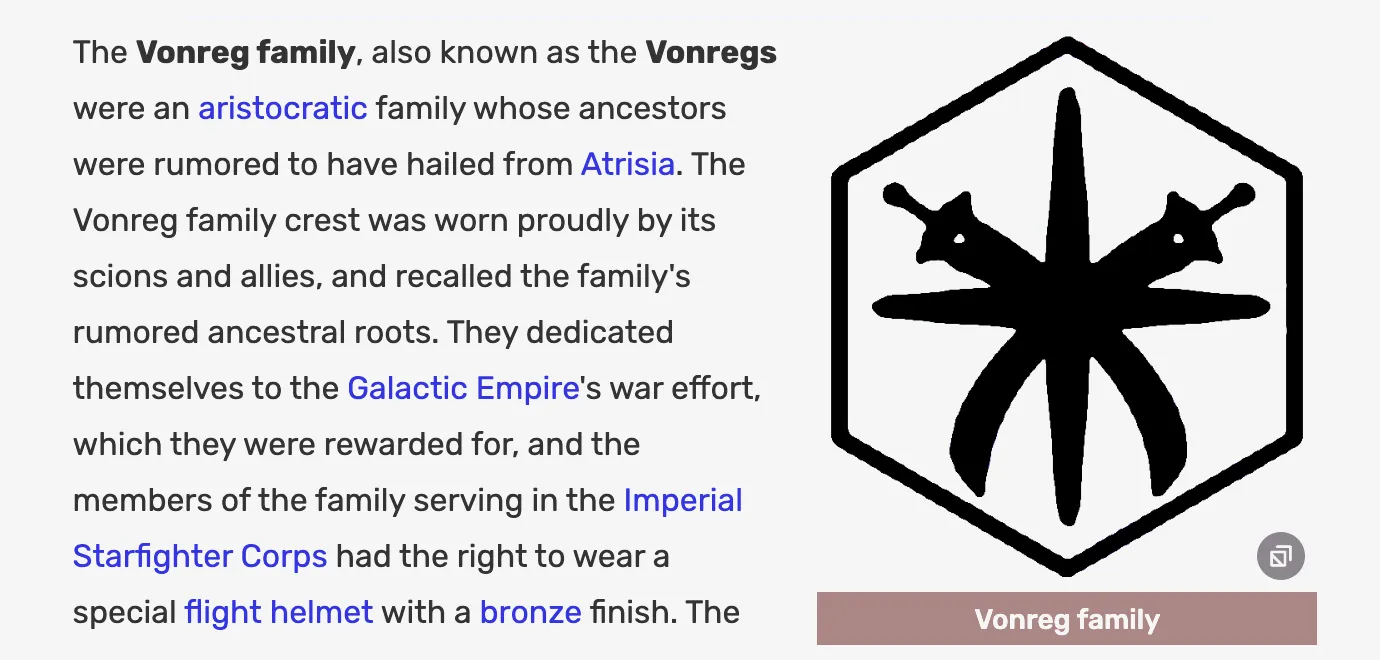
The Vonreg crest belonged to an aristocratic family that served the Empire. It was worn by family members and allies, and recalled their rumoured roots on Atrisia. I cannot explain the individual shapes, but I do see two crossed blades around a central star, all held inside a hexagonal shield. The blades may refer to Atrisia's martial past, although that is my own interpretation. The mark first appeared in Star Wars: Squadrons.
119
Garbis Family
"The Thune Cargo" in Star Wars Rebels Magazine 22.
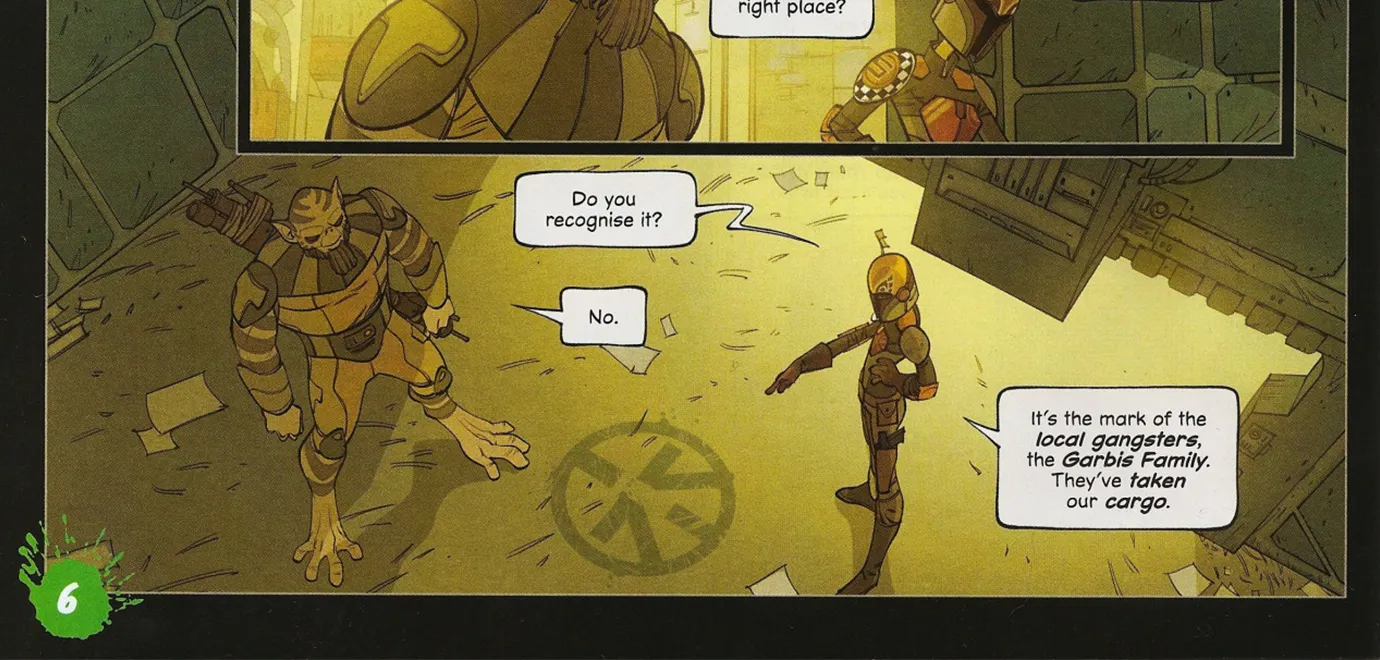
The Garbis family used this mark as a calling card. In the Rebels comic "The Thune Cargo," the gang takes a shipment on Thune and leaves the symbol behind, turning a family crest into a warning that they were there. Its strong mirror symmetry and heavy circular frame make it feel more like a stamp. I couldn't find an official meaning for the separate shapes. This brief comic appearance seems to be the only place the mark can be seen.
120
Medical Red Sigil
The Clone Wars, S6E2: Conspiracy
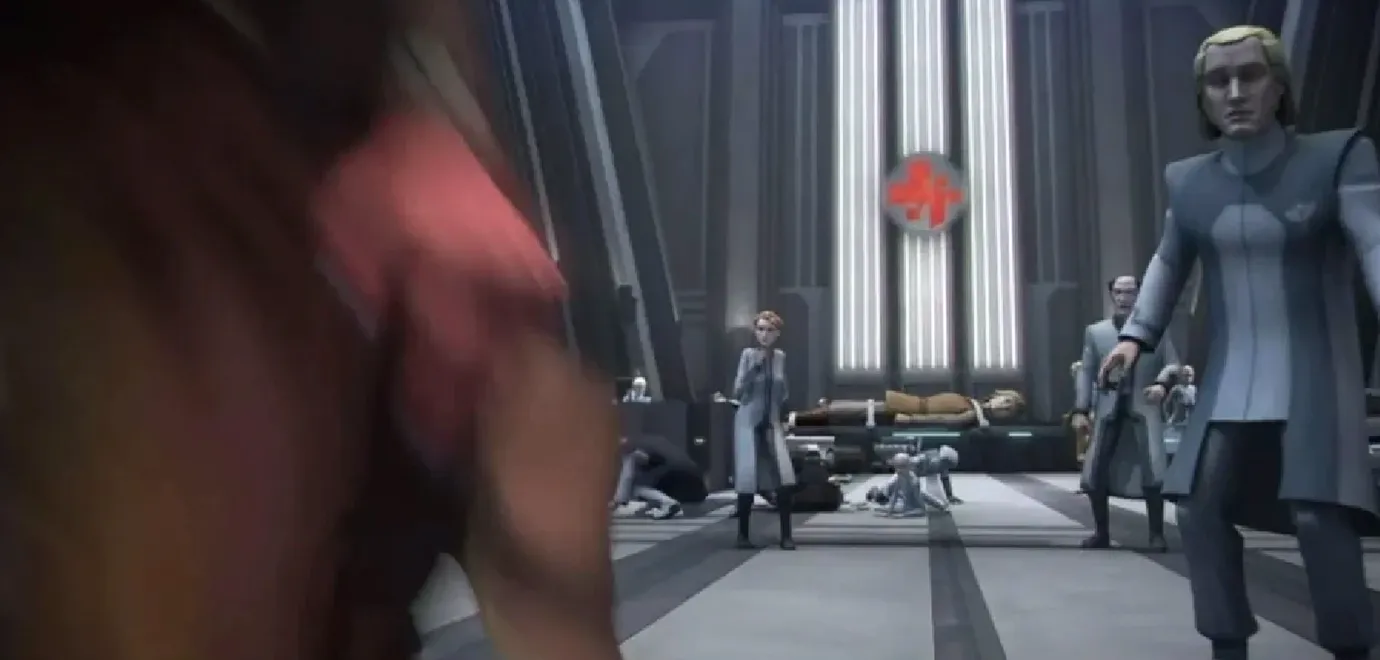
Unlike the 119 marks before it, the red sigil does not belong to a person, family or faction. It is a universal sign for medical help, used on facilities, vehicles, equipment and personnel across different eras of Star Wars. In Conspiracy, it hangs above the medical centre on Kamino, where Tup and Fives are examined. Its cross-like form is immediately clear, but altered enough to fit the wider visual language of the galaxy. I close the poster with it because after all the symbols of identity and allegiance, the final mark will be understood by everyone.